 Add to Chrome
 Add to Firefox
 Add to Edge
Integrating Wide and Deep Neural Networks with Squeeze-and-Excitation Blocks for Multi-Target Property Prediction in Additively Manufactured Fiber Reinforced Composites
Dec 26, 2025
Continuous fiber-reinforced composite manufactured by additive manufacturing (CFRC-AM) offers opportunities for printing lightweight materials with high specific strength. However, their performance is sensitive to the interaction of process and material parameters, making exhaustive experimental testing impractical. In this study, we introduce a data-efficient, multi-input, multi-target learning approach that integrates Latin Hypercube Sampling (LHS)-guided experimentation with a squeeze-and-excitation wide and deep neural network (SE-WDNN) to jointly predict multiple mechanical and manufacturing properties of CFRC-AMs based on different manufacturing parameters. We printed and tested 155 specimens selected from a design space of 4,320 combinations using a Markforged Mark Two 3D printer. The processed data formed the input-output set for our proposed model. We compared the results with those from commonly used machine learning models, including feedforward neural networks, Kolmogorov-Arnold networks, XGBoost, CatBoost, and random forests. Our model achieved the lowest overall test error (MAPE = 12.33%) and showed statistically significant improvements over the baseline wide and deep neural network for several target variables (paired t-tests, p <= 0.05). SHapley Additive exPlanations (SHAP) analysis revealed that reinforcement strategy was the major influence on mechanical performance. Overall, this study demonstrates that the integration of LHS and SE-WDNN enables interpretable and sample-efficient multi-target predictions, guiding parameter selection in CFRC-AM with a balance between mechanical behavior and manufacturing metrics.

Root Cause Analysis of Hydrogen Bond Separation in Spatio-Temporal Molecular Dynamics using Causal Models
Aug 17, 2025
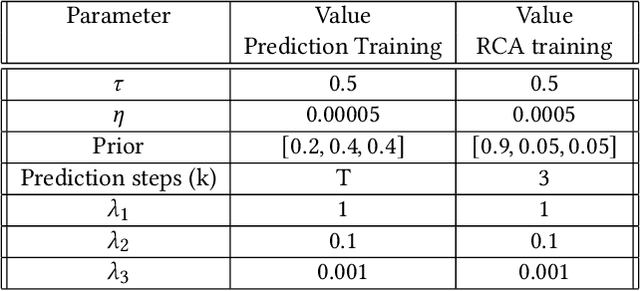
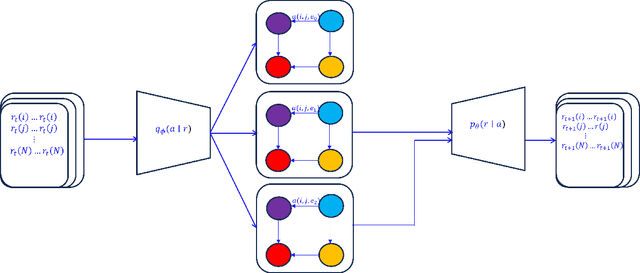

Molecular dynamics simulations (MDS) face challenges, including resource-heavy computations and the need to manually scan outputs to detect "interesting events," such as the formation and persistence of hydrogen bonds between atoms of different molecules. A critical research gap lies in identifying the underlying causes of hydrogen bond formation and separation -understanding which interactions or prior events contribute to their emergence over time. With this challenge in mind, we propose leveraging spatio-temporal data analytics and machine learning models to enhance the detection of these phenomena. In this paper, our approach is inspired by causal modeling and aims to identify the root cause variables of hydrogen bond formation and separation events. Specifically, we treat the separation of hydrogen bonds as an "intervention" occurring and represent the causal structure of the bonding and separation events in the MDS as graphical causal models. These causal models are built using a variational autoencoder-inspired architecture that enables us to infer causal relationships across samples with diverse underlying causal graphs while leveraging shared dynamic information. We further include a step to infer the root causes of changes in the joint distribution of the causal models. By constructing causal models that capture shifts in the conditional distributions of molecular interactions during bond formation or separation, this framework provides a novel perspective on root cause analysis in molecular dynamic systems. We validate the efficacy of our model empirically on the atomic trajectories that used MDS for chiral separation, demonstrating that we can predict many steps in the future and also find the variables driving the observed changes in the system.