 Add to Chrome
 Add to Firefox
 Add to Edge
An Explainable FFT-Based Spatial-Frequency Fusion Framework for Deepfake Detection
Jul 19, 2026
Deepfake generation has raised growing concerns regarding digital media authenticity, misinformation, identity fraud, and public trust. Recent studies show that combining spatial and frequency features leads to stronger detection results than using independently. This paper presents MSCA-FFT, a Fast Fourier Transform (FFT)-based multi-scale cross-attention framework for image-level deepfake detection. The model combines a partially fine-tuned Xception spatial branch with an FFT-based frequency branch. The frequency branch processes the log-scaled FFT magnitude spectrum through shallow convolutional layers, avoiding inverse frequency-to-image reconstruction used in DCT-based pipelines. The spatial and frequency representations are refined by transformer encoders, fused through cross-attention, and passed to an MLP classifier for real/fake prediction. Experimental results show that MSCA-FFT achieves consistently higher performance than the DCT-based state-of-the-art spatial-frequency fusion method and the compared baseline models. The ablation study further indicates that the FFT-based frequency branch provides complementary spectral cues when fused with spatial features. In addition, FFT-based frequency analysis and Grad-CAM/LIME explanations show consistent evidence around manipulation-sensitive facial regions, including the eyes, mouth, nose, and facial boundaries.

A Survey of Deep Fake Detection for Trial Courts
May 31, 2022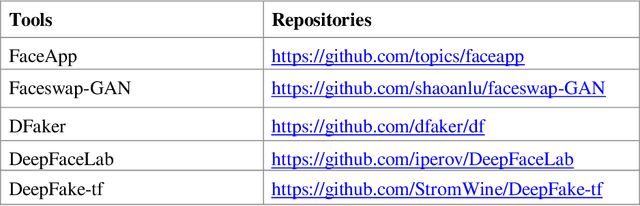
Recently, image manipulation has achieved rapid growth due to the advancement of sophisticated image editing tools. A recent surge of generated fake imagery and videos using neural networks is DeepFake. DeepFake algorithms can create fake images and videos that humans cannot distinguish from authentic ones. (GANs) have been extensively used for creating realistic images without accessing the original images. Therefore, it is become essential to detect fake videos to avoid spreading false information. This paper presents a survey of methods used to detect DeepFakes and datasets available for detecting DeepFakes in the literature to date. We present extensive discussions and research trends related to DeepFake technologies.