 Add to Chrome
 Add to Firefox
 Add to Edge
Locally Deployable Small Language Models for Emergency Department Decision Support: A Systematic Benchmark of Fine-Tuning Strategies
Aug 10, 2026
Deploying large language models (LLMs) for decision support in emergency departments (EDs) faces two major challenges: privacy risks of transmitting patient data to closed-source commercial LLMs and the lack of systematic evaluation of fine-tuning strategies for locally deployable open-source small language models (SLMs). We benchmarked eight open-source SLMs using zero-shot prompting, prefix tuning, Low-Rank Adaptation (LoRA), and full fine-tuning on three ED tasks: triage level prediction, specialist referral recommendation, and diagnosis prediction. Using 2,083 MIMIC-IV-ED cases and Claude Haiku 4.5 and Claude Sonnet 4.5 as baselines, we found that LoRA fine-tuned open-source SLMs outperform commercial baselines on triage level prediction and specialist referral recommendation, while diagnosis prediction remains challenging for open-source SLMs. Confusion matrix analysis further shows that fine-tuned open-source SLMs can detect highest-severity patients missed by the commercial baselines. These results demonstrate that locally deployable SLMs can achieve clinically competitive performance for ED decision support.

Unifying Acoustic Features and Text with Multimodal LLMs for Neurodegenerative Screening
Jun 10, 2026Voice-based screening offers a scalable and non-invasive way to assess neurodegenerative diseases such as Alzheimer's disease (AD) and Parkinson's disease (PD), but their staging remains challenging due to the difficulty of integrating heterogeneous data. This paper presents NeurMLLM, an efficient multimodal generative framework for neurodegenerative disease staging. NeurMLLM first encodes the spectrograms and Mel-frequency cepstral coefficients of audio data with vision transformers and projects their representations into the embedding space of a large language model (LLM), where they are concatenated with transcript and demographic instruction tokens as a single unified sequence. The LLM is then instruction-tuned via Low-Rank Adaptation using task prompts to autoregressively predict a constrained label token, enabling a generative classification. By evaluating on the Bridge2AI-Voice dataset for fine-grained staging of AD and PD, we observe that NeurMLLM achieves strong performance, consistently outperforming classical machine learning methods and existing LLM-based approaches. The results show the high potential of multimodal LLMs in neurodegenerative disease staging, improving staging accuracy and supporting accessible deployment.
Contour Detection in Cassini ISS images based on Hierarchical Extreme Learning Machine and Dense Conditional Random Field
Aug 22, 2019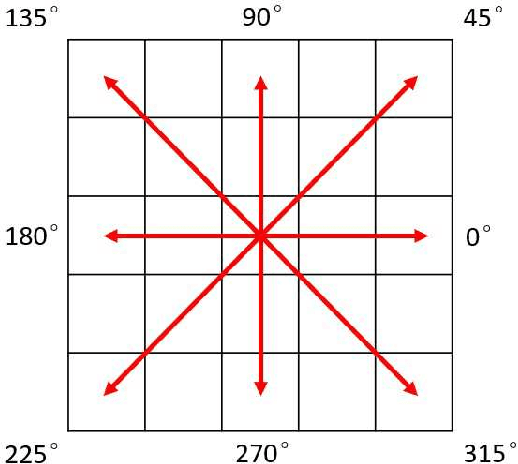

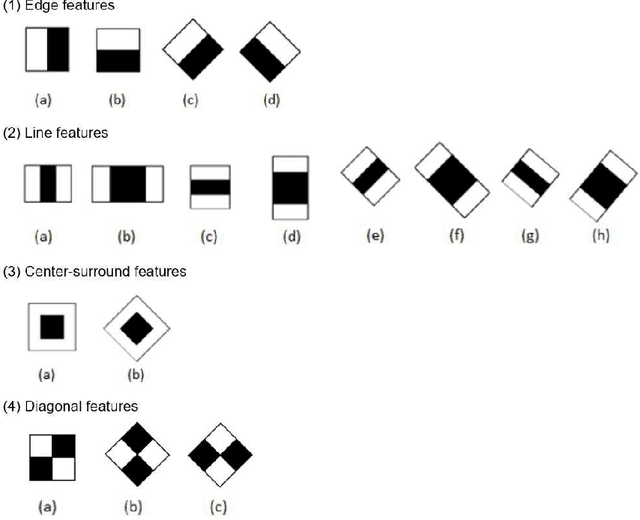
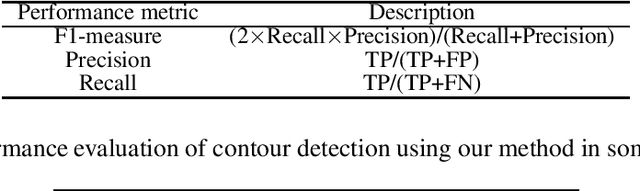
In Cassini ISS (Imaging Science Subsystem) images, contour detection is often performed on disk-resolved object to accurately locate their center. Thus, the contour detection is a key problem. Traditional edge detection methods, such as Canny and Roberts, often extract the contour with too much interior details and noise. Although the deep convolutional neural network has been applied successfully in many image tasks, such as classification and object detection, it needs more time and computer resources. In the paper, a contour detection algorithm based on H-ELM (Hierarchical Extreme Learning Machine) and DenseCRF (Dense Conditional Random Field) is proposed for Cassini ISS images. The experimental results show that this algorithm's performance is better than both traditional machine learning methods such as SVM, ELM and even deep convolutional neural network. And the extracted contour is closer to the actual contour. Moreover, it can be trained and tested quickly on the general configuration of PC, so can be applied to contour detection for Cassini ISS images.