 Add to Chrome
 Add to Firefox
 Add to Edge
Mind the Gaps: Mixture-of-Minds for Human Simulation
Aug 06, 2026
Predicting how a population will answer a new question is a long-standing goal. Statistical methods succeed at the level of the mass but falter at the level of the individual. Large language model simulators inherit this gap. They recover a population's central tendencies while flattening its heterogeneity, and they carry social biases and prompt brittleness that distort individual predictions. This paper introduces Anacreon, an audience simulation model that targets the individual level within a narrow, well-specified domain. Anacreon learns an authorship embedding that separates individuals, clusters a real qualitative corpus around seed people, and trains a dedicated adapter for each cluster, a mixture of minds, on a Gemma~4 12B base. It harvests demographics, psychological traits, and survey responses from public text, and augments each record with a chain-of-emotion. It reduces prompt brittleness by shuffling response options and reduces positive bias by balancing the training distribution. On a large, externally sourced survey, Anacreon reaches a state-of-the-art ordinal alignment of 0.775, the individual-level accuracy measure on which the field has converged, with a small residual bias. The work is a step toward drawing aggregate insight from faithfully simulated individuals.

Machine Learning needs its own Randomness Standard: Randomised Smoothing and PRNG-based attacks
Jun 24, 2023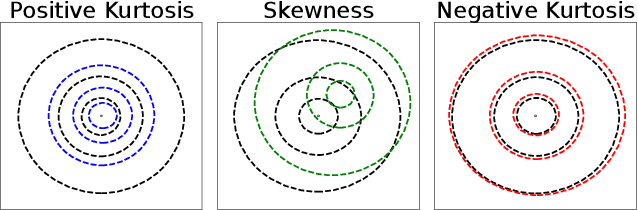
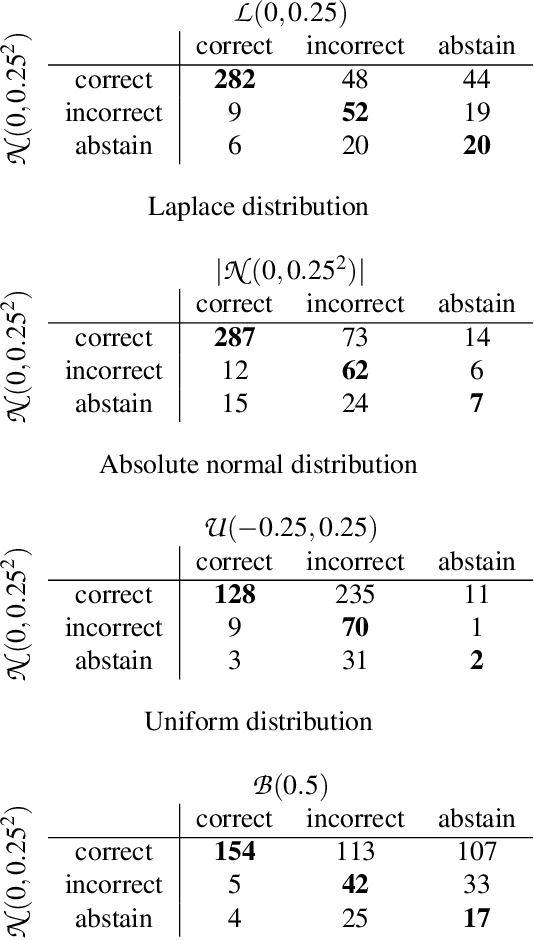
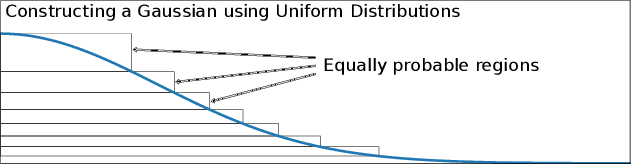
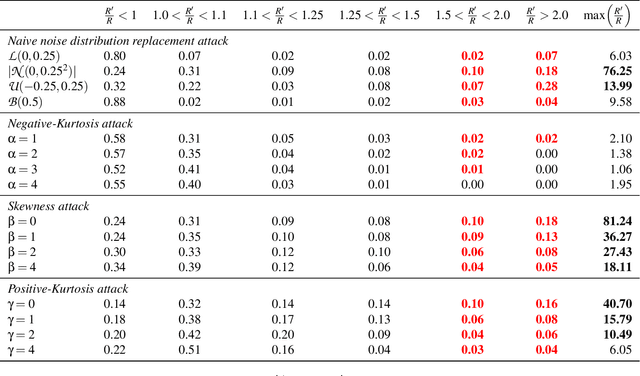
Randomness supports many critical functions in the field of machine learning (ML) including optimisation, data selection, privacy, and security. ML systems outsource the task of generating or harvesting randomness to the compiler, the cloud service provider or elsewhere in the toolchain. Yet there is a long history of attackers exploiting poor randomness, or even creating it -- as when the NSA put backdoors in random number generators to break cryptography. In this paper we consider whether attackers can compromise an ML system using only the randomness on which they commonly rely. We focus our effort on Randomised Smoothing, a popular approach to train certifiably robust models, and to certify specific input datapoints of an arbitrary model. We choose Randomised Smoothing since it is used for both security and safety -- to counteract adversarial examples and quantify uncertainty respectively. Under the hood, it relies on sampling Gaussian noise to explore the volume around a data point to certify that a model is not vulnerable to adversarial examples. We demonstrate an entirely novel attack against it, where an attacker backdoors the supplied randomness to falsely certify either an overestimate or an underestimate of robustness. We demonstrate that such attacks are possible, that they require very small changes to randomness to succeed, and that they can be hard to detect. As an example, we hide an attack in the random number generator and show that the randomness tests suggested by NIST fail to detect it. We advocate updating the NIST guidelines on random number testing to make them more appropriate for safety-critical and security-critical machine-learning applications.