 Add to Chrome
 Add to Firefox
 Add to Edge
Unifying Local Communications and Local Updates for LLM Pretraining
Jun 09, 2026
Communication-efficient pre-training of LLMs is increasingly important as training draws on compute distributed across clusters, data centers, and lower-bandwidth links. Many practical methods reduce communication frequency but still rely on synchronous All-Reduce operations that maintain identical model states and tie progress to global collectives. This can become a bottleneck when bandwidth or worker speed is heterogeneous. We introduce GASLoC, a novel decentralized pre-training algorithm that generalizes the notion of communication acceleration to the recently popular "outer optimizer" to allow a practical gossip-based training framework that is compatible with adaptive optimizers, allows for local optimizer steps, and can utilize sparse randomized peer communication. Empirically, on a number of standard LLM training tasks, we demonstrate that GASLoC outperforms state-of-the-art decentralized algorithms in single step per communication setting for a number of topologies and, unlike existing decentralized methods in the LLM setting, it allows to obtain performance competitive with DiLoCo when utilizing multiple local steps. In the heterogeneous bandwidth setting we demonstrate the advantage of GASLoC showing that it can significantly outperform DiLoCo.

Beyond Local Sharpness: Communication-Efficient Global Sharpness-aware Minimization for Federated Learning
Dec 04, 2024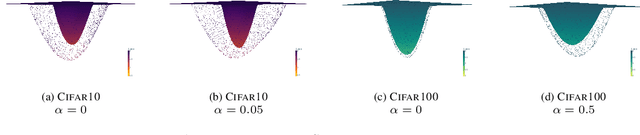
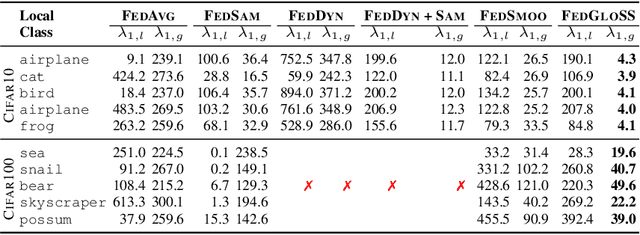
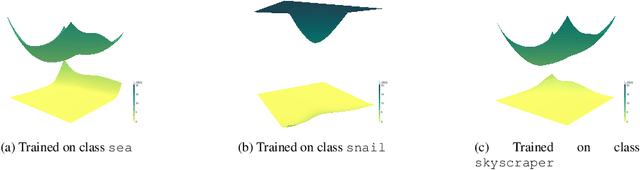

Federated learning (FL) enables collaborative model training with privacy preservation. Data heterogeneity across edge devices (clients) can cause models to converge to sharp minima, negatively impacting generalization and robustness. Recent approaches use client-side sharpness-aware minimization (SAM) to encourage flatter minima, but the discrepancy between local and global loss landscapes often undermines their effectiveness, as optimizing for local sharpness does not ensure global flatness. This work introduces FedGloSS (Federated Global Server-side Sharpness), a novel FL approach that prioritizes the optimization of global sharpness on the server, using SAM. To reduce communication overhead, FedGloSS cleverly approximates sharpness using the previous global gradient, eliminating the need for additional client communication. Our extensive evaluations demonstrate that FedGloSS consistently reaches flatter minima and better performance compared to state-of-the-art FL methods across various federated vision benchmarks.