 Add to Chrome
 Add to Firefox
 Add to Edge
Multi-Dimensional Model Integrity and Responsibility Assessment Index and Scoring Framework
May 14, 2026
Artificial intelligence in high-stakes tabular domains cannot be evaluated by predictive performance alone, yet current practice still assesses explainability, fairness, robustness, privacy, and sustainability mostly in isolation. We propose the Model Integrity and Responsibility Assessment Index (MIRAI), a unified evaluation framework that measures tabular models across these five dimensions under a controlled comparison setting and aggregates them into a single score. MIRAI combines established metrics through normalized and direction-aligned dimension scores, which enables direct comparison across models with different architectural and computational profiles. Experiments on healthcare, financial, and socioeconomic datasets show that higher predictive performance does not necessarily imply better overall integrity and responsibility. In several cases, simpler models achieve a stronger cross-dimensional balance than more complex deep tabular architectures. MIRAI provides a compact and practical basis for responsible model selection in regulated settings.

Adaptive Collaboration of Arena-Based Argumentative LLMs for Explainable and Contestable Legal Reasoning
Feb 21, 2026Legal reasoning requires not only high accuracy but also the ability to justify decisions through verifiable and contestable arguments. However, existing Large Language Model (LLM) approaches, such as Chain-of-Thought (CoT) and Retrieval-Augmented Generation (RAG), often produce unstructured explanations that lack a formal mechanism for verification or user intervention. To address this limitation, we propose Adaptive Collaboration of Argumentative LLMs (ACAL), a neuro-symbolic framework that integrates adaptive multi-agent collaboration with an Arena-based Quantitative Bipolar Argumentation Framework (A-QBAF). ACAL dynamically deploys expert agent teams to construct arguments, employs a clash resolution mechanism to adjudicate conflicting claims, and utilizes uncertainty-aware escalation for borderline cases. Crucially, our framework supports a Human-in-the-Loop (HITL) contestability workflow, enabling users to directly audit and modify the underlying reasoning graph to influence the final judgment. Empirical evaluations on the LegalBench benchmark demonstrate that ACAL outperforms strong baselines across Gemini-2.5-Flash-Lite and Gemini-2.5-Flash architectures, effectively balancing efficient predictive performance with structured transparency and contestability. Our implementation is available at: https://github.com/loc110504/ACAL.
XEdgeAI: A Human-centered Industrial Inspection Framework with Data-centric Explainable Edge AI Approach
Jul 16, 2024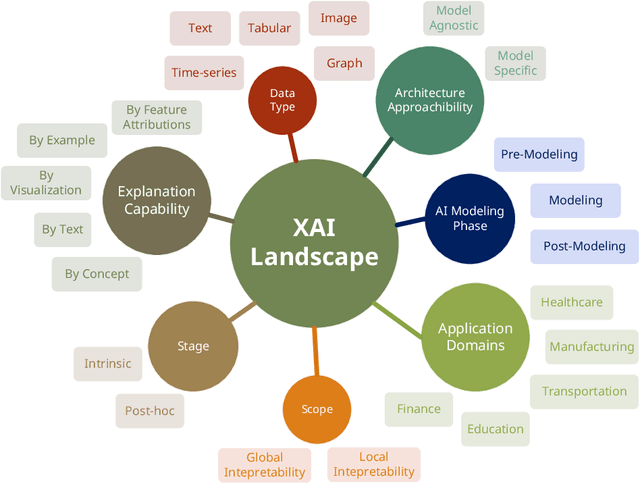
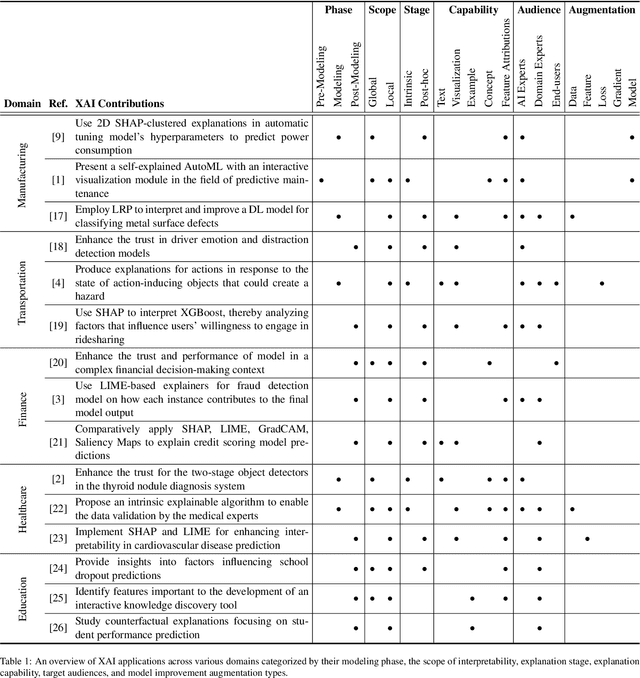
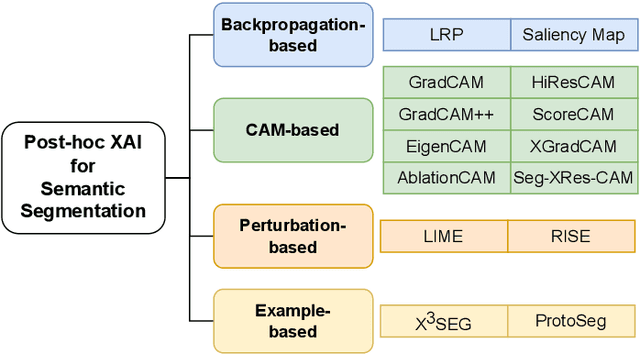
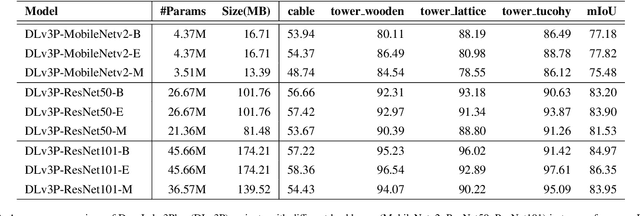
Recent advancements in deep learning have significantly improved visual quality inspection and predictive maintenance within industrial settings. However, deploying these technologies on low-resource edge devices poses substantial challenges due to their high computational demands and the inherent complexity of Explainable AI (XAI) methods. This paper addresses these challenges by introducing a novel XAI-integrated Visual Quality Inspection framework that optimizes the deployment of semantic segmentation models on low-resource edge devices. Our framework incorporates XAI and the Large Vision Language Model to deliver human-centered interpretability through visual and textual explanations to end-users. This is crucial for end-user trust and model interpretability. We outline a comprehensive methodology consisting of six fundamental modules: base model fine-tuning, XAI-based explanation generation, evaluation of XAI approaches, XAI-guided data augmentation, development of an edge-compatible model, and the generation of understandable visual and textual explanations. Through XAI-guided data augmentation, the enhanced model incorporating domain expert knowledge with visual and textual explanations is successfully deployed on mobile devices to support end-users in real-world scenarios. Experimental results showcase the effectiveness of the proposed framework, with the mobile model achieving competitive accuracy while significantly reducing model size. This approach paves the way for the broader adoption of reliable and interpretable AI tools in critical industrial applications, where decisions must be both rapid and justifiable.
LangXAI: Integrating Large Vision Models for Generating Textual Explanations to Enhance Explainability in Visual Perception Tasks
Feb 19, 2024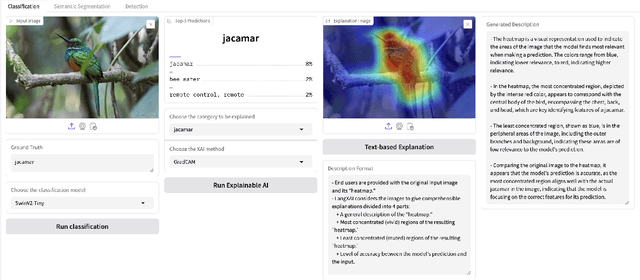
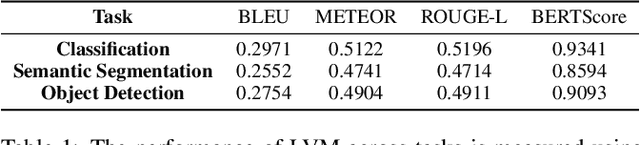
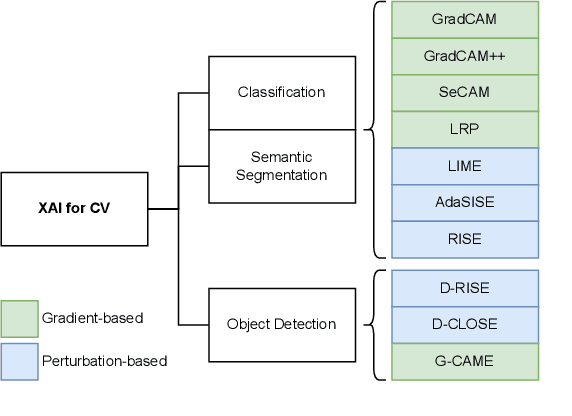
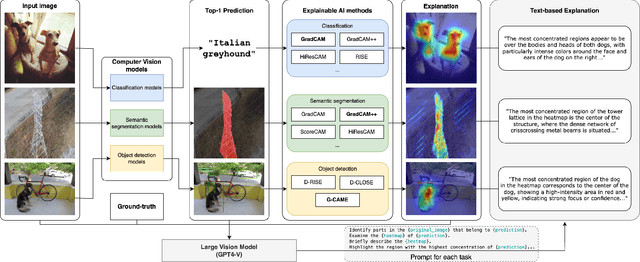
LangXAI is a framework that integrates Explainable Artificial Intelligence (XAI) with advanced vision models to generate textual explanations for visual recognition tasks. Despite XAI advancements, an understanding gap persists for end-users with limited domain knowledge in artificial intelligence and computer vision. LangXAI addresses this by furnishing text-based explanations for classification, object detection, and semantic segmentation model outputs to end-users. Preliminary results demonstrate LangXAI's enhanced plausibility, with high BERTScore across tasks, fostering a more transparent and reliable AI framework on vision tasks for end-users.