 Add to Chrome
 Add to Firefox
 Add to Edge
Clear, Compelling Arguments: Rethinking the Foundations of Frontier AI Safety Cases
Mar 08, 2026
This paper contributes to the nascent debate around safety cases for frontier AI systems. Safety cases are structured, defensible arguments that a system is acceptably safe to deploy in a given context. Historically, they have been used in safety-critical industries, such as aerospace, nuclear or automotive. As a result, safety cases for frontier AI have risen in prominence, both in the safety policies of leading frontier developers and in international research agendas proposed by leaders in generative AI, such as the Singapore Consensus on Global AI Safety Research Priorities and the International AI Safety Report. This paper appraises this work. We note that research conducted within the alignment community which draws explicitly on lessons from the assurance community has significant limitations. We therefore aim to rethink existing approaches to alignment safety cases. We offer lessons from existing methodologies within safety assurance and outline the limitations involved in the alignment community's current approach. Building on this foundation, we present a case study for a safety case focused on Deceptive Alignment and CBRN capabilities, drawing on existing, theoretical safety case "sketches" created by the alignment safety case community. Overall, we contribute holistic insights from the field of safety assurance via rigorous theory and methodologies that have been applied in safety-critical contexts. We do so in order to create a better foundational framework for robust, defensible and useful safety case methodologies which can help to assure the safety of frontier AI systems.

Unravelling Responsibility for AI
Aug 04, 2023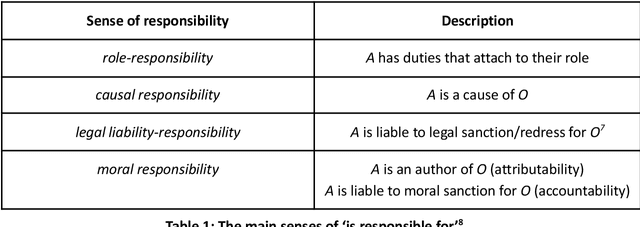
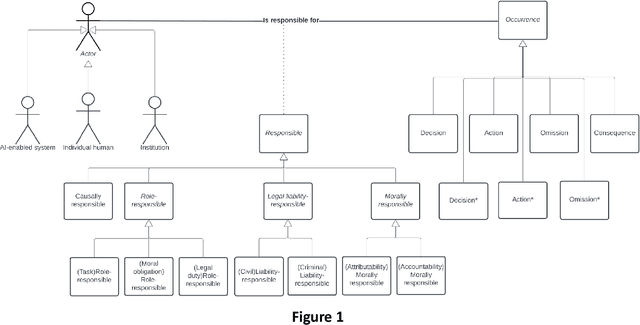
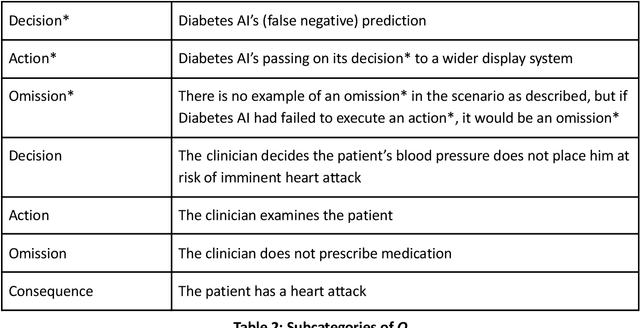
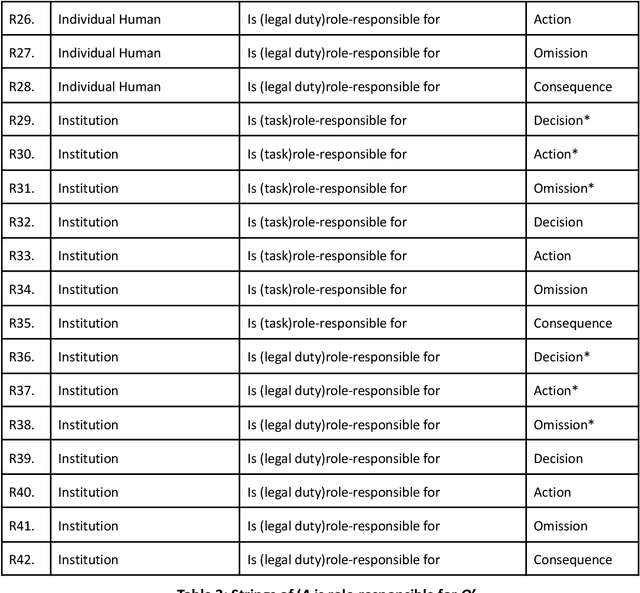
To reason about where responsibility does and should lie in complex situations involving AI-enabled systems, we first need a sufficiently clear and detailed cross-disciplinary vocabulary for talking about responsibility. Responsibility is a triadic relation involving an actor, an occurrence, and a way of being responsible. As part of a conscious effort towards 'unravelling' the concept of responsibility to support practical reasoning about responsibility for AI, this paper takes the three-part formulation, 'Actor A is responsible for Occurrence O' and identifies valid combinations of subcategories of A, is responsible for, and O. These valid combinations - which we term "responsibility strings" - are grouped into four senses of responsibility: role-responsibility; causal responsibility; legal liability-responsibility; and moral responsibility. They are illustrated with two running examples, one involving a healthcare AI-based system and another the fatal collision of an AV with a pedestrian in Tempe, Arizona in 2018. The output of the paper is 81 responsibility strings. The aim is that these strings provide the vocabulary for people across disciplines to be clear and specific about the different ways that different actors are responsible for different occurrences within a complex event for which responsibility is sought, allowing for precise and targeted interdisciplinary normative deliberations.