 Add to Chrome
 Add to Firefox
 Add to Edge
Advancing Investment Frontiers: Industry-grade Deep Reinforcement Learning for Portfolio Optimization
Feb 27, 2024
This research paper delves into the application of Deep Reinforcement Learning (DRL) in asset-class agnostic portfolio optimization, integrating industry-grade methodologies with quantitative finance. At the heart of this integration is our robust framework that not only merges advanced DRL algorithms with modern computational techniques but also emphasizes stringent statistical analysis, software engineering and regulatory compliance. To the best of our knowledge, this is the first study integrating financial Reinforcement Learning with sim-to-real methodologies from robotics and mathematical physics, thus enriching our frameworks and arguments with this unique perspective. Our research culminates with the introduction of AlphaOptimizerNet, a proprietary Reinforcement Learning agent (and corresponding library). Developed from a synthesis of state-of-the-art (SOTA) literature and our unique interdisciplinary methodology, AlphaOptimizerNet demonstrates encouraging risk-return optimization across various asset classes with realistic constraints. These preliminary results underscore the practical efficacy of our frameworks. As the finance sector increasingly gravitates towards advanced algorithmic solutions, our study bridges theoretical advancements with real-world applicability, offering a template for ensuring safety and robust standards in this technologically driven future.

Machine Learning Algorithms for Financial Asset Price Forecasting
Mar 31, 2020
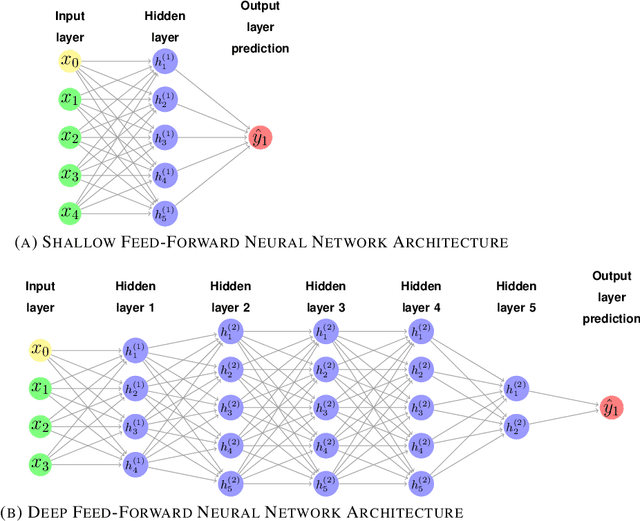
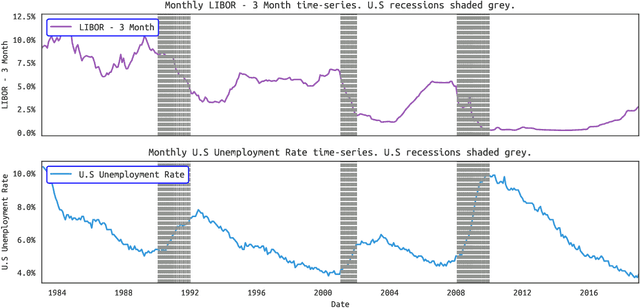

This research paper explores the performance of Machine Learning (ML) algorithms and techniques that can be used for financial asset price forecasting. The prediction and forecasting of asset prices and returns remains one of the most challenging and exciting problems for quantitative finance and practitioners alike. The massive increase in data generated and captured in recent years presents an opportunity to leverage Machine Learning algorithms. This study directly compares and contrasts state-of-the-art implementations of modern Machine Learning algorithms on high performance computing (HPC) infrastructures versus the traditional and highly popular Capital Asset Pricing Model (CAPM) on U.S equities data. The implemented Machine Learning models - trained on time series data for an entire stock universe (in addition to exogenous macroeconomic variables) significantly outperform the CAPM on out-of-sample (OOS) test data.