 Add to Chrome
 Add to Firefox
 Add to Edge
Developing and Evaluating a Large Language Model-Based Automated Feedback System Grounded in Evidence-Centered Design for Supporting Physics Problem Solving
Dec 11, 2025
Generative AI offers new opportunities for individualized and adaptive learning, particularly through large language model (LLM)-based feedback systems. While LLMs can produce effective feedback for relatively straightforward conceptual tasks, delivering high-quality feedback for tasks that require advanced domain expertise, such as physics problem solving, remains a substantial challenge. This study presents the design of an LLM-based feedback system for physics problem solving grounded in evidence-centered design (ECD) and evaluates its performance within the German Physics Olympiad. Participants assessed the usefulness and accuracy of the generated feedback, which was generally perceived as useful and highly accurate. However, an in-depth analysis revealed that the feedback contained factual errors in 20% of cases; errors that often went unnoticed by the students. We discuss the risks associated with uncritical reliance on LLM-based feedback systems and outline potential directions for generating more adaptive and reliable LLM-based feedback in the future.

Evaluating GPT- and Reasoning-based Large Language Models on Physics Olympiad Problems: Surpassing Human Performance and Implications for Educational Assessment
May 14, 2025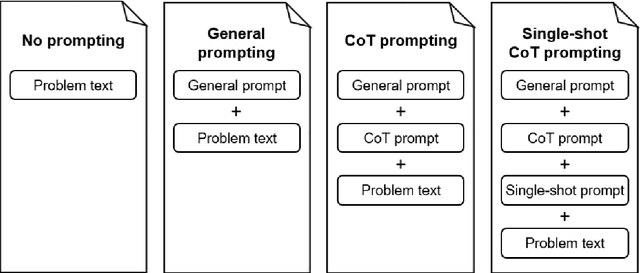
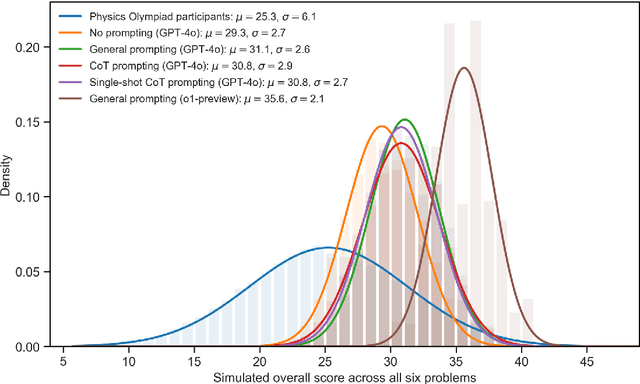
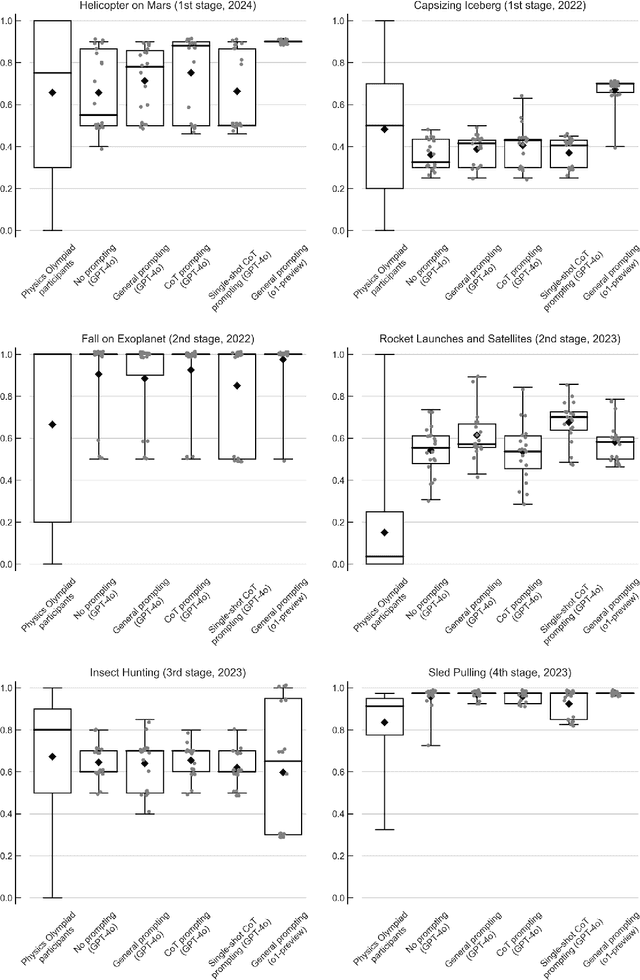
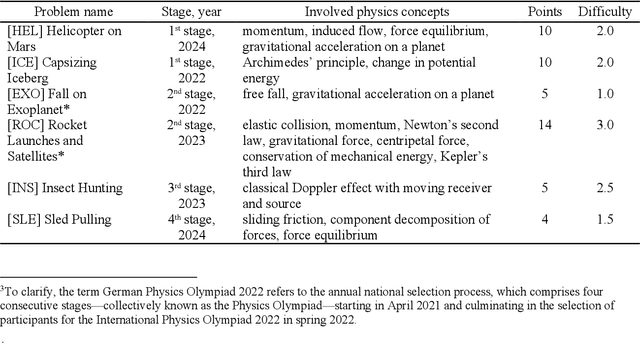
Large language models (LLMs) are now widely accessible, reaching learners at all educational levels. This development has raised concerns that their use may circumvent essential learning processes and compromise the integrity of established assessment formats. In physics education, where problem solving plays a central role in instruction and assessment, it is therefore essential to understand the physics-specific problem-solving capabilities of LLMs. Such understanding is key to informing responsible and pedagogically sound approaches to integrating LLMs into instruction and assessment. This study therefore compares the problem-solving performance of a general-purpose LLM (GPT-4o, using varying prompting techniques) and a reasoning-optimized model (o1-preview) with that of participants of the German Physics Olympiad, based on a set of well-defined Olympiad problems. In addition to evaluating the correctness of the generated solutions, the study analyzes characteristic strengths and limitations of LLM-generated solutions. The findings of this study indicate that both tested LLMs (GPT-4o and o1-preview) demonstrate advanced problem-solving capabilities on Olympiad-type physics problems, on average outperforming the human participants. Prompting techniques had little effect on GPT-4o's performance, while o1-preview almost consistently outperformed both GPT-4o and the human benchmark. Based on these findings, the study discusses implications for the design of summative and formative assessment in physics education, including how to uphold assessment integrity and support students in critically engaging with LLMs.