 Add to Chrome
 Add to Firefox
 Add to Edge
HealthAdminBench: Evaluating Computer-Use Agents on Healthcare Administration Tasks
Apr 10, 2026
Healthcare administration accounts for over $1 trillion in annual spending, making it a promising target for LLM-based computer-use agents (CUAs). While clinical applications of LLMs have received significant attention, no benchmark exists for evaluating CUAs on end-to-end administrative workflows. To address this gap, we introduce HealthAdminBench, a benchmark comprising four realistic GUI environments: an EHR, two payer portals, and a fax system, and 135 expert-defined tasks spanning three administrative task types: Prior Authorization, Appeals and Denials Management, and Durable Medical Equipment (DME) Order Processing. Each task is decomposed into fine-grained, verifiable subtasks, yielding 1,698 evaluation points. We evaluate seven agent configurations under multiple prompting and observation settings and find that, despite strong subtask performance, end-to-end reliability remains low: the best-performing agent (Claude Opus 4.6 CUA) achieves only 36.3 percent task success, while GPT-5.4 CUA attains the highest subtask success rate (82.8 percent). These results reveal a substantial gap between current agent capabilities and the demands of real-world administrative workflows. HealthAdminBench provides a rigorous foundation for evaluating progress toward safe and reliable automation of healthcare administrative workflows.

Natural images from the birthplace of the human eye
Feb 04, 2011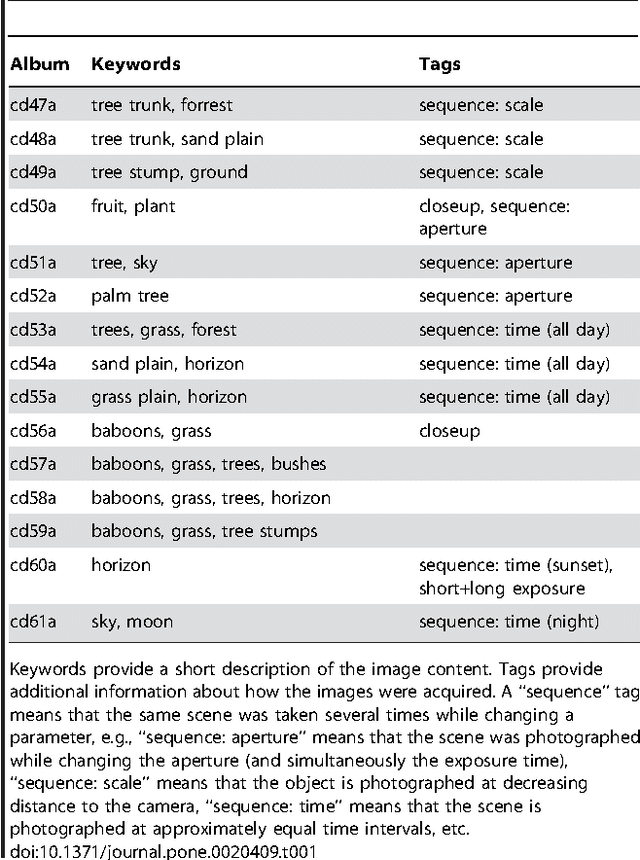
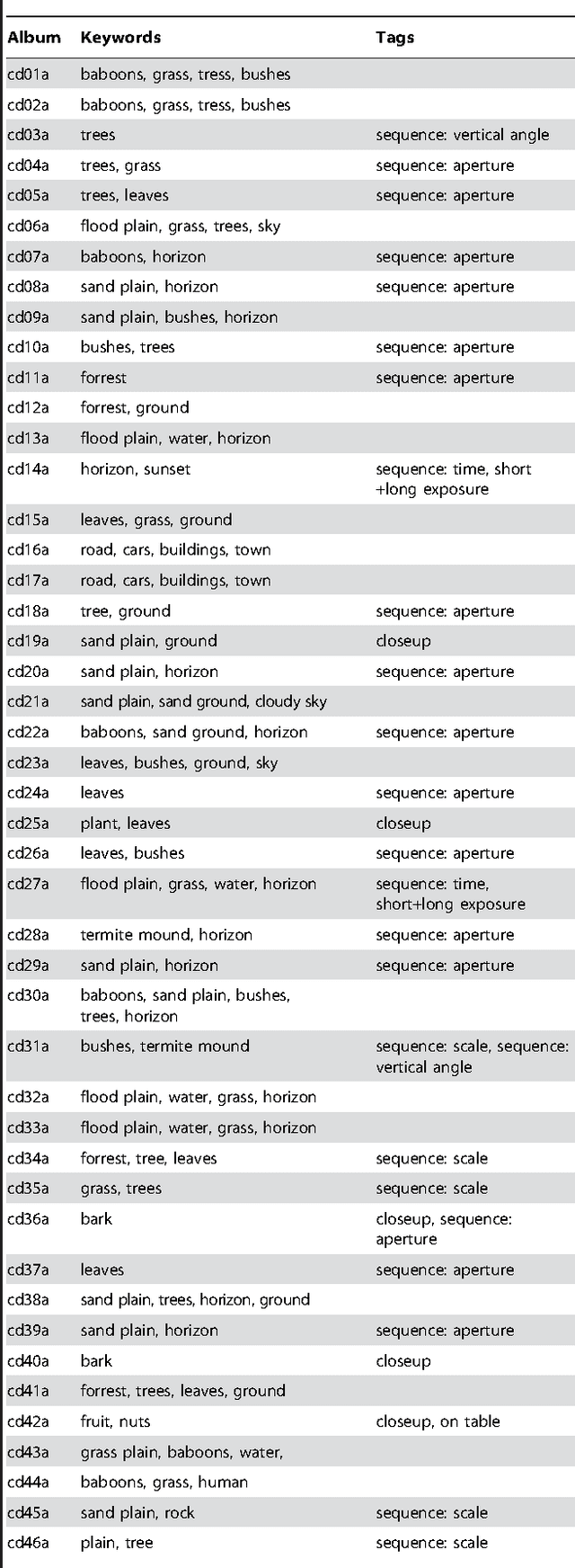
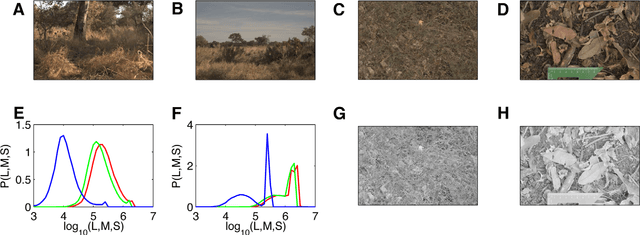
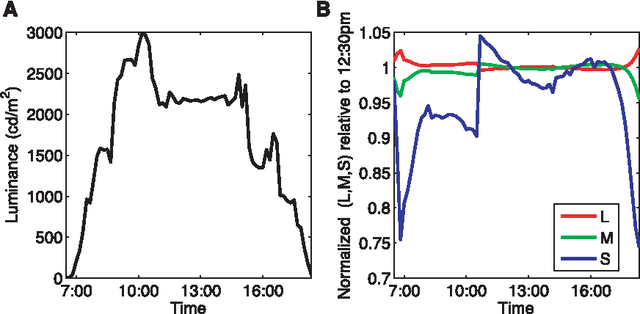
Here we introduce a database of calibrated natural images publicly available through an easy-to-use web interface. Using a Nikon D70 digital SLR camera, we acquired about 5000 six-megapixel images of Okavango Delta of Botswana, a tropical savanna habitat similar to where the human eye is thought to have evolved. Some sequences of images were captured unsystematically while following a baboon troop, while others were designed to vary a single parameter such as aperture, object distance, time of day or position on the horizon. Images are available in the raw RGB format and in grayscale. Images are also available in units relevant to the physiology of human cone photoreceptors, where pixel values represent the expected number of photoisomerizations per second for cones sensitive to long (L), medium (M) and short (S) wavelengths. This database is distributed under a Creative Commons Attribution-Noncommercial Unported license to facilitate research in computer vision, psychophysics of perception, and visual neuroscience.
* Submitted to PLoS ONE