 Add to Chrome
 Add to Firefox
 Add to Edge
Influential Papers in Artificial Intelligence and Paediatrics: Assessing RPYS by Experts Review
Oct 27, 2021


The use of artificial intelligence in paediatrics has vastly increased in the last few years. Interestingly, no historical bibliometric study analysing the knowledge development in this specific paediatric field has been performed yet, thus our study aimed to close this gap. References Publication Years Spectrography (RPYS), more precisely CitedReferenceExplorer (CRE) software tool was employed to achieve this aim. We identified 28 influential papers and domain experts validation showed that both, the RPYS method and CRE tool performed adequately in the identification process.

Content Analysis Application in Nursing: A Synthetic Knowledge Synthesis Meta-Study
May 15, 2021
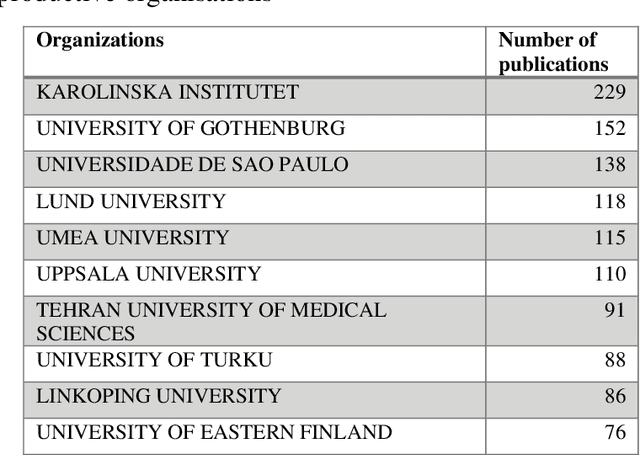

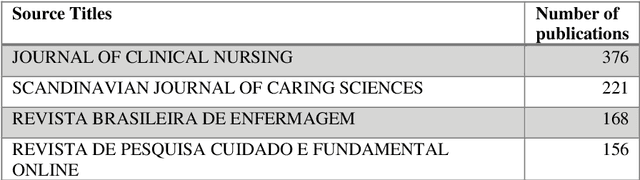
Theoretical issues: With the explosive growth in the research literature production, the need for new approaches to structure knowledge emerged. Method: Synthetic content analysis was used in our meta-study. Results and discussion: Our meta-study showed that content analysis is frequently used in nursing research in a very wide spectrum of applications. The trend of its use is positive and it is used globally in a variety of research settings. The synthetic content analysis used in our study showed to be a very helpful tool in performing knowledge synthesis, replacing many of the routine activities of conventional synthesis with automated activities this making such studies more economically viable and easier to perform.
Machine learning on small size samples: A synthetic knowledge synthesis
Mar 01, 2021

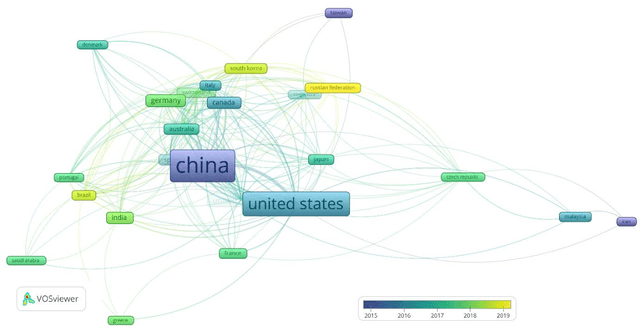

One of the increasingly important technologies dealing with the growing complexity of the digitalization of almost all human activities is Artificial intelligence, more precisely machine learning Despite the fact, that we live in a Big data world where almost everything is digitally stored, there are many real-world situations, where researchers are faced with small data samples. The present study aim is to answer the following research question namely What is the small data problem in machine learning and how it is solved?. Our bibliometric study showed a positive trend in the number of research publications concerning the use of small datasets and substantial growth of the research community dealing with the small dataset problem, indicating that the research field is moving toward higher maturity levels. Despite notable international cooperation, the regional concentration of research literature production in economically more developed countries was observed.
Artificial intelligence and pediatrics: A synthetic mini review
Feb 16, 2018


The use of artificial intelligence intelligencein medicine can be traced back to 1968 when Paycha published his paper Le diagnostic a l'aide d'intelligences artificielle, presentation de la premiere machine diagnostri. Few years later Shortliffe et al. presented an expert system named Mycin which was able to identify bacteria causing severe blood infections and to recommend antibiotics. Despite the fact that Mycin outperformed members of the Stanford medical school in the reliability of diagnosis it was never used in practice due to a legal issue who do you sue if it gives a wrong diagnosis?. However only in 2016 when the artificial intelligence software built into the IBM Watson AI platform correctly diagnosed and proposed an effective treatment for a 60-year-old womans rare form of leukemia the AI use in medicine become really popular.On of first papers presenting the use of AI in paediatrics was published in 1984. The paper introduced a computer-assisted medical decision making system called SHELP.