 Add to Chrome
 Add to Firefox
 Add to Edge
Improvement in Alzheimer's Disease MRI Images Analysis by Convolutional Neural Networks Via Topological Optimization
Oct 25, 2023
This research underscores the efficacy of Fourier topological optimization in refining MRI imagery, thereby bolstering the classification precision of Alzheimer's Disease through convolutional neural networks. Recognizing that MRI scans are indispensable for neurological assessments, but frequently grapple with issues like blurriness and contrast irregularities, the deployment of Fourier topological optimization offered enhanced delineation of brain structures, ameliorated noise, and superior contrast. The applied techniques prioritized boundary enhancement, contrast and brightness adjustments, and overall image lucidity. Employing CNN architectures VGG16, ResNet50, InceptionV3, and Xception, the post-optimization analysis revealed a marked elevation in performance. Conclusively, the amalgamation of Fourier topological optimization with CNNs delineates a promising trajectory for the nuanced classification of Alzheimer's Disease, portending a transformative impact on its diagnostic paradigms.

Ensemble-based Hybrid Optimization of Bayesian Neural Networks and Traditional Machine Learning Algorithms
Oct 09, 2023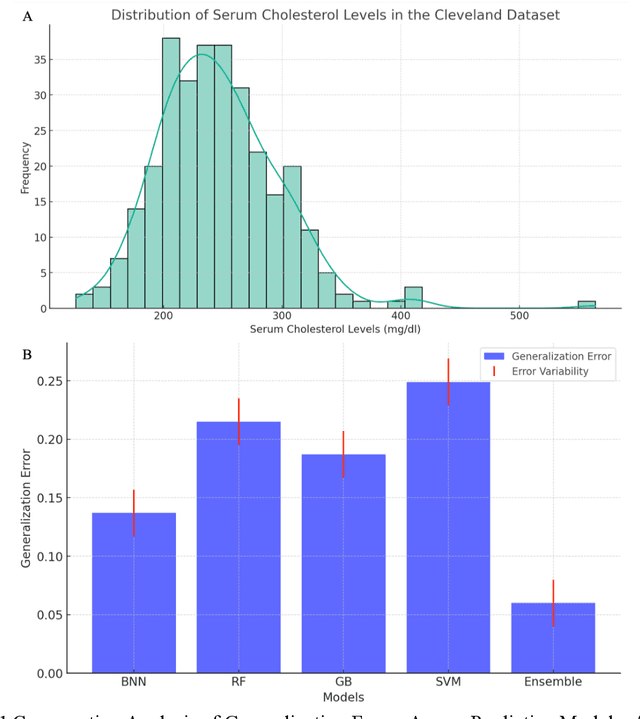
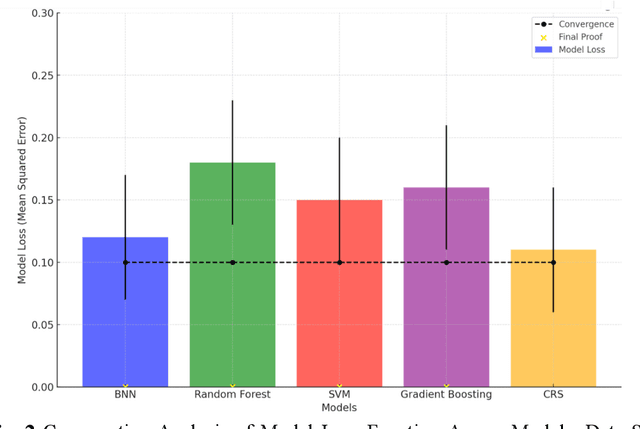
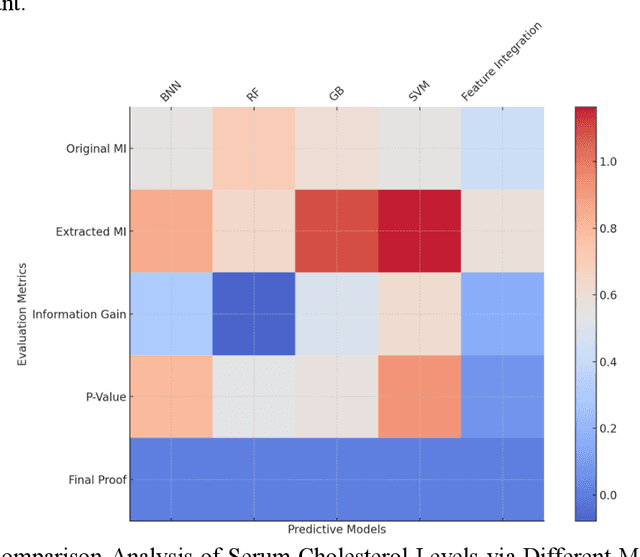
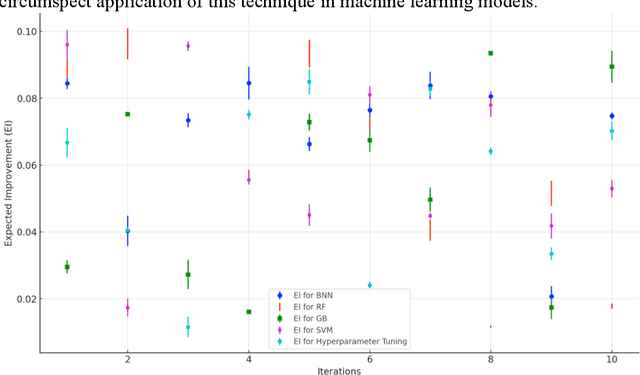
This research introduces a novel methodology for optimizing Bayesian Neural Networks (BNNs) by synergistically integrating them with traditional machine learning algorithms such as Random Forests (RF), Gradient Boosting (GB), and Support Vector Machines (SVM). Feature integration solidifies these results by emphasizing the second-order conditions for optimality, including stationarity and positive definiteness of the Hessian matrix. Conversely, hyperparameter tuning indicates a subdued impact in improving Expected Improvement (EI), represented by EI(x). Overall, the ensemble method stands out as a robust, algorithmically optimized approach.