 Add to Chrome
 Add to Firefox
 Add to Edge
Widespread Gender and Pronoun Bias in Moral Judgments Across LLMs
Mar 13, 2026
Large language models (LLMs) are increasingly used to assess moral or ethical statements, yet their judgments may reflect social and linguistic biases. This work presents a controlled, sentence-level study of how grammatical person, number, and gender markers influence LLM moral classifications of fairness. Starting from 550 balanced base sentences from the ETHICS dataset, we generated 26 counterfactual variants per item, systematically varying pronouns and demographic markers to yield 14,850 semantically equivalent sentences. We evaluated six model families (Grok, GPT, LLaMA, Gemma, DeepSeek, and Mistral), and measured fairness judgments and inter-group disparities using Statistical Parity Difference (SPD). Results show statistically significant biases: sentences written in the singular form and third person are more often judged as "fair'', while those in the second person are penalized. Gender markers produce the strongest effects, with non-binary subjects consistently favored and male subjects disfavored. We conjecture that these patterns reflect distributional and alignment biases learned during training, emphasizing the need for targeted fairness interventions in moral LLM applications.

Development and Validation of an AI-Driven Model for the La Rance Tidal Barrage: A Generalisable Case Study
Feb 10, 2022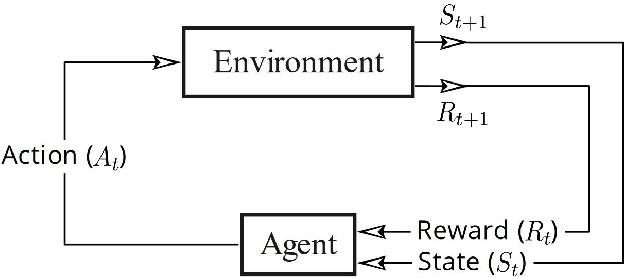
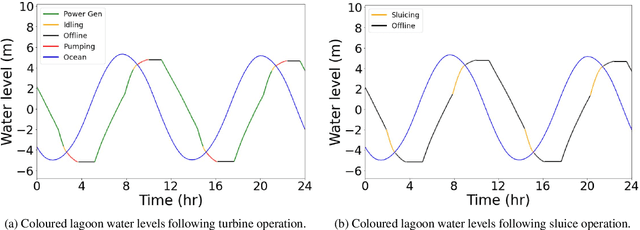
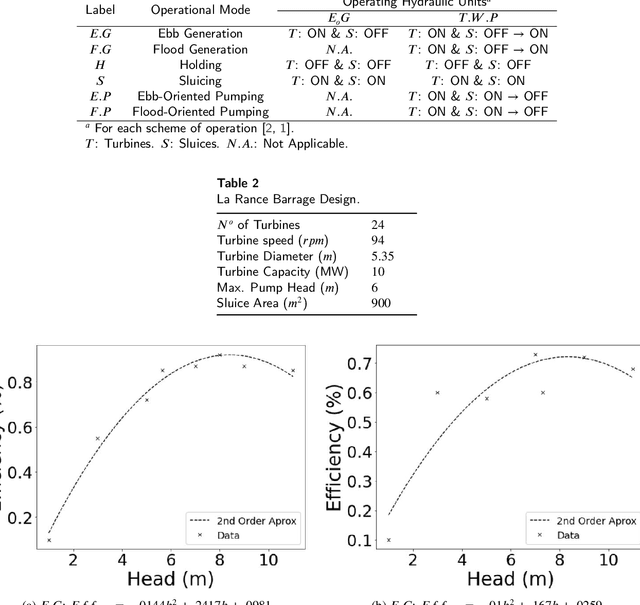
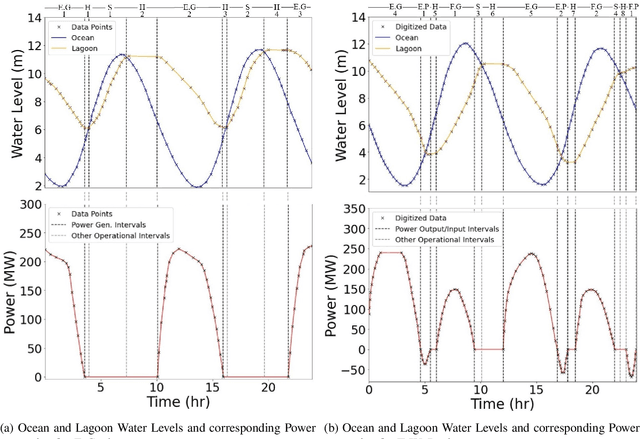
In this work, an AI-Driven (autonomous) model representation of the La Rance tidal barrage was developed using novel parametrisation and Deep Reinforcement Learning (DRL) techniques. Our model results were validated with experimental measurements, yielding the first Tidal Range Structure (TRS) model validated against a constructed tidal barrage and made available to academics. In order to proper model La Rance, parametrisation methodologies were developed for simulating (i) turbines (in pumping and power generation modes), (ii) transition ramp functions (for opening and closing hydraulic structures) and (iii) equivalent lagoon wetted area. Furthermore, an updated DRL method was implemented for optimising the operation of the hydraulic structures that compose La Rance. The achieved objective of this work was to verify the capabilities of an AI-Driven TRS model to appropriately predict (i) turbine power and (ii) lagoon water level variations. In addition, the observed operational strategy and yearly energy output of our AI-Driven model appeared to be comparable with those reported for the La Rance tidal barrage. The outcomes of this work (developed methodologies and DRL implementations) are generalisable and can be applied to other TRS projects. Furthermore, this work provided insights which allow for more realistic simulation of TRS operation, enabled through our AI-Driven model.