 Add to Chrome
 Add to Firefox
 Add to Edge
Directional approach to gradual cover: the continuous case
Apr 06, 2020

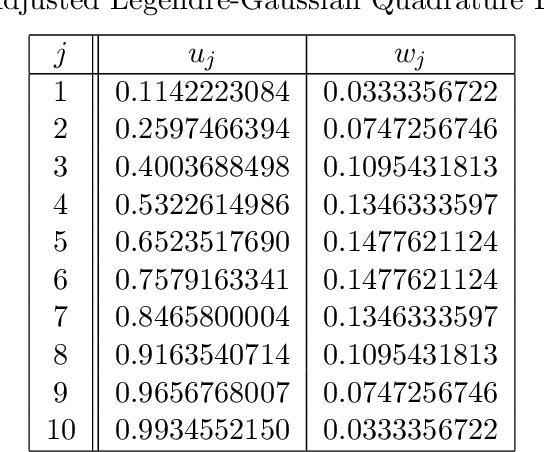


The objective of the cover location models is covering demand by facilities within a given distance. The gradual (or partial) cover replaces abrupt drop from full cover to no cover by defining gradual decline in cover. In this paper we use a recently proposed rule for calculating the joint cover of a demand point by several facilities termed "directional gradual cover". Contrary to all gradual cover models, the joint cover depends on the facilities' directions. In order to calculate the joint cover, existing models apply the partial cover by each facility disregarding their direction. We develop a genetic algorithm to solve the facilities location problem and also solve the problem for facilities that can be located anywhere in the plane. The proposed modifications were extensively tested on a case study of covering Orange County, California.

The Importance of Good Starting Solutions in the Minimum Sum of Squares Clustering Problem
Apr 06, 2020


The clustering problem has many applications in Machine Learning, Operations Research, and Statistics. We propose three algorithms to create starting solutions for improvement algorithms for this problem. We test the algorithms on 72 instances that were investigated in the literature. Forty eight of them are relatively easy to solve and we found the best known solution many times for all of them. Twenty four medium and large size instances are more challenging. We found five new best known solutions and matched the best known solution for 18 of the remaining 19 instances.