 Add to Chrome
 Add to Firefox
 Add to Edge
Mesquite MoCap: Democratizing Real-Time Motion Capture with Affordable, Bodyworn IoT Sensors and WebXR SLAM
Dec 27, 2025
Motion capture remains costly and complex to deploy, limiting use outside specialized laboratories. We present Mesquite, an open-source, low-cost inertial motion-capture system that combines a body-worn network of 15 IMU sensor nodes with a hip-worn Android smartphone for position tracking. A low-power wireless link streams quaternion orientations to a central USB dongle and a browser-based application for real-time visualization and recording. Built on modern web technologies -- WebGL for rendering, WebXR for SLAM, WebSerial and WebSockets for device and network I/O, and Progressive Web Apps for packaging -- the system runs cross-platform entirely in the browser. In benchmarks against a commercial optical system, Mesquite achieves mean joint-angle error of 2-5 degrees while operating at approximately 5% of the cost. The system sustains 30 frames per second with end-to-end latency under 15ms and a packet delivery rate of at least 99.7% in standard indoor environments. By leveraging IoT principles, edge processing, and a web-native stack, Mesquite lowers the barrier to motion capture for applications in entertainment, biomechanics, healthcare monitoring, human-computer interaction, and virtual reality. We release hardware designs, firmware, and software under an open-source license (GNU GPL).

AnoGAN for Tabular Data: A Novel Approach to Anomaly Detection
May 05, 2024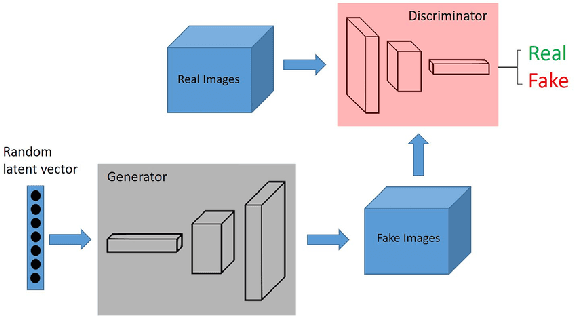
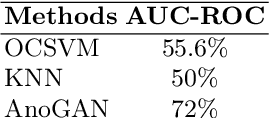
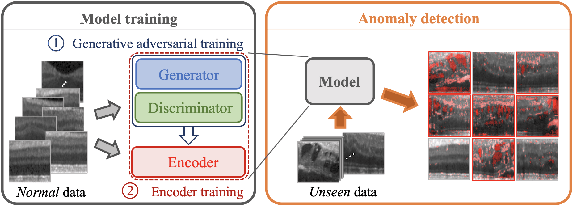
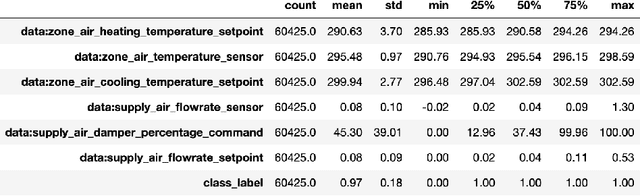
Anomaly detection, a critical facet in data analysis, involves identifying patterns that deviate from expected behavior. This research addresses the complexities inherent in anomaly detection, exploring challenges and adapting to sophisticated malicious activities. With applications spanning cybersecurity, healthcare, finance, and surveillance, anomalies often signify critical information or potential threats. Inspired by the success of Anomaly Generative Adversarial Network (AnoGAN) in image domains, our research extends its principles to tabular data. Our contributions include adapting AnoGAN's principles to a new domain and promising advancements in detecting previously undetectable anomalies. This paper delves into the multifaceted nature of anomaly detection, considering the dynamic evolution of normal behavior, context-dependent anomaly definitions, and data-related challenges like noise and imbalances.