 Add to Chrome
 Add to Firefox
 Add to Edge
Regression of Functions by Quantum Neural Networks Circuits
Dec 23, 2025
The performance of quantum neural network models depends strongly on architectural decisions, including circuit depth, placement of parametrized operations, and data-encoding strategies. Selecting an effective architecture is challenging and closely related to the classical difficulty of choosing suitable neural-network topologies, which is computationally hard. This work investigates automated quantum-circuit construction for regression tasks and introduces a genetic-algorithm framework that discovers Reduced Regressor QNN architectures. The approach explores depth, parametrized gate configurations, and flexible data re-uploading patterns, formulating the construction of quantum regressors as an optimization process. The discovered circuits are evaluated against seventeen classical regression models on twenty-two nonlinear benchmark functions and four analytical functions. Although classical methods often achieve comparable results, they typically require far more parameters, whereas the evolved quantum models remain compact while providing competitive performance. We further analyze dataset complexity using twelve structural descriptors and show, across five increasingly challenging meta-learning scenarios, that these measures can reliably predict which quantum architecture will perform best. The results demonstrate perfect or near-perfect predictive accuracy in several scenarios, indicating that complexity metrics offer powerful and compact representations of dataset structure and can effectively guide automated model selection. Overall, this study provides a principled basis for meta-learning-driven quantum architecture design and advances the understanding of how quantum models behave in regression settings--a topic that has received limited exploration in prior work. These findings pave the way for more systematic and theoretically grounded approaches to quantum regression.

Improving accuracy in short mortality rate series: Exploring Multi-step Forecasting Approaches in Hybrid Systems
Sep 26, 2025The decline in interest rates and economic stabilization has heightened the importance of accurate mortality rate forecasting, particularly in insurance and pension markets. Multi-step-ahead predictions are crucial for public health, demographic planning, and insurance risk assessments; however, they face challenges when data are limited. Hybrid systems that combine statistical and Machine Learning (ML) models offer a promising solution for handling both linear and nonlinear patterns. This study evaluated the impact of different multi-step forecasting approaches (Recursive, Direct, and Multi-Input Multi-Output) and ML models on the accuracy of hybrid systems. Results from 12 datasets and 21 models show that the selection of both the multi-step approach and the ML model is essential for improving performance, with the ARIMA-LSTM hybrid using a recursive approach outperforming other models in most cases.
EsmamDS: A more diverse exceptional survival model mining approach
Sep 06, 2021
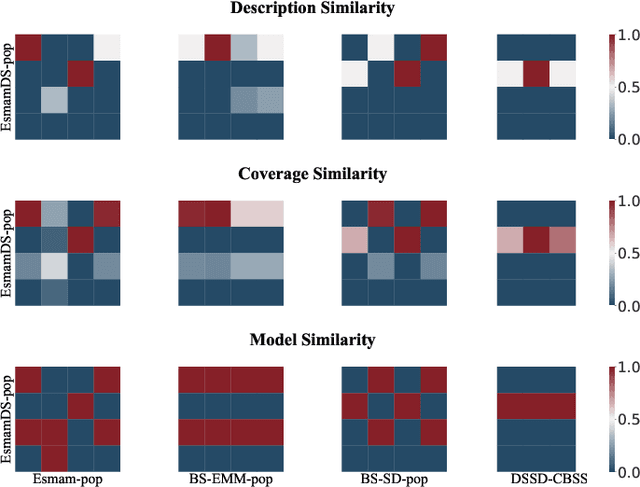
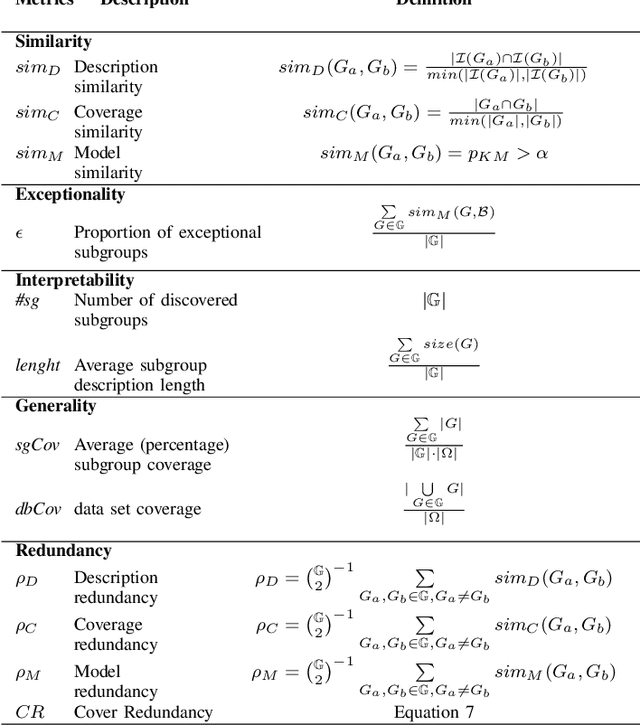
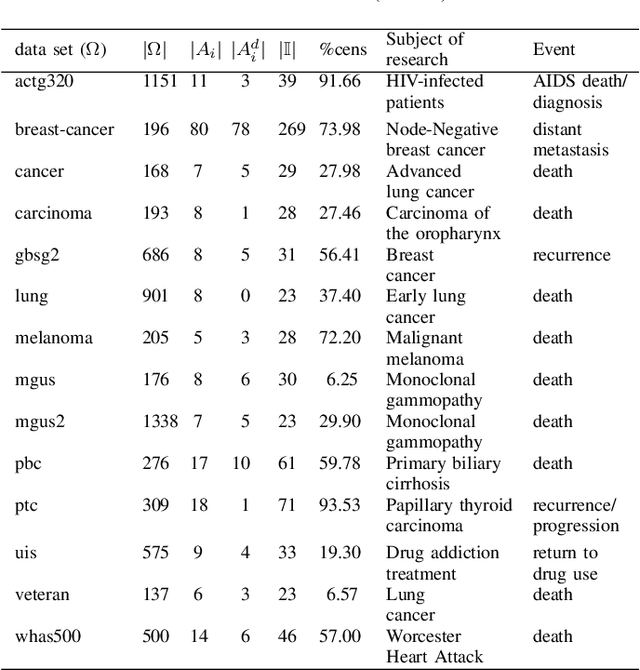
A variety of works in the literature strive to uncover the factors associated with survival behaviour. However, the computational tools to provide such information are global models designed to predict if or when a (survival) event will occur. When approaching the problem of explaining differences in survival behaviour, those approaches rely on (assumptions of) predictive features followed by risk stratification. In other words, they lack the ability to discover new information on factors related to survival. In contrast, we approach such a problem from the perspective of descriptive supervised pattern mining to discover local patterns associated with different survival behaviours. Hence, we introduce the EsmamDS algorithm: an Exceptional Model Mining framework to provide straightforward characterisations of subgroups presenting unusual survival models -- given by the Kaplan-Meier estimates. This work builds on the Esmam algorithm to address the problem of pattern redundancy and provide a more informative and diverse characterisation of survival behaviour.