 Add to Chrome
 Add to Firefox
 Add to Edge
Recognition of Daily Activities through Multi-Modal Deep Learning: A Video, Pose, and Object-Aware Approach for Ambient Assisted Living
Mar 04, 2026
Recognition of daily activities is a critical element for effective Ambient Assisted Living (AAL) systems, particularly to monitor the well-being and support the independence of older adults in indoor environments. However, developing robust activity recognition systems faces significant challenges, including intra-class variability, inter-class similarity, environmental variability, camera perspectives, and scene complexity. This paper presents a multi-modal approach for the recognition of activities of daily living tailored for older adults within AAL settings. The proposed system integrates visual information processed by a 3D Convolutional Neural Network (CNN) with 3D human pose data analyzed by a Graph Convolutional Network. Contextual information, derived from an object detection module, is fused with the 3D CNN features using a cross-attention mechanism to enhance recognition accuracy. This method is evaluated using the Toyota SmartHome dataset, which consists of real-world indoor activities. The results indicate that the proposed system achieves competitive classification accuracy for a range of daily activities, highlighting its potential as an essential component for advanced AAL monitoring solutions. This advancement supports the broader goal of developing intelligent systems that promote safety and autonomy among older adults.

A Review on Visual Privacy Preservation Techniques for Active and Assisted Living
Dec 17, 2021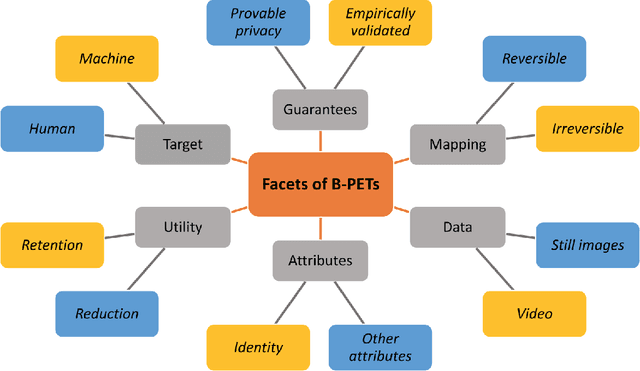
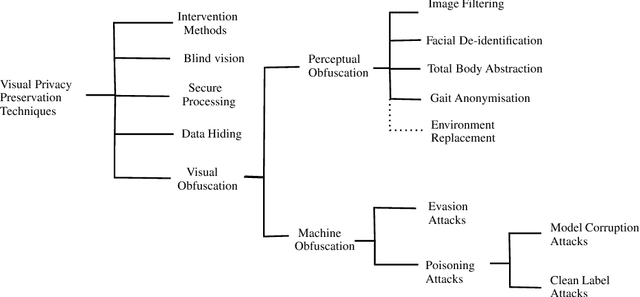
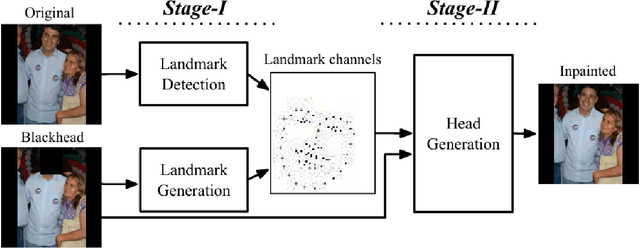
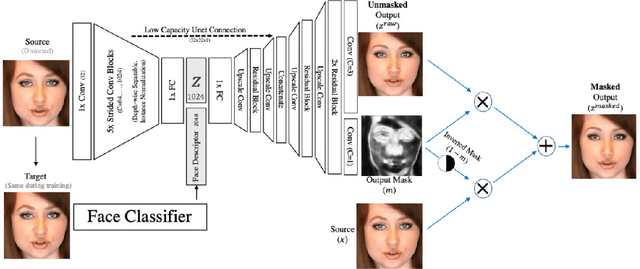
This paper reviews the state of the art in visual privacy protection techniques, with particular attention paid to techniques applicable to the field of active and assisted living (AAL). A novel taxonomy with which state-of-the-art visual privacy protection methods can be classified is introduced. Perceptual obfuscation methods, a category in the taxonomy, is highlighted. These are a category of visual privacy preservation techniques particularly relevant when considering scenarios that come under video-based AAL monitoring. Obfuscation against machine learning models is also explored. A high-level classification scheme of the different levels of privacy by design is connected to the proposed taxonomy of visual privacy preservation techniques. Finally, we note open questions that exist in the field and introduce the reader to some exciting avenues for future research in the area of visual privacy.