 Add to Chrome
 Add to Firefox
 Add to Edge
TranslatePsy-AfriSLM: High-Quality Data Scaling For Low-Resource Machine Translation
Aug 19, 2026
The rapid progress in Artificial Intelligence has largely bypassed African languages, creating a digital divide that limits AI adoption on the continent. Recent open-source LLMs systematically underperform on African machine translation, while the lack of large-scale, high-quality, open-source parallel data has constrained the development of competitive small language models (SLMs). We introduce *TranslatePsy-AfriSLM*, a collection of open-source MT resources for 19 Sub-Saharan African languages, including curated parallel data, African-specialized synthetic data, and a family of fine-tuned SLMs. Our empirical study shows that unified quality-estimation filtering removes up to 96% of training tokens without degrading quality, and that filtered synthetic data dominates the quality-efficiency Pareto frontier. Fine-tuned on the resulting data mixture, TranslatePsy-AfriSLM outperforms substantially larger systems, including TranslateGemma-27B and Qwen3.5-122B-A10B, with as few as 0.8B parameters.

Improving Robustness in Real-World Neural Machine Translation Engines
Jul 02, 2019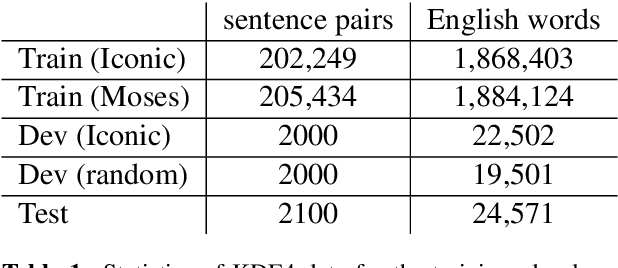
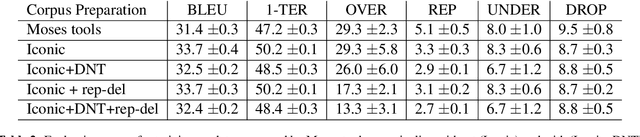
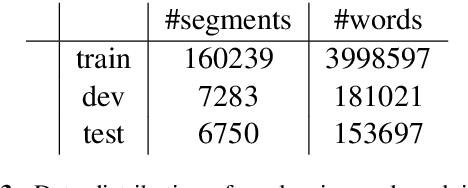
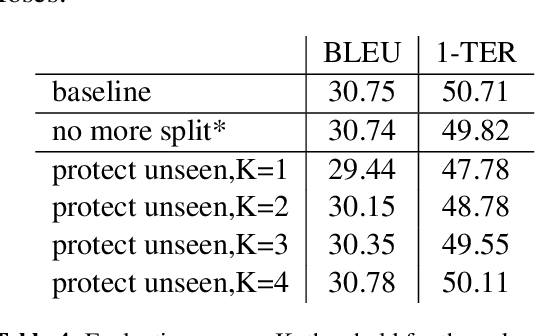
As a commercial provider of machine translation, we are constantly training engines for a variety of uses, languages, and content types. In each case, there can be many variables, such as the amount of training data available, and the quality requirements of the end user. These variables can have an impact on the robustness of Neural MT engines. On the whole, Neural MT cures many ills of other MT paradigms, but at the same time, it has introduced a new set of challenges to address. In this paper, we describe some of the specific issues with practical NMT and the approaches we take to improve model robustness in real-world scenarios.
MultiBooked: A Corpus of Basque and Catalan Hotel Reviews Annotated for Aspect-level Sentiment Classification
Mar 22, 2018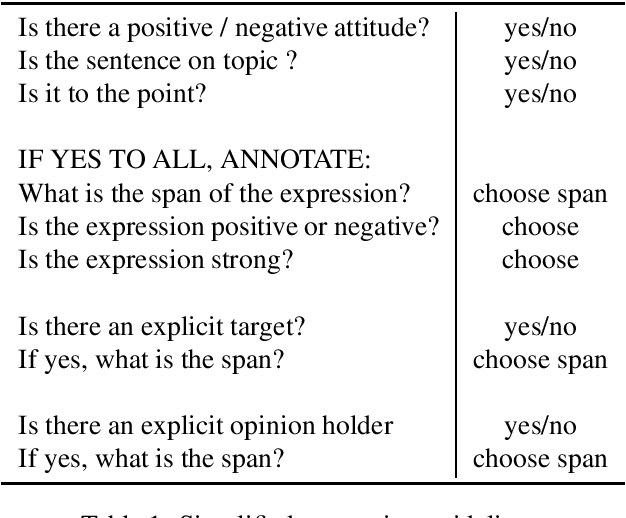
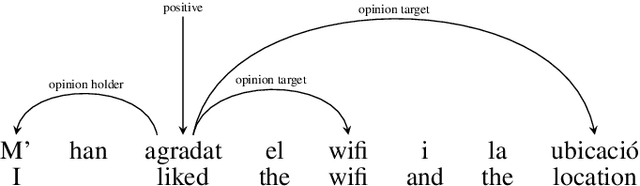
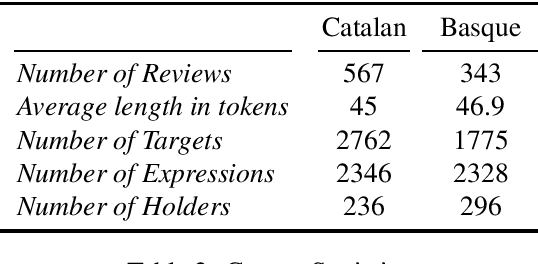
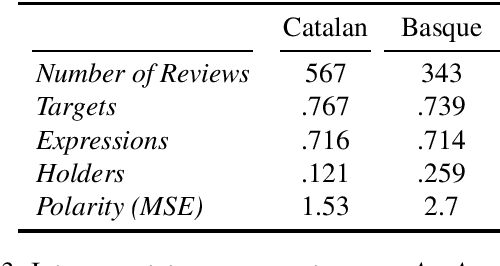
While sentiment analysis has become an established field in the NLP community, research into languages other than English has been hindered by the lack of resources. Although much research in multi-lingual and cross-lingual sentiment analysis has focused on unsupervised or semi-supervised approaches, these still require a large number of resources and do not reach the performance of supervised approaches. With this in mind, we introduce two datasets for supervised aspect-level sentiment analysis in Basque and Catalan, both of which are under-resourced languages. We provide high-quality annotations and benchmarks with the hope that they will be useful to the growing community of researchers working on these languages.