 Add to Chrome
 Add to Firefox
 Add to Edge
DiffusionPrint: Learning Generative Fingerprints for Diffusion-Based Inpainting Localization
Apr 14, 2026
Modern diffusion-based inpainting models pose significant challenges for image forgery localization (IFL), as their full regeneration pipelines reconstruct the entire image via a latent decoder, disrupting the camera-level noise patterns that existing forensic methods rely on. We propose DiffusionPrint, a patch-level contrastive learning framework that learns a forensic signal robust to the spectral distortions introduced by latent decoding. It exploits the fact that inpainted regions generated by the same model share a consistent generative fingerprint, using this as a self-supervisory signal. DiffusionPrint trains a convolutional backbone via a MoCo-style objective with cross-category hard negative mining and a generator-aware classification head, producing a forensic feature map that serves as a highly discriminative secondary modality in fusion-based IFL frameworks. Integrated into TruFor, MMFusion, and a lightweight fusion baseline, DiffusionPrint consistently improves localization across multiple generative models, with gains of up to +28% on mask types unseen during fine-tuning and confirmed generalization to unseen generative architectures. Code is available at https://github.com/mever-team/diffusionprint

TGIF2: Extended Text-Guided Inpainting Forgery Dataset & Benchmark
Mar 30, 2026Generative AI has made text-guided inpainting a powerful image editing tool, but at the same time a growing challenge for media forensics. Existing benchmarks, including our text-guided inpainting forgery (TGIF) dataset, show that image forgery localization (IFL) methods can localize manipulations in spliced images but struggle not in fully regenerated (FR) images, while synthetic image detection (SID) methods can detect fully regenerated images but cannot perform localization. With new generative inpainting models emerging and the open problem of localization in FR images remaining, updated datasets and benchmarks are needed. We introduce TGIF2, an extended version of TGIF, that captures recent advances in text-guided inpainting and enables a deeper analysis of forensic robustness. TGIF2 augments the original dataset with edits generated by FLUX.1 models, as well as with random non-semantic masks. Using the TGIF2 dataset, we conduct a forensic evaluation spanning IFL and SID, including fine-tuning IFL methods on FR images and generative super-resolution attacks. Our experiments show that both IFL and SID methods degrade on FLUX.1 manipulations, highlighting limited generalization. Additionally, while fine-tuning improves localization on FR images, evaluation with random non-semantic masks reveals object bias. Furthermore, generative super-resolution significantly weakens forensic traces, demonstrating that common image enhancement operations can undermine current forensic pipelines. In summary, TGIF2 provides an updated dataset and benchmark, which enables new insights into the challenges posed by modern inpainting and AI-based image enhancements. TGIF2 is available at https://github.com/IDLabMedia/tgif-dataset.
A Large-scale AI-generated Image Inpainting Benchmark
Feb 10, 2025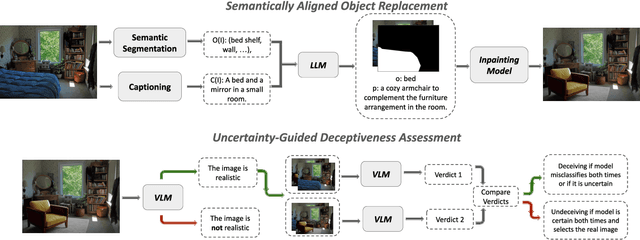
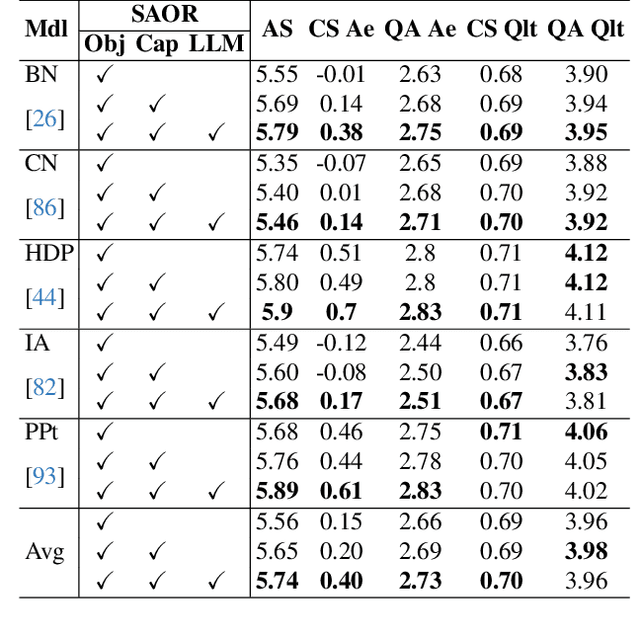
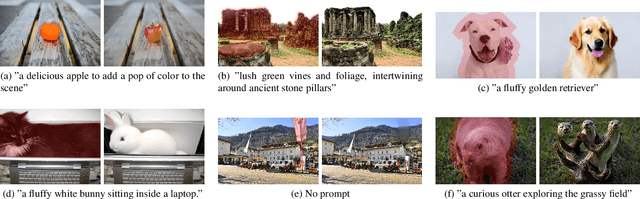
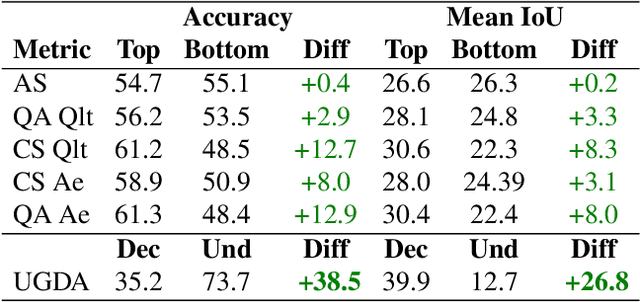
Recent advances in generative models enable highly realistic image manipulations, creating an urgent need for robust forgery detection methods. Current datasets for training and evaluating these methods are limited in scale and diversity. To address this, we propose a methodology for creating high-quality inpainting datasets and apply it to create DiQuID, comprising over 95,000 inpainted images generated from 78,000 original images sourced from MS-COCO, RAISE, and OpenImages. Our methodology consists of three components: (1) Semantically Aligned Object Replacement (SAOR) that identifies suitable objects through instance segmentation and generates contextually appropriate prompts, (2) Multiple Model Image Inpainting (MMII) that employs various state-of-the-art inpainting pipelines primarily based on diffusion models to create diverse manipulations, and (3) Uncertainty-Guided Deceptiveness Assessment (UGDA) that evaluates image realism through comparative analysis with originals. The resulting dataset surpasses existing ones in diversity, aesthetic quality, and technical quality. We provide comprehensive benchmarking results using state-of-the-art forgery detection methods, demonstrating the dataset's effectiveness in evaluating and improving detection algorithms. Through a human study with 42 participants on 1,000 images, we show that while humans struggle with images classified as deceiving by our methodology, models trained on our dataset maintain high performance on these challenging cases. Code and dataset are available at https://github.com/mever-team/DiQuID.