 Add to Chrome
 Add to Firefox
 Add to Edge
MENTIS: What Belief Changes Under Alignment? Measuring Multi-Scale Latent Torsion in Language Models
May 31, 2026
Preference alignment has substantially improved the observable behavior of large language models, yet it remains unclear what alignment changes internally. Aligned systems still fail under jailbreaks, prompt injection, and retrieval-time corruption, suggesting behavior-level evaluation alone is incomplete. Post-training should leave measurable traces in internal computation. We ask: when an instruction-tuned (IT) model becomes a preference-aligned (PA) model, what geometric structure changes, where do those changes concentrate, and how selectively do they vary across concepts, prompts, and model families? We introduce MENTIS, a geometry-first framework for measuring alignment-induced internal reorganization in paired checkpoints. MENTIS compares IT and PA models using a primary layerwise covariance-based torsion norm (T1), a secondary spectral torsion diagnostic (T2), and an Energy-Radiance-Activation measure (ERA) for depth localization. Across four 7-8B model pairs on LITMUS, our study reveals that alignment-induced change is selective rather than uniform: normative concepts exhibit larger torsion shifts than factual concepts on average; torsion is negatively correlated with contextual entropy; and peak effects localize to architecture-specific mid-to-late layers. The same pattern appears across word-level, prompt-level, and model-level analyses. These results suggest preference alignment leaves structured, depth-localized geometric signatures in internal computation beyond what behavior-level evaluation alone can reveal.

Data Fusion of Semantic and Depth Information in the Context of Object Detection
Dec 04, 2024
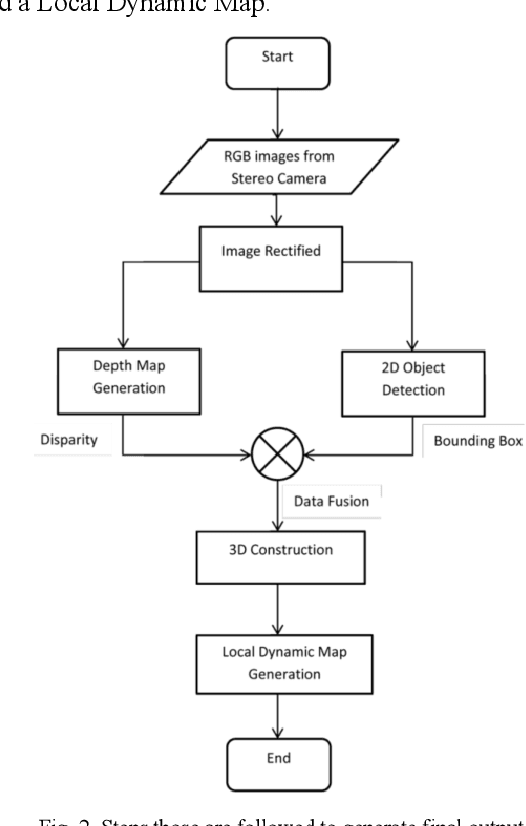
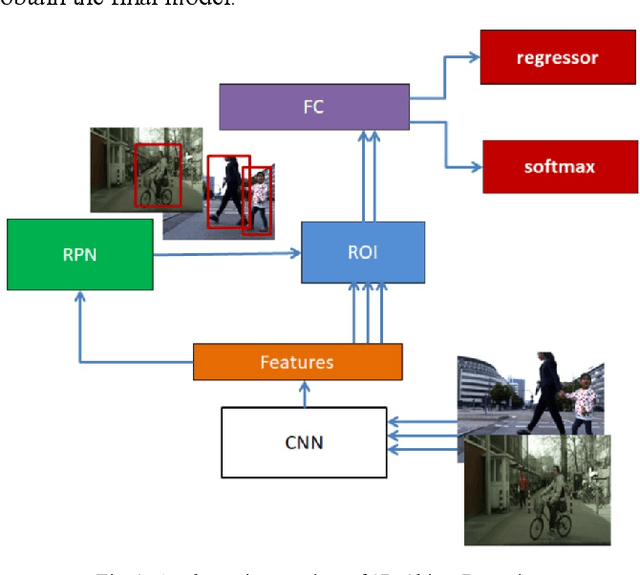
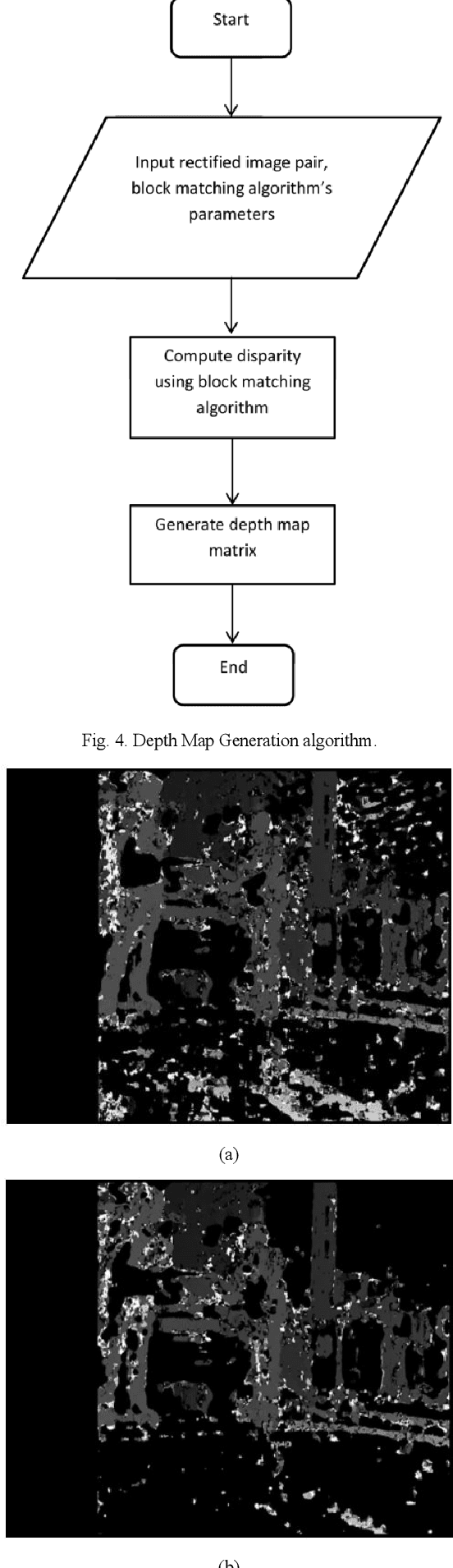
Considerable study has already been conducted regarding autonomous driving in modern era. An autonomous driving system must be extremely good at detecting objects surrounding the car to ensure safety. In this paper, classification, and estimation of an object's (pedestrian) position (concerning an ego 3D coordinate system) are studied and the distance between the ego vehicle and the object in the context of autonomous driving is measured. To classify the object, faster Region-based Convolution Neural Network (R-CNN) with inception v2 is utilized. First, a network is trained with customized dataset to estimate the reference position of objects as well as the distance from the vehicle. From camera calibration to computing the distance, cutting-edge technologies of computer vision algorithms in a series of processes are applied to generate a 3D reference point of the region of interest. The foremost step in this process is generating a disparity map using the concept of stereo vision.