 Add to Chrome
 Add to Firefox
 Add to Edge
Extracting Governing Equations from Latent Dynamics via Multi-View Contrastive Learning
Jun 11, 2026
Identifying latent dynamical systems from noisy, high-dimensional measurements is a central problem at the intersection of representation learning, system identification, and scientific discovery. We present DYSCO, a multi-view temporal contrastive learning algorithm that jointly recovers latent trajectories and the governing dynamics from such observations, by leveraging multiple independent noisy views of the same underlying process to disentangle signal from noise. By parameterizing the dynamics in a structured functional basis, our framework further enables symbolic recovery of the governing equations within an affine gauge. We offer theoretical guarantees for strong identification up to an affine indeterminacy, extending prior identifiability results to the realistic setting of noisy nonlinear observations. Empirically, we demonstrate accurate recovery of both latent trajectories and flow fields across a diverse set of dynamical regimes (e.g., chaotic, oscillatory, and metastable) under both Gaussian and Poisson observation noise, the latter being particularly relevant for neural recordings.

Prune and distill: similar reformatting of image information along rat visual cortex and deep neural networks
May 27, 2022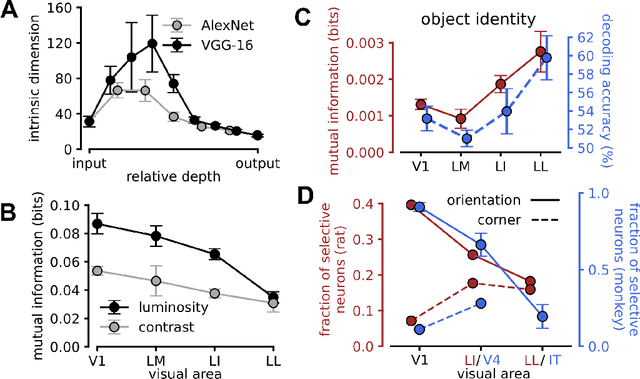
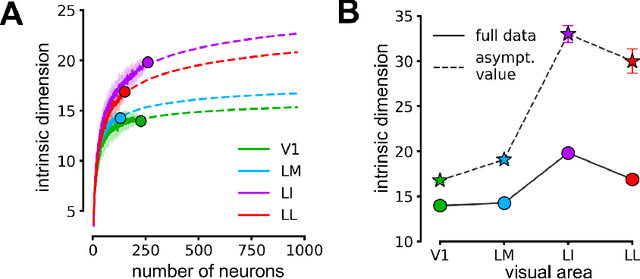
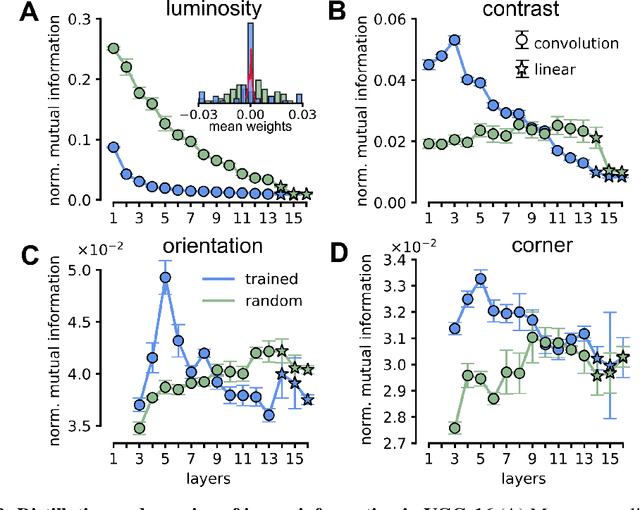
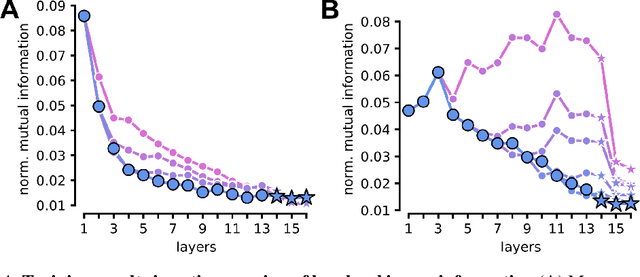
Visual object recognition has been extensively studied in both neuroscience and computer vision. Recently, the most popular class of artificial systems for this task, deep convolutional neural networks (CNNs), has been shown to provide excellent models for its functional analogue in the brain, the ventral stream in visual cortex. This has prompted questions on what, if any, are the common principles underlying the reformatting of visual information as it flows through a CNN or the ventral stream. Here we consider some prominent statistical patterns that are known to exist in the internal representations of either CNNs or the visual cortex and look for them in the other system. We show that intrinsic dimensionality (ID) of object representations along the rat homologue of the ventral stream presents two distinct expansion-contraction phases, as previously shown for CNNs. Conversely, in CNNs, we show that training results in both distillation and active pruning (mirroring the increase in ID) of low- to middle-level image information in single units, as representations gain the ability to support invariant discrimination, in agreement with previous observations in rat visual cortex. Taken together, our findings suggest that CNNs and visual cortex share a similarly tight relationship between dimensionality expansion/reduction of object representations and reformatting of image information.