 Add to Chrome
 Add to Firefox
 Add to Edge
VAAS: Vision-Attention Anomaly Scoring for Image Manipulation Detection in Digital Forensics
Dec 17, 2025
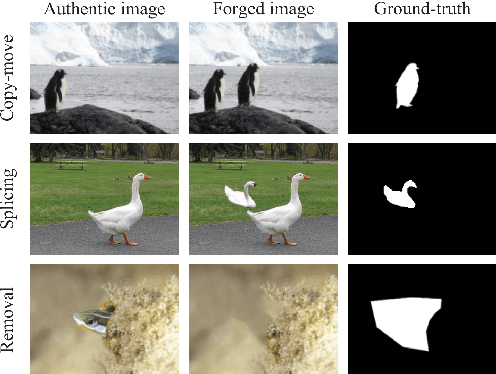
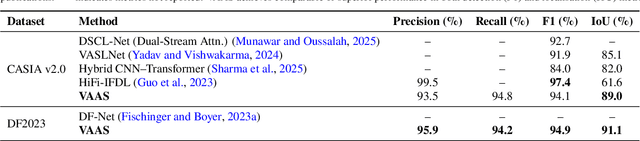
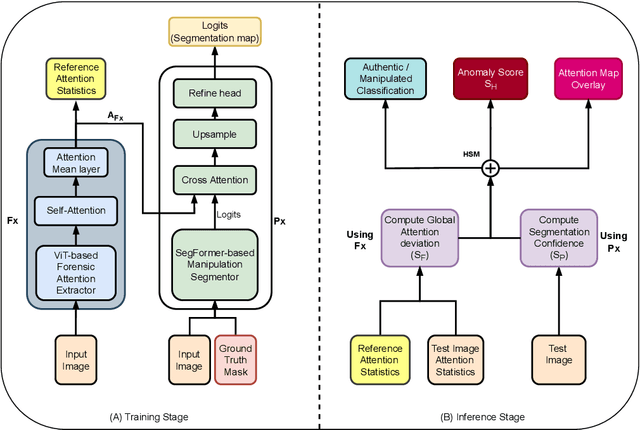
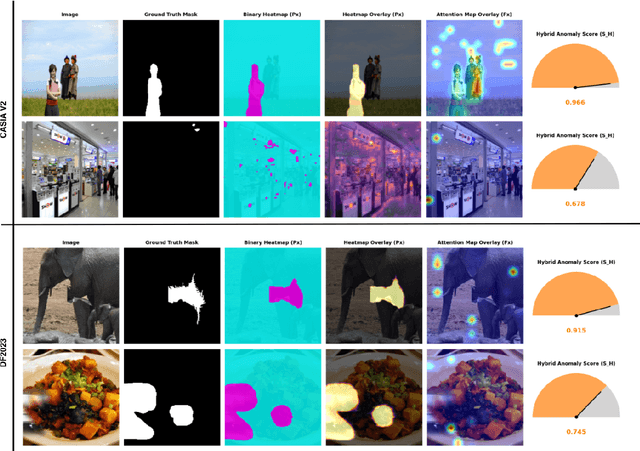
Recent advances in AI-driven image generation have introduced new challenges for verifying the authenticity of digital evidence in forensic investigations. Modern generative models can produce visually consistent forgeries that evade traditional detectors based on pixel or compression artefacts. Most existing approaches also lack an explicit measure of anomaly intensity, which limits their ability to quantify the severity of manipulation. This paper introduces Vision-Attention Anomaly Scoring (VAAS), a novel dual-module framework that integrates global attention-based anomaly estimation using Vision Transformers (ViT) with patch-level self-consistency scoring derived from SegFormer embeddings. The hybrid formulation provides a continuous and interpretable anomaly score that reflects both the location and degree of manipulation. Evaluations on the DF2023 and CASIA v2.0 datasets demonstrate that VAAS achieves competitive F1 and IoU performance, while enhancing visual explainability through attention-guided anomaly maps. The framework bridges quantitative detection with human-understandable reasoning, supporting transparent and reliable image integrity assessment. The source code for all experiments and corresponding materials for reproducing the results are available open source.

Computer Vision for Multimedia Geolocation in Human Trafficking Investigation: A Systematic Literature Review
Feb 23, 2024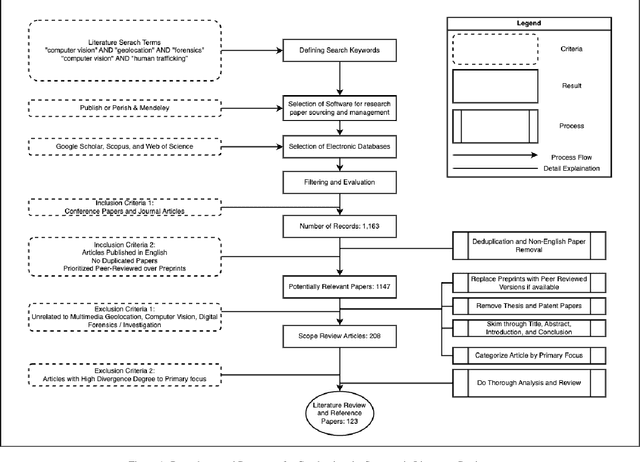
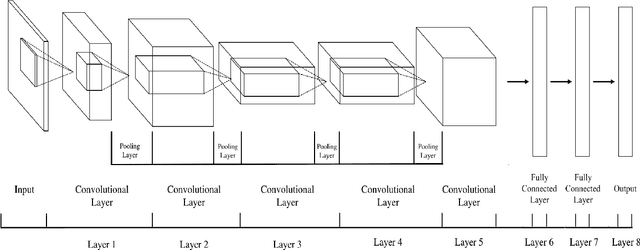
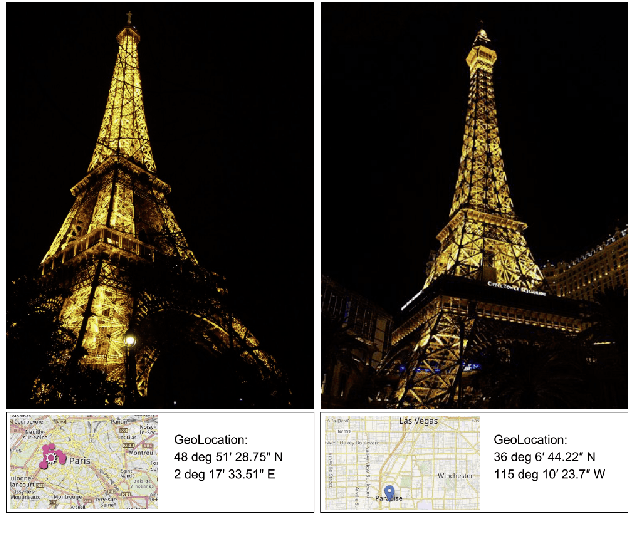
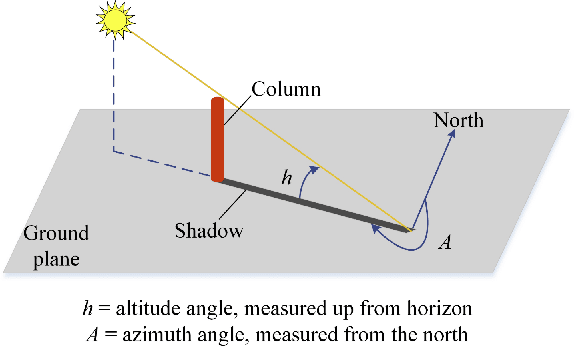
The task of multimedia geolocation is becoming an increasingly essential component of the digital forensics toolkit to effectively combat human trafficking, child sexual exploitation, and other illegal acts. Typically, metadata-based geolocation information is stripped when multimedia content is shared via instant messaging and social media. The intricacy of geolocating, geotagging, or finding geographical clues in this content is often overly burdensome for investigators. Recent research has shown that contemporary advancements in artificial intelligence, specifically computer vision and deep learning, show significant promise towards expediting the multimedia geolocation task. This systematic literature review thoroughly examines the state-of-the-art leveraging computer vision techniques for multimedia geolocation and assesses their potential to expedite human trafficking investigation. This includes a comprehensive overview of the application of computer vision-based approaches to multimedia geolocation, identifies their applicability in combating human trafficking, and highlights the potential implications of enhanced multimedia geolocation for prosecuting human trafficking. 123 articles inform this systematic literature review. The findings suggest numerous potential paths for future impactful research on the subject.