 Add to Chrome
 Add to Firefox
 Add to Edge
SCAR-GS: Spatial Context Attention for Residuals in Progressive Gaussian Splatting
Jan 07, 2026
Recent advances in 3D Gaussian Splatting have allowed for real-time, high-fidelity novel view synthesis. Nonetheless, these models have significant storage requirements for large and medium-sized scenes, hindering their deployment over cloud and streaming services. Some of the most recent progressive compression techniques for these models rely on progressive masking and scalar quantization techniques to reduce the bitrate of Gaussian attributes using spatial context models. While effective, scalar quantization may not optimally capture the correlations of high-dimensional feature vectors, which can potentially limit the rate-distortion performance. In this work, we introduce a novel progressive codec for 3D Gaussian Splatting that replaces traditional methods with a more powerful Residual Vector Quantization approach to compress the primitive features. Our key contribution is an auto-regressive entropy model, guided by a multi-resolution hash grid, that accurately predicts the conditional probability of each successive transmitted index, allowing for coarse and refinement layers to be compressed with high efficiency.

Two-stage Learning-to-Defer for Multi-Task Learning
Oct 21, 2024

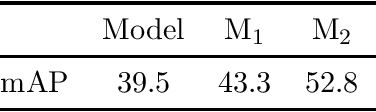
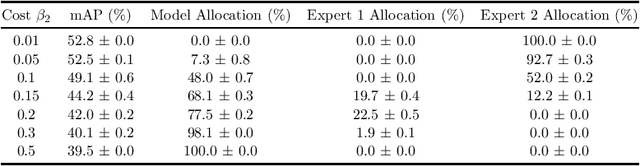
The Learning-to-Defer approach has been explored for classification and, more recently, regression tasks separately. Many contemporary learning tasks, however, involves both classification and regression components. In this paper, we introduce a Learning-to-Defer approach for multi-task learning that encompasses both classification and regression tasks. Our two-stage approach utilizes a rejector that defers decisions to the most accurate agent among a pre-trained joint classifier-regressor models and one or more external experts. We show that our surrogate loss is $(\mathcal{H}, \mathcal{F}, \mathcal{R})$ and Bayes--consistent, ensuring an effective approximation of the optimal solution. Additionally, we derive learning bounds that demonstrate the benefits of employing multiple confident experts along a rich model in a two-stage learning framework. Empirical experiments conducted on electronic health record analysis tasks underscore the performance enhancements achieved through our method.
Learning-to-Defer for Extractive Question Answering
Oct 21, 2024Pre-trained language models have profoundly impacted the field of extractive question-answering, leveraging large-scale textual corpora to enhance contextual language understanding. Despite their success, these models struggle in complex scenarios that demand nuanced interpretation or inferential reasoning beyond immediate textual cues. Furthermore, their size poses deployment challenges on resource-constrained devices. Addressing these limitations, we introduce an adapted two-stage Learning-to-Defer mechanism that enhances decision-making by enabling selective deference to human experts or larger models without retraining language models in the context of question-answering. This approach not only maintains computational efficiency but also significantly improves model reliability and accuracy in ambiguous contexts. We establish the theoretical soundness of our methodology by proving Bayes and $(\mathcal{H}, \mathcal{R})$--consistency of our surrogate loss function, guaranteeing the optimality of the final solution. Empirical evaluations on the SQuADv2 dataset illustrate performance gains from integrating human expertise and leveraging larger models. Our results further demonstrate that deferring a minimal number of queries allows the smaller model to achieve performance comparable to their larger counterparts while preserving computing efficiency, thus broadening the applicability of pre-trained language models in diverse operational environments.