 Add to Chrome
 Add to Firefox
 Add to Edge
Tracking Wildfire Assets with Commodity RFID and Gaussian Process Modeling
Dec 17, 2025
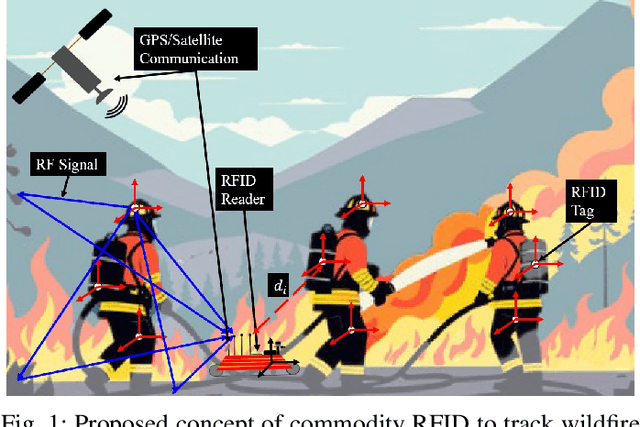
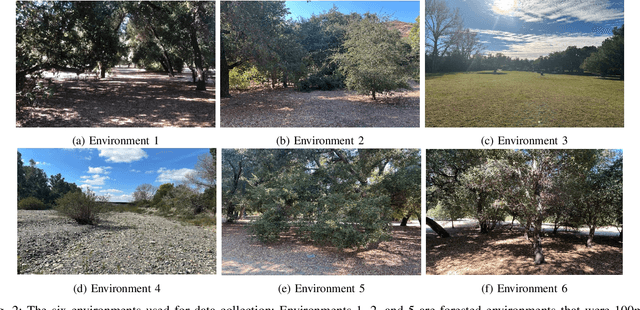
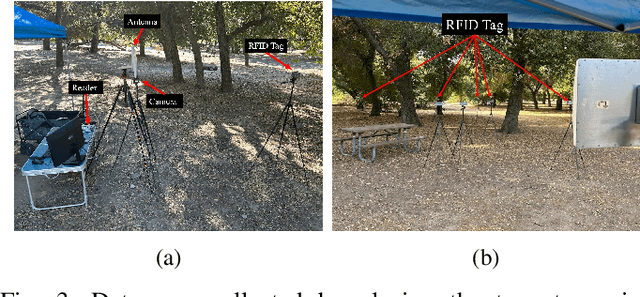
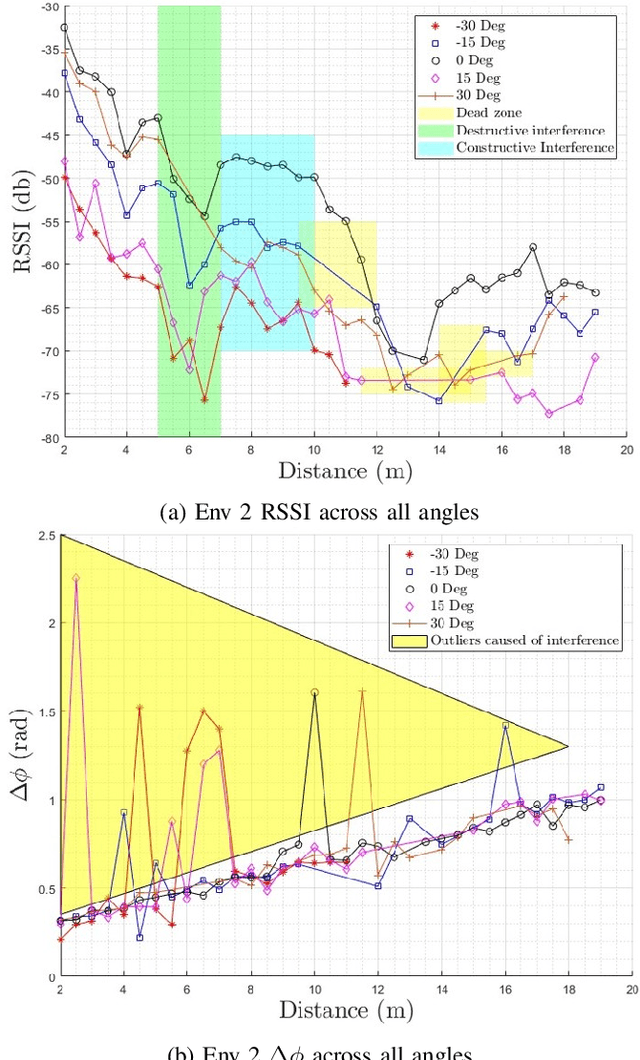
This paper presents a novel, cost-effective, and scalable approach to track numerous assets distributed in forested environments using commodity Radio Frequency Identification (RFID) targeting wildfire response applications. Commodity RFID systems suffer from poor tag localization when dispersed in forested environments due to signal attenuation, multi-path effects and environmental variability. Current methods to address this issue via fingerprinting rely on dispersing tags at known locations {\em a priori}. In this paper, we address the case when it is not possible to tag known locations and show that it is possible to localize tags to accuracies comparable to global positioning systems (GPS) without such a constraint. For this, we propose Gaussian Process to model various environments solely based on RF signal response signatures and without the aid of additional sensors such as global positioning GPS or cameras, and match an unknown RF to the closest match in a model dictionary. We utilize a new weighted log-likelihood method to associate an unknown environment with the closest environment in a dictionary of previously modeled environments, which is a crucial step in being able to use our approach. Our results show that it is possible to achieve localization accuracies of the order of GPS, but with passive commodity RFID, which will allow the tracking of dozens of wildfire assets within the vicinity of mobile readers at-a-time simultaneously, does not require known positions to be tagged {\em a priori}, and can achieve localization at a fraction of the cost compared to GPS.

Enhancing IoT Communication and Localization via Smarter Antenna
Oct 15, 2024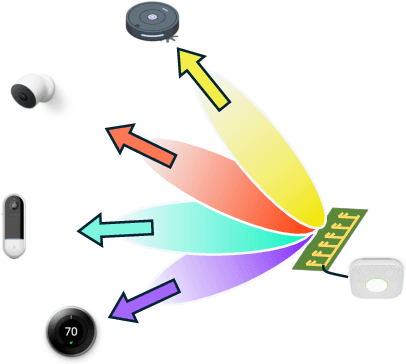

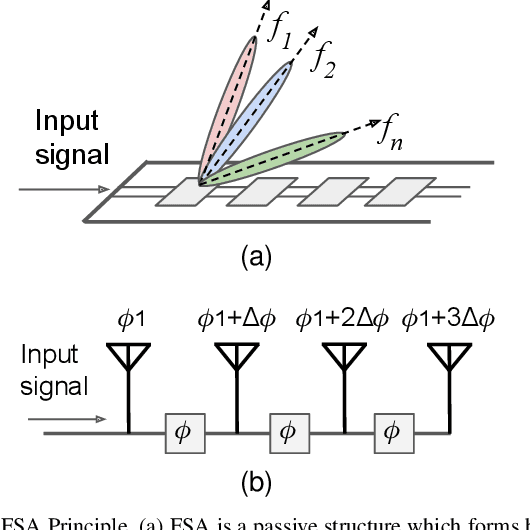
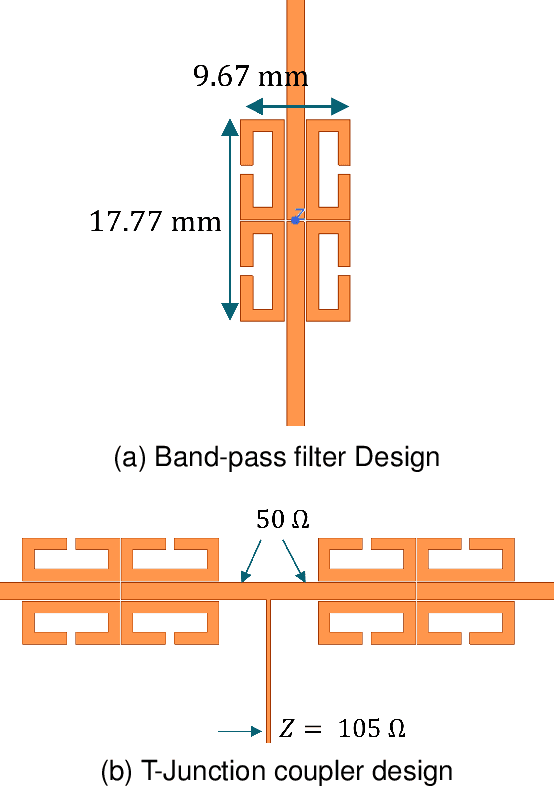
The convergence of sensing and communication functionalities is poised to become a pivotal feature of the sixth-generation (6G) wireless networks. This vision represents a paradigm shift in wireless network design, moving beyond mere communication to a holistic integration of sensing and communication capabilities, thereby further narrowing the gap between the physical and digital worlds. While Internet of Things (IoT) devices are integral to future wireless networks, their current capabilities in sensing and communication are constrained by their power and resource limitations. On one hand, their restricted power budget limits their transmission power, leading to reduced communication range and data rates. On the other hand, their limited hardware and processing abilities hinder the adoption of sophisticated sensing technologies, such as direction finding and localization. In this work, we introduce Wi-Pro, a system which seamlessly integrates today's WiFi protocol with smart antenna design to enhance the communication and sensing capabilities of existing IoT devices. This plug-and-play system can be easily installed by replacing the IoT device's antenna. Wi-Pro seamlessly integrates smart antenna hardware with current WiFi protocols, utilizing their inherent features to not only enhance communication but also to enable precise localization on low-cost IoT devices. Our evaluation results demonstrate that Wi-Pro achieves up to 150\% data rate improvement, up to five times range improvement, accurate direction finding, and localization on single-chain IoT devices.
mmWall: A Reconfigurable Metamaterial Surface for mmWave Networks
Feb 02, 2021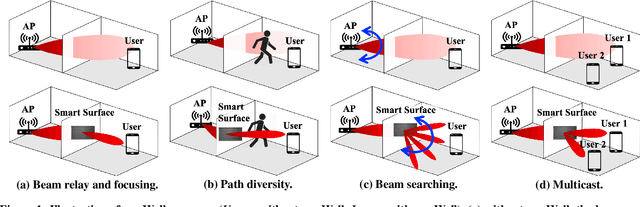
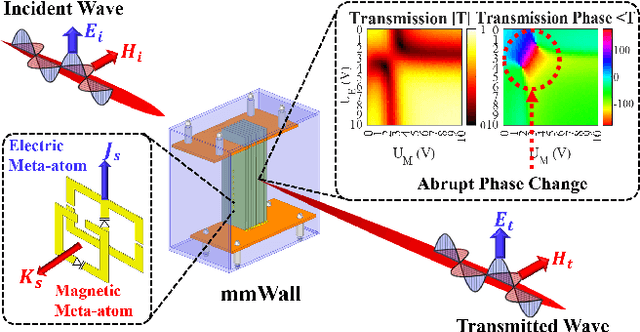
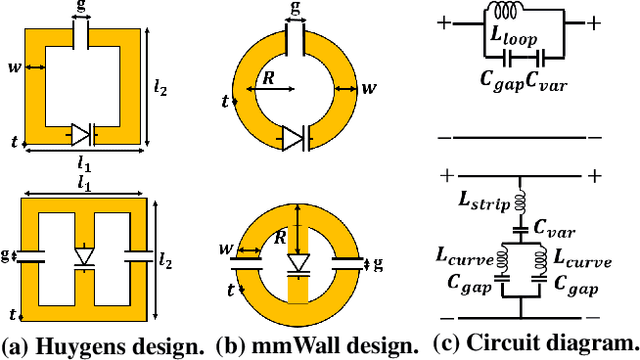
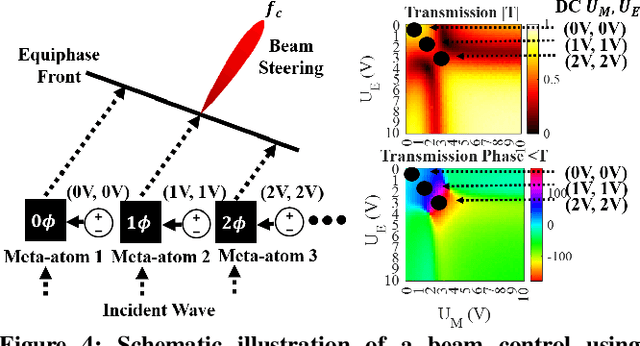
To support faster and more efficient networks, mobile operators and service providers are bringing 5G millimeter wave (mmWave) networks indoors. However, due to their high directionality, mmWave links are extremely vulnerable to blockage by walls and human mobility. To address these challenges, we exploit advances in artificially engineered metamaterials, introducing a wall-mounted smart metasurface, called mmWall, that enables a fast mmWave beam relay through the wall and redirects the beam power to another direction when a human body blocks a line-of-sight path. Moreover, our mmWall supports multiple users and fast beam alignment by generating multi-armed beams. We sketch the design of a real-time system by considering (1) how to design a programmable, metamaterial-based surface that refracts the incoming signal to one or more arbitrary directions, and (2) how to split an incoming mmWave beam into multiple outgoing beams and arbitrarily control the beam energy between these beams. Preliminary results show the mmWall metasurface steers the outgoing beam in a full 360-degrees, with an 89.8% single-beam efficiency and 74.5% double-beam efficiency.