 Add to Chrome
 Add to Firefox
 Add to Edge
ThreadSumm: Summarization of Nested Discourse Threads Using Tree of Thoughts
Apr 19, 2026
Summarizing deeply nested discussion threads requires handling interleaved replies, quotes, and overlapping topics, which standard LLM summarizers struggle to capture reliably. We introduce ThreadSumm, a multi-stage LLM framework that treats thread summarization as a hierarchical reasoning problem over explicit aspect and content unit representations. Our method first performs content planning via LLM-based extraction of discourse aspects and Atomic Content Units, then applies sentence ordering to construct thread-aware sequences that surface multiple viewpoints rather than a single linear strand. On top of these interpretable units, ThreadSumm employs a Tree of Thoughts search that generates and scores multiple paragraph candidates, jointly optimizing coherence and coverage within a unified search space. With this multi-proposal and iterative refinement design, we show improved performance in generating logically structured summaries compared to existing baselines, while achieving higher aspect retention and opinion coverage in nested discussions.

Understanding Position Bias Effects on Fairness in Social Multi-Document Summarization
May 03, 2024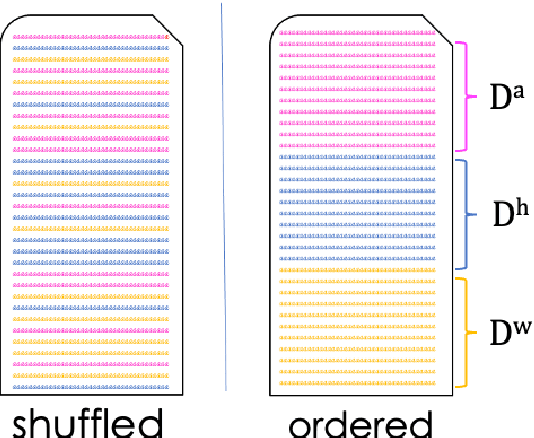
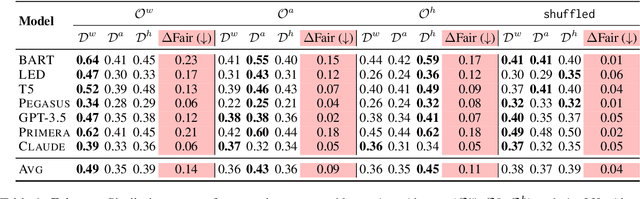

Text summarization models have typically focused on optimizing aspects of quality such as fluency, relevance, and coherence, particularly in the context of news articles. However, summarization models are increasingly being used to summarize diverse sources of text, such as social media data, that encompass a wide demographic user base. It is thus crucial to assess not only the quality of the generated summaries, but also the extent to which they can fairly represent the opinions of diverse social groups. Position bias, a long-known issue in news summarization, has received limited attention in the context of social multi-document summarization. We deeply investigate this phenomenon by analyzing the effect of group ordering in input documents when summarizing tweets from three distinct linguistic communities: African-American English, Hispanic-aligned Language, and White-aligned Language. Our empirical analysis shows that although the textual quality of the summaries remains consistent regardless of the input document order, in terms of fairness, the results vary significantly depending on how the dialect groups are presented in the input data. Our results suggest that position bias manifests differently in social multi-document summarization, severely impacting the fairness of summarization models.