 Add to Chrome
 Add to Firefox
 Add to Edge
Semi-Supervised Domain Adaptation for Wildfire Detection
Apr 02, 2024

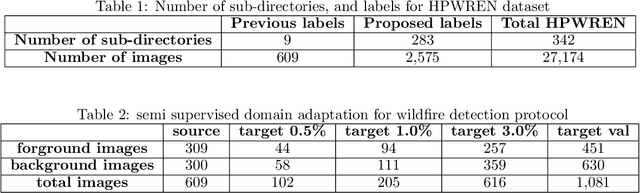


Recently, both the frequency and intensity of wildfires have increased worldwide, primarily due to climate change. In this paper, we propose a novel protocol for wildfire detection, leveraging semi-supervised Domain Adaptation for object detection, accompanied by a corresponding dataset designed for use by both academics and industries. Our dataset encompasses 30 times more diverse labeled scenes for the current largest benchmark wildfire dataset, HPWREN, and introduces a new labeling policy for wildfire detection. Inspired by CoordConv, we propose a robust baseline, Location-Aware Object Detection for Semi-Supervised Domain Adaptation (LADA), utilizing a teacher-student based framework capable of extracting translational variance features characteristic of wildfires. With only using 1% target domain labeled data, our framework significantly outperforms our source-only baseline by a notable margin of 3.8% in mean Average Precision on the HPWREN wildfire dataset. Our dataset is available at https://github.com/BloomBerry/LADA.

Deep Support Vectors
Mar 26, 2024

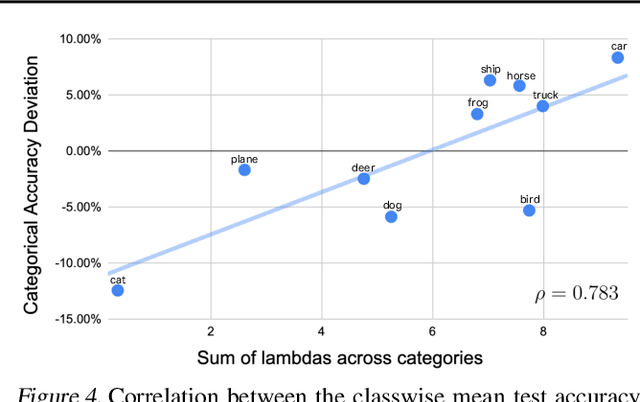

While the success of deep learning is commonly attributed to its theoretical equivalence with Support Vector Machines (SVM), the practical implications of this relationship have not been thoroughly explored. This paper pioneers an exploration in this domain, specifically focusing on the identification of Deep Support Vectors (DSVs) within deep learning models. We introduce the concept of DeepKKT conditions, an adaptation of the traditional Karush-Kuhn-Tucker (KKT) conditions tailored for deep learning. Through empirical investigations, we illustrate that DSVs exhibit similarities to support vectors in SVM, offering a tangible method to interpret the decision-making criteria of models. Additionally, our findings demonstrate that models can be effectively reconstructed using DSVs, resembling the process in SVM. The code will be available.
Harmonizing Visual and Textual Embeddings for Zero-Shot Text-to-Image Customization
Mar 21, 2024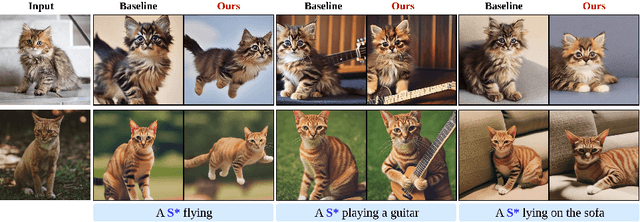
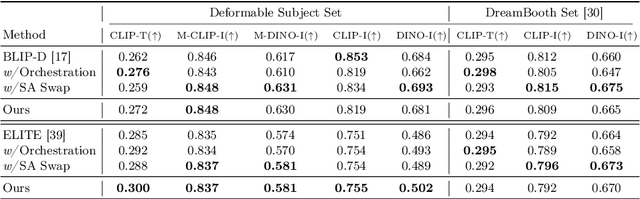
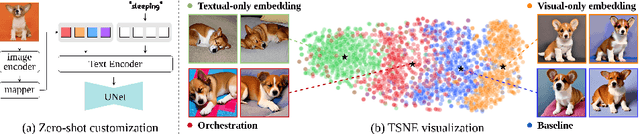
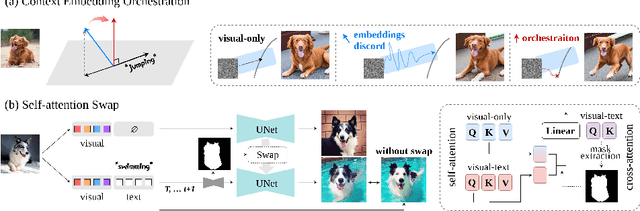
In a surge of text-to-image (T2I) models and their customization methods that generate new images of a user-provided subject, current works focus on alleviating the costs incurred by a lengthy per-subject optimization. These zero-shot customization methods encode the image of a specified subject into a visual embedding which is then utilized alongside the textual embedding for diffusion guidance. The visual embedding incorporates intrinsic information about the subject, while the textual embedding provides a new, transient context. However, the existing methods often 1) are significantly affected by the input images, eg., generating images with the same pose, and 2) exhibit deterioration in the subject's identity. We first pin down the problem and show that redundant pose information in the visual embedding interferes with the textual embedding containing the desired pose information. To address this issue, we propose orthogonal visual embedding which effectively harmonizes with the given textual embedding. We also adopt the visual-only embedding and inject the subject's clear features utilizing a self-attention swap. Our results demonstrate the effectiveness and robustness of our method, which offers highly flexible zero-shot generation while effectively maintaining the subject's identity.
HourglassNeRF: Casting an Hourglass as a Bundle of Rays for Few-shot Neural Rendering
Mar 16, 2024Recent advancements in the Neural Radiance Field (NeRF) have bolstered its capabilities for novel view synthesis, yet its reliance on dense multi-view training images poses a practical challenge. Addressing this, we propose HourglassNeRF, an effective regularization-based approach with a novel hourglass casting strategy. Our proposed hourglass is conceptualized as a bundle of additional rays within the area between the original input ray and its corresponding reflection ray, by featurizing the conical frustum via Integrated Positional Encoding (IPE). This design expands the coverage of unseen views and enables an adaptive high-frequency regularization based on target pixel photo-consistency. Furthermore, we propose luminance consistency regularization based on the Lambertian assumption, which is known to be effective for training a set of augmented rays under the few-shot setting. Leveraging the inherent property of a Lambertian surface, which retains consistent luminance irrespective of the viewing angle, we assume our proposed hourglass as a collection of flipped diffuse reflection rays and enhance the luminance consistency between the original input ray and its corresponding hourglass, resulting in more physically grounded training framework and performance improvement. Our HourglassNeRF outperforms its baseline and achieves competitive results on multiple benchmarks with sharply rendered fine details. The code will be available.
Mitigating the Bias in the Model for Continual Test-Time Adaptation
Mar 02, 2024
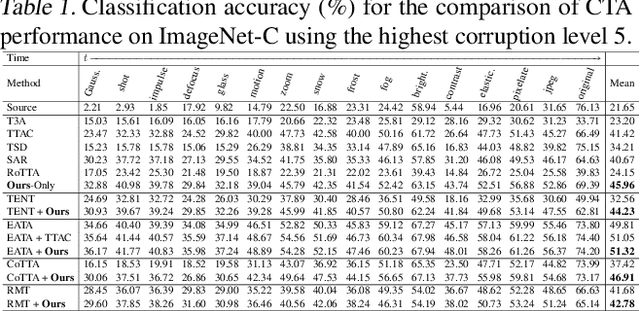
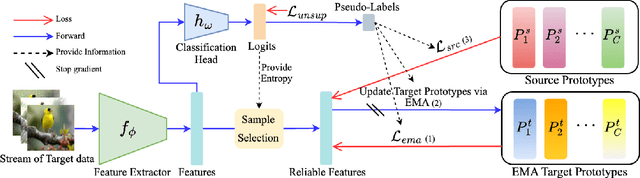
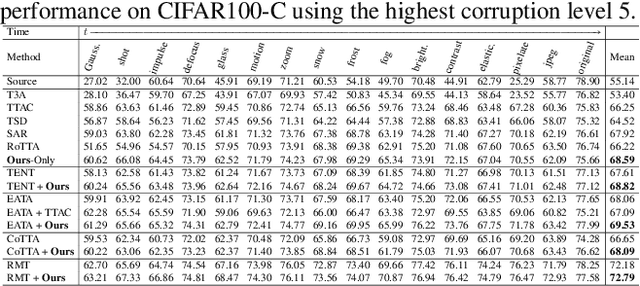
Continual Test-Time Adaptation (CTA) is a challenging task that aims to adapt a source pre-trained model to continually changing target domains. In the CTA setting, a model does not know when the target domain changes, thus facing a drastic change in the distribution of streaming inputs during the test-time. The key challenge is to keep adapting the model to the continually changing target domains in an online manner. We find that a model shows highly biased predictions as it constantly adapts to the chaining distribution of the target data. It predicts certain classes more often than other classes, making inaccurate over-confident predictions. This paper mitigates this issue to improve performance in the CTA scenario. To alleviate the bias issue, we make class-wise exponential moving average target prototypes with reliable target samples and exploit them to cluster the target features class-wisely. Moreover, we aim to align the target distributions to the source distribution by anchoring the target feature to its corresponding source prototype. With extensive experiments, our proposed method achieves noteworthy performance gain when applied on top of existing CTA methods without substantial adaptation time overhead.
Respect the model: Fine-grained and Robust Explanation with Sharing Ratio Decomposition
Jan 25, 2024


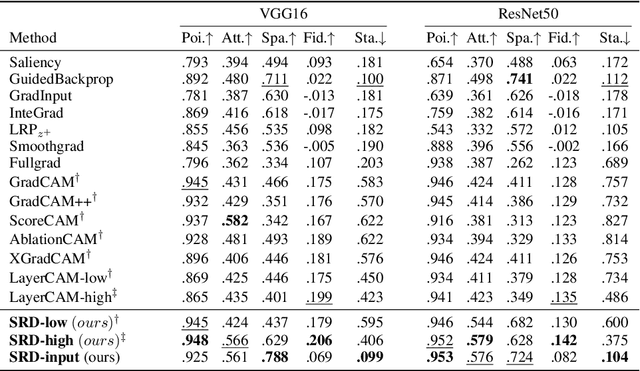
The truthfulness of existing explanation methods in authentically elucidating the underlying model's decision-making process has been questioned. Existing methods have deviated from faithfully representing the model, thus susceptible to adversarial attacks. To address this, we propose a novel eXplainable AI (XAI) method called SRD (Sharing Ratio Decomposition), which sincerely reflects the model's inference process, resulting in significantly enhanced robustness in our explanations. Different from the conventional emphasis on the neuronal level, we adopt a vector perspective to consider the intricate nonlinear interactions between filters. We also introduce an interesting observation termed Activation-Pattern-Only Prediction (APOP), letting us emphasize the importance of inactive neurons and redefine relevance encapsulating all relevant information including both active and inactive neurons. Our method, SRD, allows for the recursive decomposition of a Pointwise Feature Vector (PFV), providing a high-resolution Effective Receptive Field (ERF) at any layer.
Any-Way Meta Learning
Jan 10, 2024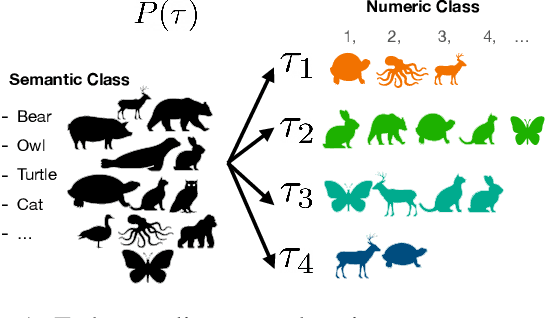
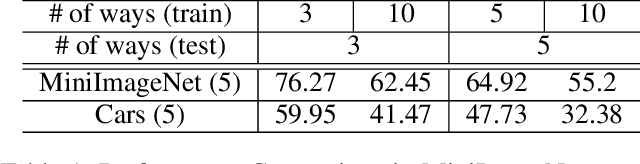
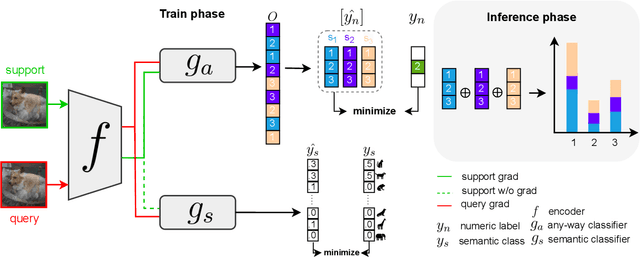
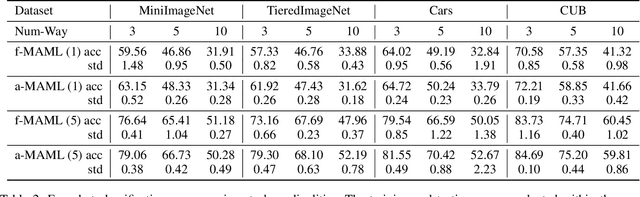
Although meta-learning seems promising performance in the realm of rapid adaptability, it is constrained by fixed cardinality. When faced with tasks of varying cardinalities that were unseen during training, the model lacks its ability. In this paper, we address and resolve this challenge by harnessing `label equivalence' emerged from stochastic numeric label assignments during episodic task sampling. Questioning what defines ``true" meta-learning, we introduce the ``any-way" learning paradigm, an innovative model training approach that liberates model from fixed cardinality constraints. Surprisingly, this model not only matches but often outperforms traditional fixed-way models in terms of performance, convergence speed, and stability. This disrupts established notions about domain generalization. Furthermore, we argue that the inherent label equivalence naturally lacks semantic information. To bridge this semantic information gap arising from label equivalence, we further propose a mechanism for infusing semantic class information into the model. This would enhance the model's comprehension and functionality. Experiments conducted on renowned architectures like MAML and ProtoNet affirm the effectiveness of our method.
What, How, and When Should Object Detectors Update in Continually Changing Test Domains?
Dec 12, 2023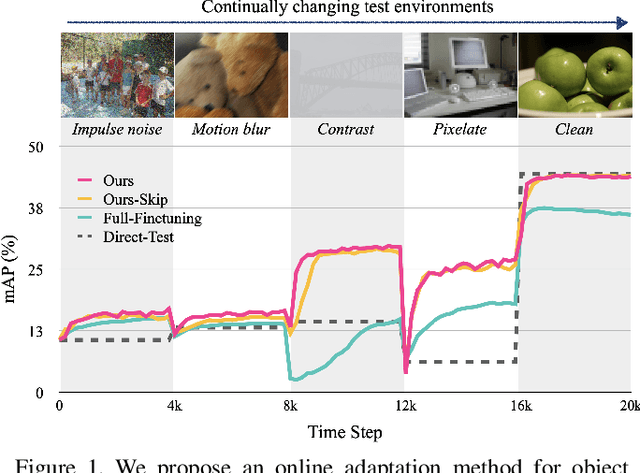
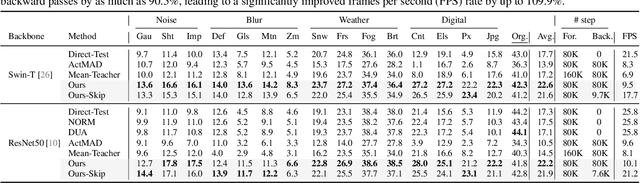
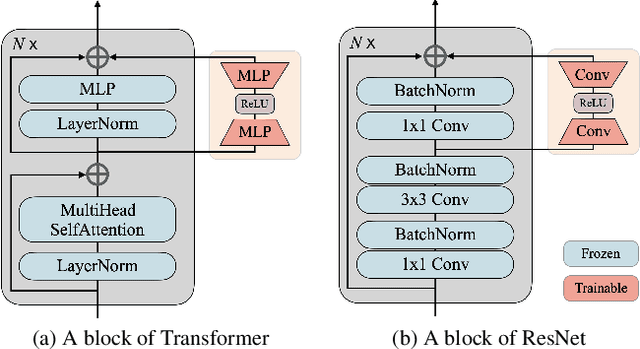
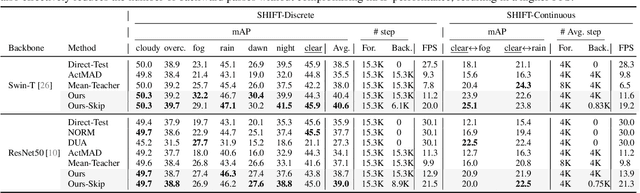
It is a well-known fact that the performance of deep learning models deteriorates when they encounter a distribution shift at test time. Test-time adaptation (TTA) algorithms have been proposed to adapt the model online while inferring test data. However, existing research predominantly focuses on classification tasks through the optimization of batch normalization layers or classification heads, but this approach limits its applicability to various model architectures like Transformers and makes it challenging to apply to other tasks, such as object detection. In this paper, we propose a novel online adaption approach for object detection in continually changing test domains, considering which part of the model to update, how to update it, and when to perform the update. By introducing architecture-agnostic and lightweight adaptor modules and only updating these while leaving the pre-trained backbone unchanged, we can rapidly adapt to new test domains in an efficient way and prevent catastrophic forgetting. Furthermore, we present a practical and straightforward class-wise feature aligning method for object detection to resolve domain shifts. Additionally, we enhance efficiency by determining when the model is sufficiently adapted or when additional adaptation is needed due to changes in the test distribution. Our approach surpasses baselines on widely used benchmarks, achieving improvements of up to 4.9\%p and 7.9\%p in mAP for COCO $\rightarrow$ COCO-corrupted and SHIFT, respectively, while maintaining about 20 FPS or higher.
Open Domain Generalization with a Single Network by Regularization Exploiting Pre-trained Features
Dec 08, 2023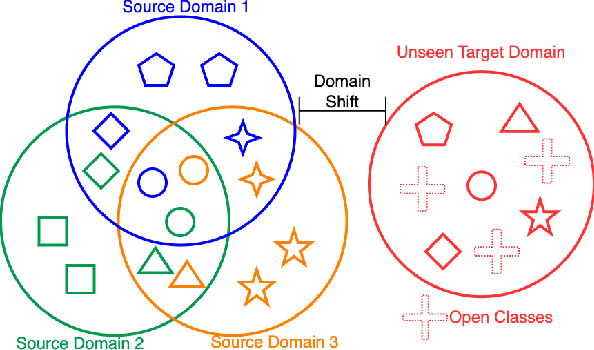

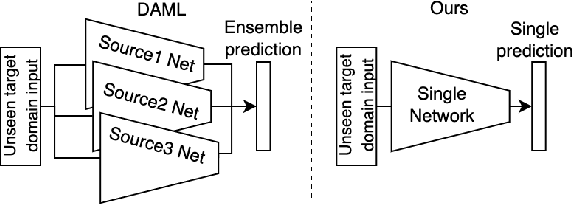
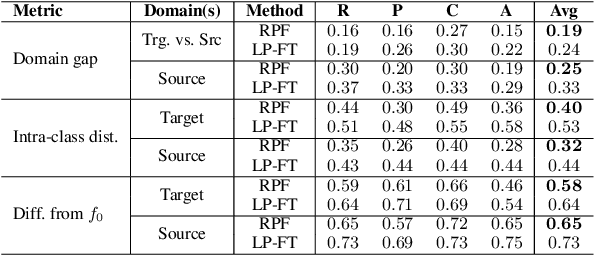
Open Domain Generalization (ODG) is a challenging task as it not only deals with distribution shifts but also category shifts between the source and target datasets. To handle this task, the model has to learn a generalizable representation that can be applied to unseen domains while also identify unknown classes that were not present during training. Previous work has used multiple source-specific networks, which involve a high computation cost. Therefore, this paper proposes a method that can handle ODG using only a single network. The proposed method utilizes a head that is pre-trained by linear-probing and employs two regularization terms, each targeting the regularization of feature extractor and the classification head, respectively. The two regularization terms fully utilize the pre-trained features and collaborate to modify the head of the model without excessively altering the feature extractor. This ensures a smoother softmax output and prevents the model from being biased towards the source domains. The proposed method shows improved adaptability to unseen domains and increased capability to detect unseen classes as well. Extensive experiments show that our method achieves competitive performance in several benchmarks. We also justify our method with careful analysis of the effect on the logits, features, and the head.
SAVE: Protagonist Diversification with Structure Agnostic Video Editing
Dec 05, 2023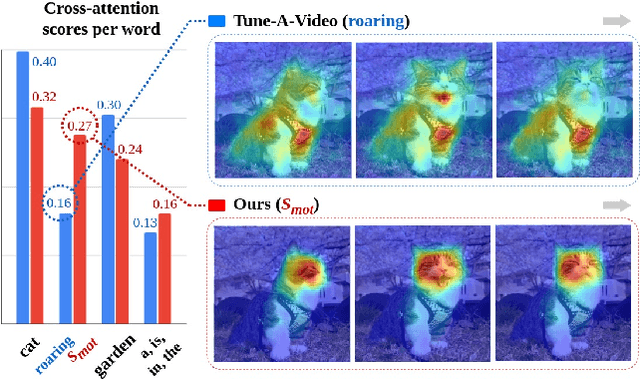
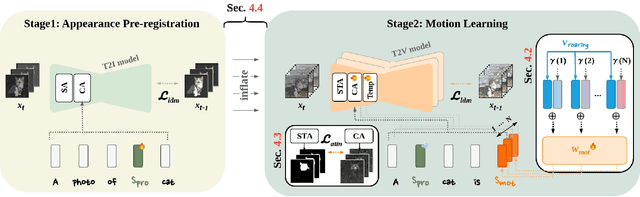
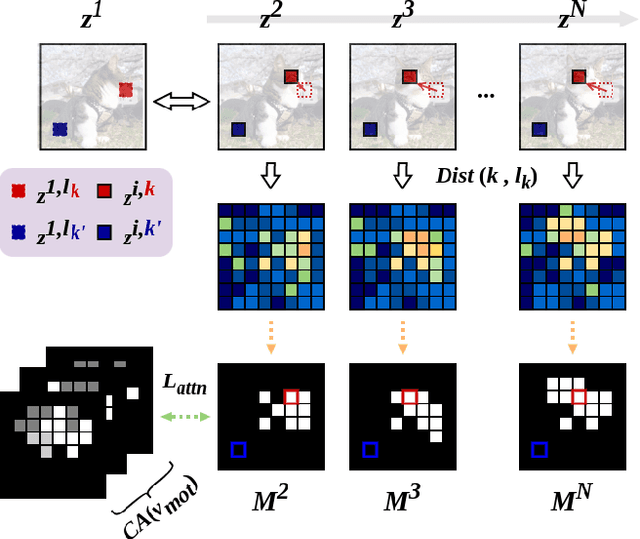
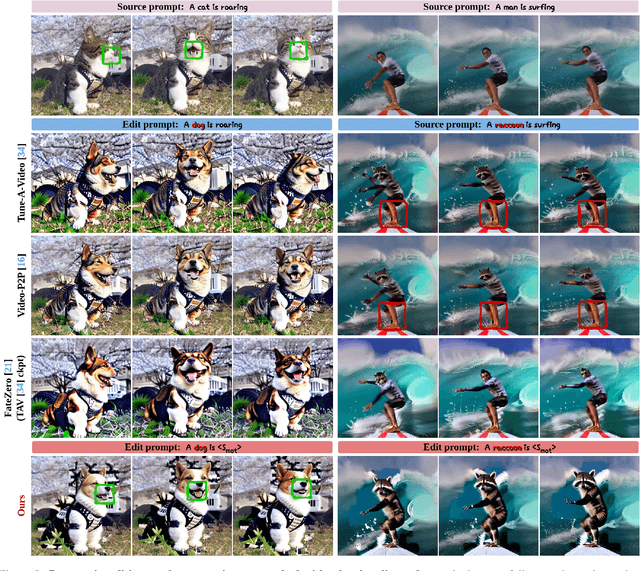
Driven by the upsurge progress in text-to-image (T2I) generation models, text-to-video (T2V) generation has experienced a significant advance as well. Accordingly, tasks such as modifying the object or changing the style in a video have been possible. However, previous works usually work well on trivial and consistent shapes, and easily collapse on a difficult target that has a largely different body shape from the original one. In this paper, we spot the bias problem in the existing video editing method that restricts the range of choices for the new protagonist and attempt to address this issue using the conventional image-level personalization method. We adopt motion personalization that isolates the motion from a single source video and then modifies the protagonist accordingly. To deal with the natural discrepancy between image and video, we propose a motion word with an inflated textual embedding to properly represent the motion in a source video. We also regulate the motion word to attend to proper motion-related areas by introducing a novel pseudo optical flow, efficiently computed from the pre-calculated attention maps. Finally, we decouple the motion from the appearance of the source video with an additional pseudo word. Extensive experiments demonstrate the editing capability of our method, taking a step toward more diverse and extensive video editing.