 Add to Chrome
 Add to Firefox
 Add to Edge
Where Does AI Leave a Footprint? Children's Reasoning About AI's Environmental Costs
Mar 28, 2026
Two of the most socially consequential issues facing today's children are the rise of artificial intelligence (AI) and the rapid changes to the earth's climate. Both issues are complex and contested, and they are linked through the notable environmental costs of AI use. Using a systems thinking framework, we developed an interactive system called Ecoprompt to help children reason about the environmental impact of AI. EcoPrompt combines a prompt-level environmental footprint calculator with a simulation game that challenges players to reason about the impact of AI use on natural resources that the player manages. We evaluated the system through two participatory design sessions with 16 children ages 6-12. Our findings surfaced children's perspectives on societal and environmental tradeoffs of AI use, as well as their sense of agency and responsibility. Taken together, these findings suggest opportunities for broadening AI literacy to include systems-level reasoning about AI's environmental impact.

Designing Games for Enabling Co-creation with Social Agents
May 01, 2021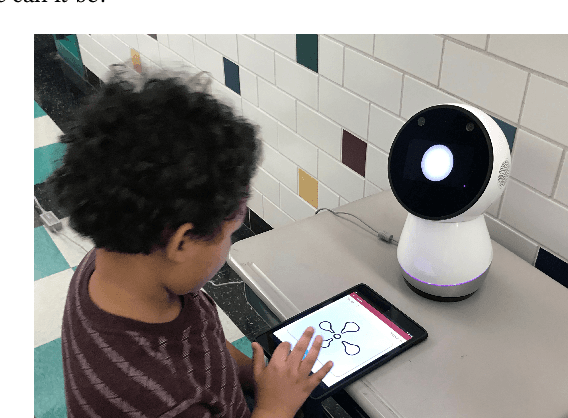
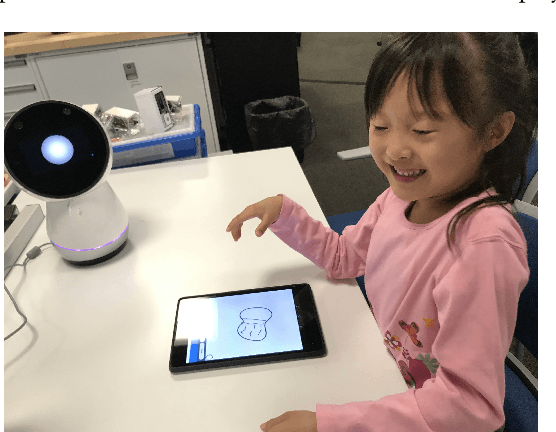
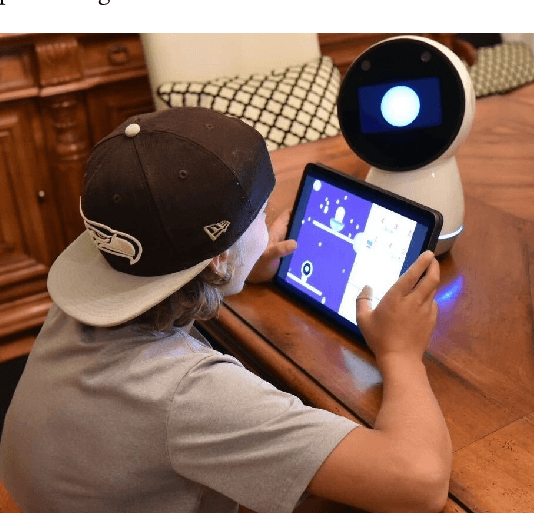
Digital tools have long been used for supporting children's creativity. Digital games that allow children to create artifacts and express themselves in a playful environment serve as efficient Creativity Support Tools (or CSTs). Creativity is also scaffolded by social interactions with others in their environment. In our work, we explore the use of game-based interactions with a social agent to scaffold children's creative expression as game players. We designed three collaborative games and play-tested with 146 5-10 year old children played with the social robot Jibo, which affords three different kinds of creativity: verbal creativity, figural creativity and divergent thinking during creative problem solving. In this paper, we reflect on game mechanic practices that we incorporated to design for stimulating creativity in children. These strategies may be valuable to game designers and HCI researchers designing games and social agents for supporting children's creativity.