 Add to Chrome
 Add to Firefox
 Add to Edge
Multi-cancer detection using a computationally efficient CNN with transfer learning
Jun 21, 2026
This study introduces a computationally efficient convolutional neural network (CNN) architecture enhanced with transfer learning for multi-cancer detection using biomedical images. The proposed lightweight CNN model is designed to reduce computational complexity while maintaining high classification performance, making it suitable for deployment in resource-constrained environments. We evaluate this approach on three distinct tumor datasets comprising brain magnetic resonance imaging (MRI) and lung and kidney computed tomography (CT) scans. The model achieves test accuracy of 90.85 +- 2.22%, 98.64 +- 2.43% and 99.92 +- 0.08% for brain, lung, and kidney cancer classification, respectively, using 5-fold stratified cross-validation (CV). Transfer learning is employed by pretraining the model on one cancer type and fine-tuning it on the others, requiring only 20 additional epochs to achieve performance comparable to models trained from scratch. The fine-tuning process involves updating the classification part of the CNN and requires approximately 0.014 seconds per image per epoch using an NVIDIA GeForce GTX 960. Comparative evaluations show that the proposed model outperforms several state-of-the-art pretrained architectures, such as Xception, VGG16, VGG19, MobileNetV2 and DenseNet121. Overall, the model's effectiveness is evaluated across three types of cancer with distinct morphological characteristics, assessing its performance on both MRI and CT imaging modalities and demonstrating robust performance across diverse tasks and data types. These findings underscore the potential of streamlined deep learning (DL) frameworks in accelerating cancer diagnosis without sacrificing accuracy, especially in settings with limited computational resources.

Classification of Electrical Impedance Tomography Data Using Machine Learning
Aug 02, 2021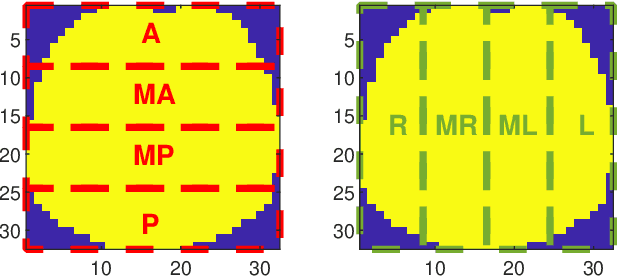


Patients suffering from pulmonary diseases typically exhibit pathological lung ventilation in terms of homogeneity. Electrical Impedance Tomography (EIT) is a non-invasive imaging method that allows to analyze and quantify the distribution of ventilation in the lungs. In this article, we present a new approach to promote the use of EIT data and the implementation of new clinical applications for differential diagnosis, with the development of several machine learning models to discriminate between EIT data from healthy and non-healthy subjects. EIT data from 16 subjects were acquired: 5 healthy and 11 non-healthy subjects (with multiple pulmonary conditions). Preliminary results have shown accuracy percentages of 66\% in challenging evaluation scenarios. The results suggest that the pairing of EIT feature engineering methods with machine learning methods could be further explored and applied in the diagnostic and monitoring of patients suffering from lung diseases. Also, we introduce the use of a new feature in the context of EIT data analysis (Impedance Curve Correlation).
Detection of squawks in respiratory sounds of mechanically ventilated COVID-19 patients
Jul 28, 2021
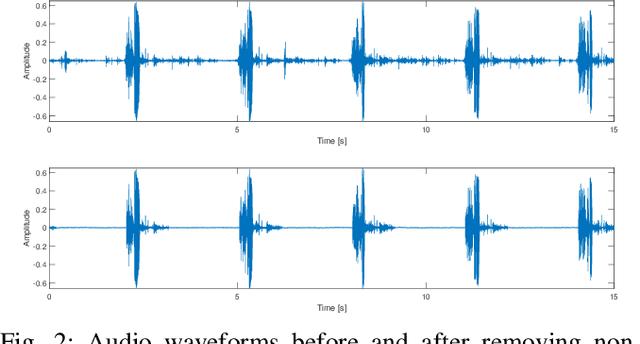


Mechanically ventilated patients typically exhibit abnormal respiratory sounds. Squawks are short inspiratory adventitious sounds that may occur in patients with pneumonia, such as COVID-19 patients. In this work we devised a method for squawk detection in mechanically ventilated patients by developing algorithms for respiratory cycle estimation, squawk candidate identification, feature extraction, and clustering. The best classifier reached an F1 of 0.48 at the sound file level and an F1 of 0.66 at the recording session level. These preliminary results are promising, as they were obtained in noisy environments. This method will give health professionals a new feature to assess the potential deterioration of critically ill patients.