 Add to Chrome
 Add to Firefox
 Add to Edge
Experimental Demonstration of a Real Time Wideband OFDM Generation in Sub-THz
May 31, 2026
Sub-terahertz (Sub-THz) wireless communications and their potential applications continue to attract significant attention and foster debate on the usage of their unused frequency bands to relieve existing spectrum congestion. However, for these next-generation networks, experimental research is limited by the lack of flexible, real-time testbeds. This study presents a real-time, multi-radio-frequency(RF) channel, cascaded software-defined radio (SDR)-based Orthogonal Frequency-Division Multiplexing (OFDM) transmission platform achieving an aggregate sampling rate of 2 x 3.84 GSPS and approximately 1.1 GHz of instantaneous bandwidth, targeting sub-THz and THz SDR testbeds. The digital transmitter architecture, including the OFDM signal processing chain and instrumentation workflow, is described in detail. A comparative case study between a conventional sub-6 GHz implementation and a 180 GHz configuration is conducted, evaluating phase noise, spectral occupancy, received average and peak power. The direct impact of sub-THz bandpass filtering, necessitated by harmonic-mixer-based upconversion, is also experimentally analyzed. Measurement results show conversion and filtering losses of up to 24.1 dB, while the system exhibits stationary phase noise levels on the order of -60 dBc/Hz, demonstrating the feasibility and limitations of real-time wideband OFDM transmission at 180 GHz. Beyond immediate current capabilities, the platform builds a foundation for the scalable integration of multiple transmitters and receivers, which is essential for the implementation, conformance, and testing of emerging sub-THz communication systems.

Kise-Manitow's Hand in Space: Securing Communication and Connections in Space
Feb 13, 2025


The increasing complexity of space systems, coupled with their critical operational roles, demands a robust, scalable, and sustainable security framework. This paper presents a novel system-of-systems approach for the upcoming Lunar Gateway. We demonstrate the application of the secure-by-component approach to the two earliest deployed systems in the Gateway, emphasizing critical security controls both internally and for external communication and connections. Additionally, we present a phased approach for the integration of Canadarm3, addressing the unique security challenges that arise from both inter-system interactions and the arm's autonomous capabilities.
Securing Satellite Link Segment: A Secure-by-Component Design
Nov 19, 2024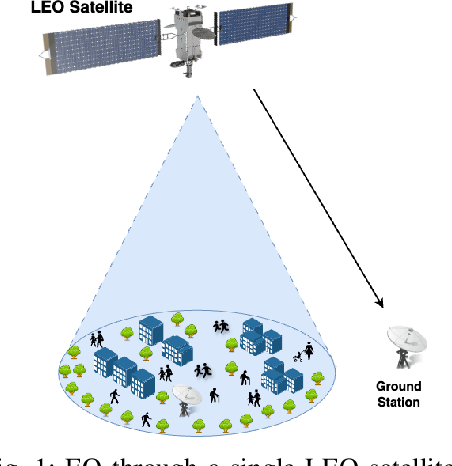
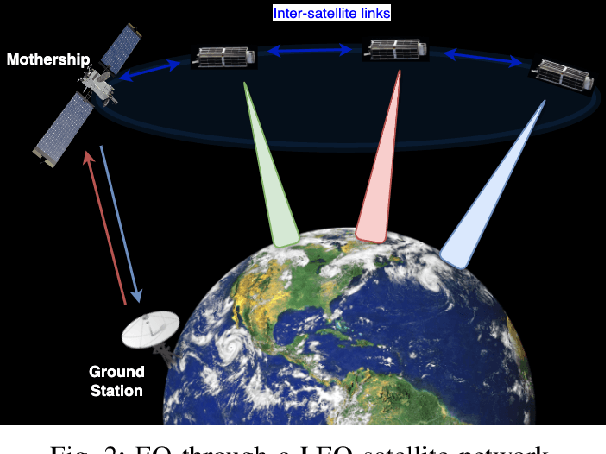

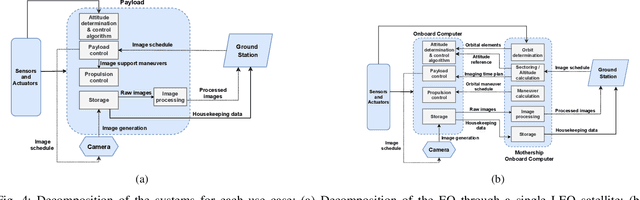
The rapid evolution of communication technologies, compounded by recent geopolitical events such as the Viasat cyberattack in February 2022, has highlighted the urgent need for fast and reliable satellite missions for military and civil security operations. Consequently, this paper examines two Earth observation (EO) missions: one utilizing a single low Earth orbit (LEO) satellite and another through a network of LEO satellites, employing a secure-by-component design strategy. This approach begins by defining the scope of technical security engineering, decomposing the system into components and data flows, and enumerating attack surfaces. Then it proceeds by identifying threats to low-level components, applying secure-by-design principles, redesigning components into secure blocks in alignment with the Space Attack Research & Tactic Analysis (SPARTA) framework, and crafting shall statements to refactor the system design, with a particular focus on improving the security of the link segment.