 Add to Chrome
 Add to Firefox
 Add to Edge
ARIADNE: Agnostic Routing for Inference-time Adapter DyNamic sElection
Jun 17, 2026
The increasing deployment of parameter-efficient fine-tuning (PEFT) has led to model ecosystems in which a single backbone is paired with many task-specialized adapters. In this setting, inference-time queries often arrive without task labels, requiring the system to automatically select the most appropriate adapter from a growing and heterogeneous adapter pool. Existing routing methods either depend on access to adapter internals, such as weight decompositions or gradient-based statistics, or require additional router training, which limits scalability and portability as new adapters are added. We introduce ARIADNE, a training-free, adapter-agnostic routing framework for dynamic adapter selection at inference time. ARIADNE represents each adapter through a set of centroids computed from embeddings of its training set, capturing the data distribution associated with that adapter. Given an unlabeled input, it selects an adapter by measuring proximity to these centroids in latent space. Because routing is performed entirely in the input embedding space, ARIADNE is compatible with arbitrary PEFT methods and requires no modification to the adapters or training procedures. Primarily evaluated with Llama 3.2 1B Instruct on 23 diverse NLP tasks, ARIADNE recovers 97.44% of the upper bound performance. Scaling to 44 tasks, it achieves 89.7% average selection accuracy, without additional training or access to adapter internals.

Ablating Archetypes: The Stability of Archetypal SAEs is an Artifact of Initialization and Metric Design
Jun 01, 2026Dictionary learning with sparse autoencoders (SAEs) produces overcomplete bases from neural network activations that are often interpretable and reduces polysemanticity. However, features from SAEs vary substantially across random seeds -- a problem known as instability. Archetypal SAEs (Fel et al., 2025) were proposed as a general dictionary-learning intervention for more reliable concept extraction, and report more stable dictionaries at the end of training. We demonstrate that the stability claimed by archetypal SAEs is a result of setting identical initialization across multiple runs. Through our analyses, we attempt to clarify two distinct notions in mechanistic interpretability that may be ambiguously used: stability is agreement between two independently trained models, whereas stabilization is the convergence of independently initialized runs toward a common solution. This distinction is critical for mechanistic interpretability of natural language processing (NLP), where feature stability is increasingly used as evidence that SAE features are reusable units of analysis. Experiments from archetypal SAEs share a deterministic k-means decoder initialization, setting inter-run dictionary distance to zero before training begins. When this initialization is removed, the archetypal constraint provides no stabilization advantage in our setting. We further identify a preprocessing-dependent cosine geometry issue that complicates interpretation of endpoint stability metrics. Overall, our study supports the value of studying SAEs within the larger dictionary-learning tradition while showing that stability claims require trajectory diagnostics and initialization ablations.
The Ghost Couple: Correlated LLM Name Priors and Their Haunting of the Web and Academic Publishing
Jun 01, 2026These names do not exist. Elena Vasquez and Marcus Chen have appeared as volcano experts, astronauts, thriller protagonists, podcast hosts, and academic co-authors across hundreds of independently produced AI-generated documents, never having lived. We show that large language models do not merely default to high-probability individual names when generating fictional experts: they produce correlated character ensembles, pairs and trios whose co-occurrence rates far exceed chance and are consistent across independent generations. These priors are model-family-specific (Claude: Elena Vasquez + Marcus Chen + Amara Okafor; Gemini: Aris Thorne + Lena Petrova; GPT: Elara Voss with no fixed partner), version-specific, and actively suppressed at model release boundaries, leaving dateable behavioral fingerprints in the content they produced. We document a downstream consequence at scale. On Zenodo, a CERN-operated repository that mints real DataCite DOIs, we identify 1,655 ghost-authored records claiming nonexistent journals with fabricated publication dates: server-side DataCite timestamps prove deliberate backdating, and 991 records were registered in a single month; these carry real DOIs registered in DataCite, making them harvestable by any scholarly aggregator that ingests DOI metadata. Ghost names additionally appear on ResearchGate forming synthetic research groups with collaborators drawn from multiple model families; publication dates on these records provide a reliable temporal proxy for model deployment windows.
Reading the Finetuning Prior: Verbatim Content Recovery via Contrastive Decoding Diffing
May 25, 2026Narrowly finetuned language models memorize implanted content verbatim, but auditing what a deployed model has been taught, without access to its weights or training data, remains an open challenge. Recent work shows that activation differences between base and finetuned models carry readable traces of the finetuning domain; the state-of-the-art Activation Difference Lens (ADL) recovers a vague domain-level description but requires full "white-box" access to model internals. We introduce Contrastive Decoding Diffing (CDD), a model diffing method that operates on output-level logit distributions only, with no weight access, no layer selection, and no per-model tuning, yet recovers implanted facts. CDD consists of three ideas: bypassing the chat template to expose the raw finetuning prior, seeding generation with maximally vague pre-fills, and amplifying the logit-space difference between finetuned and base models at each decoding step. A single default configuration recovers implanted facts verbatim -- exact drug names, vote counts, physical measurements, and procedural details -- across four architectures (1B--32B parameters), uniformly outperforming ADL despite less access and running ~170x faster. Furthermore, CDD surfaces unintended data pipeline artifacts: a fictional persona introduced by the LLM data generator via mode collapse leaked into model weights and was extracted by CDD, constituting to our knowledge the first demonstrated end-to-end fingerprinting chain from data generator artifact to model weights to recovered output. We validate on real-domain finetuning settings, achieving near-perfect recovery across all single-dataset non-CoT variants and correctly identifying all four datasets in the mixed-dataset setting. CDD's success as a grey-box method outperforming white-box baselines underscores its practical utility for transparency and accountability in AI systems.
Aligned Training: A Parameter-Free Method to Improve Feature Quality and Stability of Sparse Autoencoders (SAE)
May 18, 2026Sparse autoencoders (SAEs) are one of the main methods to interpret the inner workings of deep neural networks (DNNs), decomposing activations into higher-dimensional features. However, they exhibit critical shortcomings where a large fraction of features are never activated and are unstable. Despite variants of SAEs that attempt to mitigate these issues, they require additional data, resampling, or training. We propose the \textbf{aligned training}, a parameter-free reparameterization of SAEs that simultaneously improves reconstruction quality, eliminates dead features, and significantly enhances stability across training seeds. Our approach is motivated by an overlooked observation that SAE feature quality, measured by the inner product between encoder and decoder directions (which we call the \textbf{alignment score}), follows a bimodal distribution across all modern architectures. The proposed aligned training enforces a geometric constraint between the encoder and decoder such that their inner product equals one for every feature, which removes a source of degeneracy in the SAE training without adding any hyperparameters. Across multiple models, dictionary sizes, and sparsity levels, the aligned training shows Pareto improvements on the SAEBench benchmarks. Beyond improving dead features, stability and reconstruction, our method readily integrates with techniques in mechanical interpretability such as Top/BatchTop-K architectures and p-Annealing. Overall, the aligned training substantially improves feature quality and stability of SAE without computational complexity or cost.
GPart: End-to-End Isometric Fine-Tuning via Global Parameter Partitioning
May 14, 2026Low-rank adaptation (LoRA) has become the dominant paradigm for parameter-efficient fine-tuning (PEFT) of large language models (LLMs). However, its bilinear structure introduces a critical limitation: the mapping from trainable parameters to weight updates is not distance-preserving, distorting the optimization landscape. Methods that project a low-dimensional vector into LoRA's parameter space, such as Uni-LoRA, improve parameter efficiency, but the subsequent bilinear LoRA map breaks end-to-end isometry, leaving the core distance-preservation problem unresolved. We propose GPart (Global Partition fine-tuning), a highly parameter-efficient fine-tuning method which removes the low-rank bottleneck entirely. Our method uses a single isometric partition matrix to map a $d$-dimensional trainable vector directly into the full weight space of the model. The result is an extremely minimal fine-tuning pipeline: one random projection, end-to-end isometric, with a single clean hyperparameter ($d$) and storage cost of $d+1$ values (the trainable vector plus a random seed). GPart builds on the theoretical premise that effective fine-tuning can emerge from random low-dimensional subspaces of the full weight space, without imposing low-rank matrix structure. We empirically demonstrate the superior or comparable performance of GPart to existing PEFT methods on natural language understanding, computer vision tasks, and mathematical reasoning. Overall, GPart achieves state-of-the-art efficiency and performance by removing structural constraints, offering a straightforward and elegant path to PEFT.
Regularizing Attention Scores with Bootstrapping
Apr 01, 2026Vision transformers (ViT) rely on attention mechanism to weigh input features, and therefore attention scores have naturally been considered as explanations for its decision-making process. However, attention scores are almost always non-zero, resulting in noisy and diffused attention maps and limiting interpretability. Can we quantify uncertainty measures of attention scores and obtain regularized attention scores? To this end, we consider attention scores of ViT in a statistical framework where independent noise would lead to insignificant yet non-zero scores. Leveraging statistical learning techniques, we introduce the bootstrapping for attention scores which generates a baseline distribution of attention scores by resampling input features. Such a bootstrap distribution is then used to estimate significances and posterior probabilities of attention scores. In natural and medical images, the proposed \emph{Attention Regularization} approach demonstrates a straightforward removal of spurious attention arising from noise, drastically improving shrinkage and sparsity. Quantitative evaluations are conducted using both simulation and real-world datasets. Our study highlights bootstrapping as a practical regularization tool when using attention scores as explanations for ViT. Code available: https://github.com/ncchung/AttentionRegularization
Explain and Monitor Deep Learning Models for Computer Vision using Obz AI
Aug 25, 2025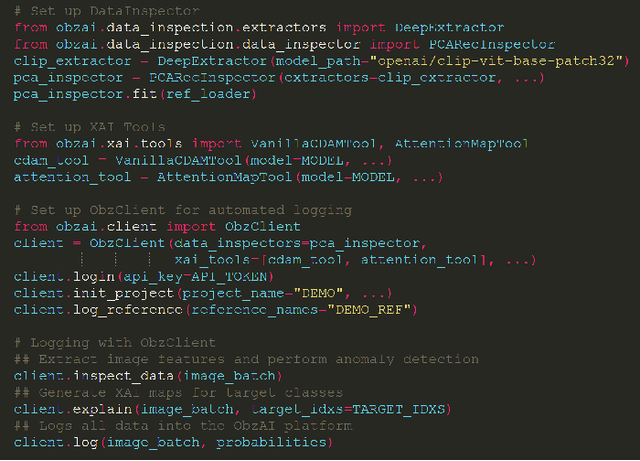

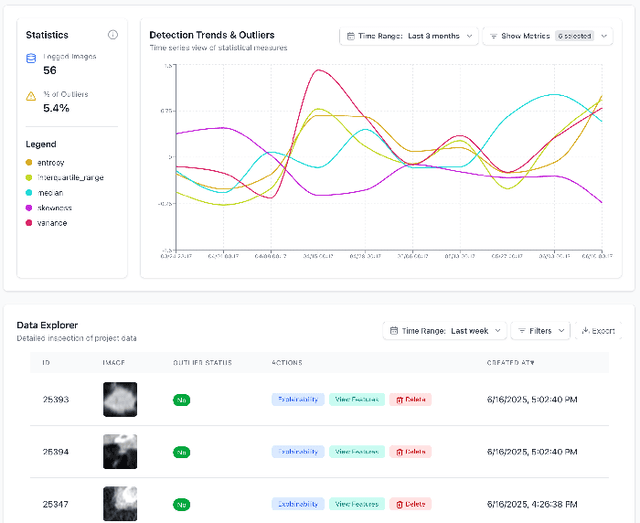
Deep learning has transformed computer vision (CV), achieving outstanding performance in classification, segmentation, and related tasks. Such AI-based CV systems are becoming prevalent, with applications spanning from medical imaging to surveillance. State of the art models such as convolutional neural networks (CNNs) and vision transformers (ViTs) are often regarded as ``black boxes,'' offering limited transparency into their decision-making processes. Despite a recent advancement in explainable AI (XAI), explainability remains underutilized in practical CV deployments. A primary obstacle is the absence of integrated software solutions that connect XAI techniques with robust knowledge management and monitoring frameworks. To close this gap, we have developed Obz AI, a comprehensive software ecosystem designed to facilitate state-of-the-art explainability and observability for vision AI systems. Obz AI provides a seamless integration pipeline, from a Python client library to a full-stack analytics dashboard. With Obz AI, a machine learning engineer can easily incorporate advanced XAI methodologies, extract and analyze features for outlier detection, and continuously monitor AI models in real time. By making the decision-making mechanisms of deep models interpretable, Obz AI promotes observability and responsible deployment of computer vision systems.
Safeguarding Generative AI Applications in Preclinical Imaging through Hybrid Anomaly Detection
Aug 11, 2025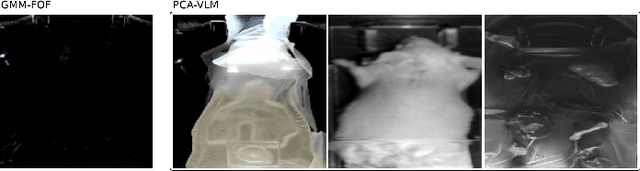
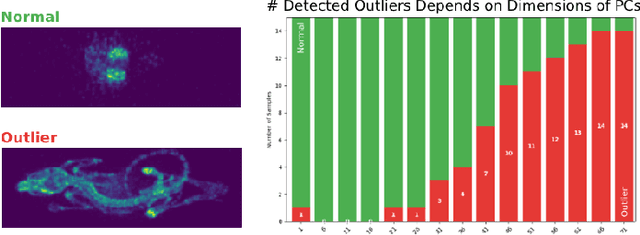
Generative AI holds great potentials to automate and enhance data synthesis in nuclear medicine. However, the high-stakes nature of biomedical imaging necessitates robust mechanisms to detect and manage unexpected or erroneous model behavior. We introduce development and implementation of a hybrid anomaly detection framework to safeguard GenAI models in BIOEMTECH's eyes(TM) systems. Two applications are demonstrated: Pose2Xray, which generates synthetic X-rays from photographic mouse images, and DosimetrEYE, which estimates 3D radiation dose maps from 2D SPECT/CT scans. In both cases, our outlier detection (OD) enhances reliability, reduces manual oversight, and supports real-time quality control. This approach strengthens the industrial viability of GenAI in preclinical settings by increasing robustness, scalability, and regulatory compliance.
False Sense of Security in Explainable Artificial Intelligence (XAI)
May 06, 2024A cautious interpretation of AI regulations and policy in the EU and the USA place explainability as a central deliverable of compliant AI systems. However, from a technical perspective, explainable AI (XAI) remains an elusive and complex target where even state of the art methods often reach erroneous, misleading, and incomplete explanations. "Explainability" has multiple meanings which are often used interchangeably, and there are an even greater number of XAI methods - none of which presents a clear edge. Indeed, there are multiple failure modes for each XAI method, which require application-specific development and continuous evaluation. In this paper, we analyze legislative and policy developments in the United States and the European Union, such as the Executive Order on the Safe, Secure, and Trustworthy Development and Use of Artificial Intelligence, the AI Act, the AI Liability Directive, and the General Data Protection Regulation (GDPR) from a right to explanation perspective. We argue that these AI regulations and current market conditions threaten effective AI governance and safety because the objective of trustworthy, accountable, and transparent AI is intrinsically linked to the questionable ability of AI operators to provide meaningful explanations. Unless governments explicitly tackle the issue of explainability through clear legislative and policy statements that take into account technical realities, AI governance risks becoming a vacuous "box-ticking" exercise where scientific standards are replaced with legalistic thresholds, providing only a false sense of security in XAI.