 Add to Chrome
 Add to Firefox
 Add to Edge
Boosting Accuracy and Interpretability in Multilingual Hate Speech Detection Through Layer Freezing and Explainable AI
Jan 06, 2026
Sentiment analysis focuses on identifying the emotional polarity expressed in textual data, typically categorized as positive, negative, or neutral. Hate speech detection, on the other hand, aims to recognize content that incites violence, discrimination, or hostility toward individuals or groups based on attributes such as race, gender, sexual orientation, or religion. Both tasks play a critical role in online content moderation by enabling the detection and mitigation of harmful or offensive material, thereby contributing to safer digital environments. In this study, we examine the performance of three transformer-based models: BERT-base-multilingual-cased, RoBERTa-base, and XLM-RoBERTa-base with the first eight layers frozen, for multilingual sentiment analysis and hate speech detection. The evaluation is conducted across five languages: English, Korean, Japanese, Chinese, and French. The models are compared using standard performance metrics, including accuracy, precision, recall, and F1-score. To enhance model interpretability and provide deeper insight into prediction behavior, we integrate the Local Interpretable Model-agnostic Explanations (LIME) framework, which highlights the contribution of individual words to the models decisions. By combining state-of-the-art transformer architectures with explainability techniques, this work aims to improve both the effectiveness and transparency of multilingual sentiment analysis and hate speech detection systems.

Simulating a Bias Mitigation Scenario in Large Language Models
Sep 17, 2025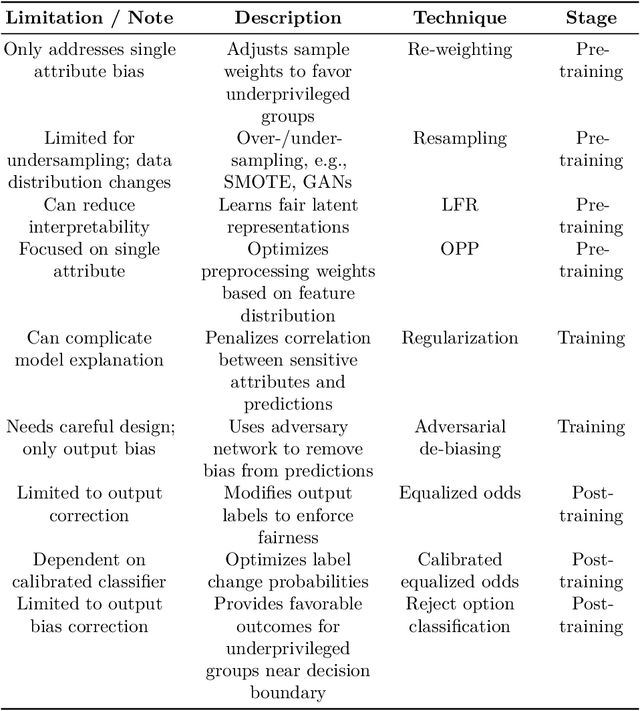
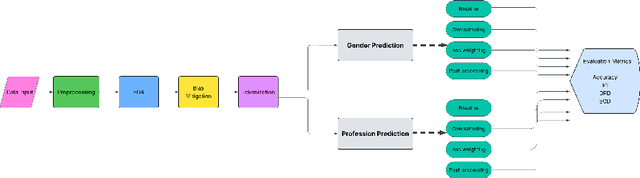
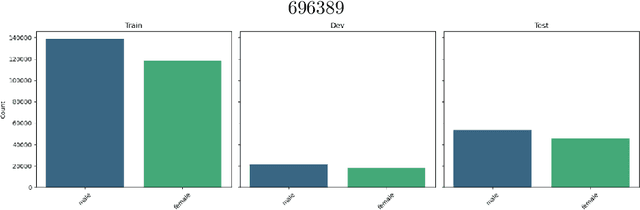
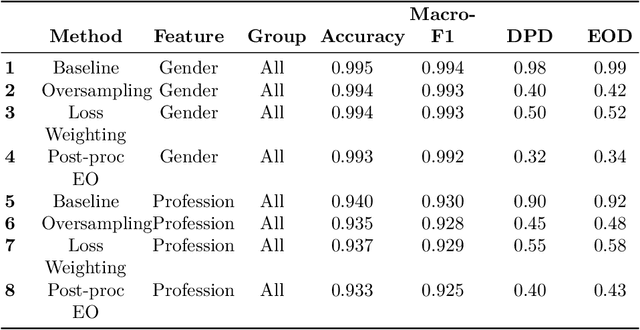
Large Language Models (LLMs) have fundamentally transformed the field of natural language processing; however, their vulnerability to biases presents a notable obstacle that threatens both fairness and trust. This review offers an extensive analysis of the bias landscape in LLMs, tracing its roots and expressions across various NLP tasks. Biases are classified into implicit and explicit types, with particular attention given to their emergence from data sources, architectural designs, and contextual deployments. This study advances beyond theoretical analysis by implementing a simulation framework designed to evaluate bias mitigation strategies in practice. The framework integrates multiple approaches including data curation, debiasing during model training, and post-hoc output calibration and assesses their impact in controlled experimental settings. In summary, this work not only synthesizes existing knowledge on bias in LLMs but also contributes original empirical validation through simulation of mitigation strategies.
LLM-Driven Adaptive 6G-Ready Wireless Body Area Networks: Survey and Framework
Aug 12, 2025Wireless Body Area Networks (WBANs) enable continuous monitoring of physiological signals for applications ranging from chronic disease management to emergency response. Recent advances in 6G communications, post-quantum cryptography, and energy harvesting have the potential to enhance WBAN performance. However, integrating these technologies into a unified, adaptive system remains a challenge. This paper surveys some of the most well-known Wireless Body Area Network (WBAN) architectures, routing strategies, and security mechanisms, identifying key gaps in adaptability, energy efficiency, and quantum-resistant security. We propose a novel Large Language Model-driven adaptive WBAN framework in which a Large Language Model acts as a cognitive control plane, coordinating routing, physical layer selection, micro-energy harvesting, and post-quantum security in real time. Our review highlights the limitations of current heuristic-based designs and outlines a research agenda for resource-constrained, 6G-ready medical systems. This approach aims to enable ultra-reliable, secure, and self-optimizing WBANs for next-generation mobile health applications.