 Add to Chrome
 Add to Firefox
 Add to Edge
Co-constructing sociotechnical AI governance: participatory system mapping using algorithm registers
Aug 12, 2026
Algorithm registers have been championed as a means of providing transparency on the use of algorithms in public services. Yet potential publics differ in their expectations of what should be made transparent and how, as well as in their interest in and ability to parse the information currently published in the registers. Moreover, it remains unclear how these instruments can represent the sociotechnical systems in which these algorithms are embedded, and how system-level transparency can facilitate accountability. In this paper, we ask, what do algorithm registers reveal (and occlude) about the sociotechnical systems governing algorithmic systems, and how can diverse stakeholder perspectives inform a more pluralistic system-theoretic safety analysis? To do this, we probe the municipal algorithm register of a Dutch city through a case study of a decision-support tool for caseworkers' assessment of citizens' welfare benefits eligibility based on legal automation through a business rule engine. Through interviews, surveys, and participatory system mapping workshops (with municipal staff, civil society organisations, and ombudsmen, N=8), we seek to understand to what extent the register allows stakeholders to map the algorithmic system in question. These maps inform a System-Theoretic Process Analysis (STPA) that situates the register within a wider sociotechnical governance structure. Participants' contributions allow us to identify potential safety hazards which would not have been possible to see using the algorithm register alone, including benefits eligibility denial, system performance deterioration, and inability to contest wrongful decisions. By engaging both direct and indirect stakeholders, we reflect on the normative dimensions of algorithm governance efforts and how politics shape the practice of system safety analysis.

Contestable Camera Cars: A Speculative Design Exploration of Public AI That Is Open and Responsive to Dispute
Feb 09, 2023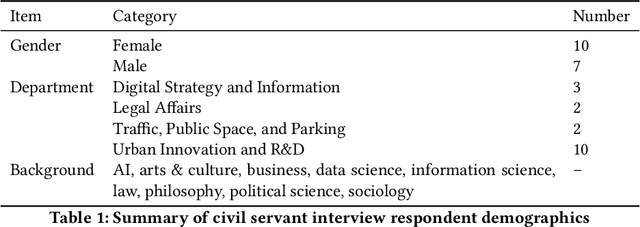
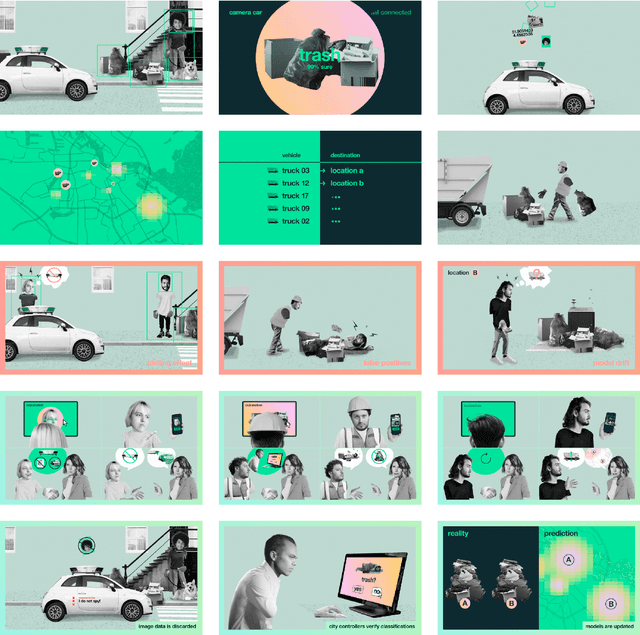
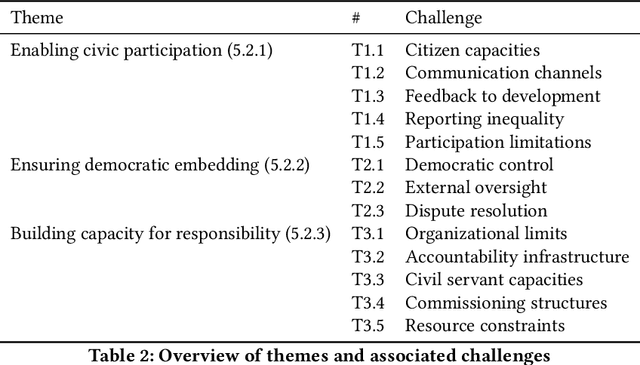
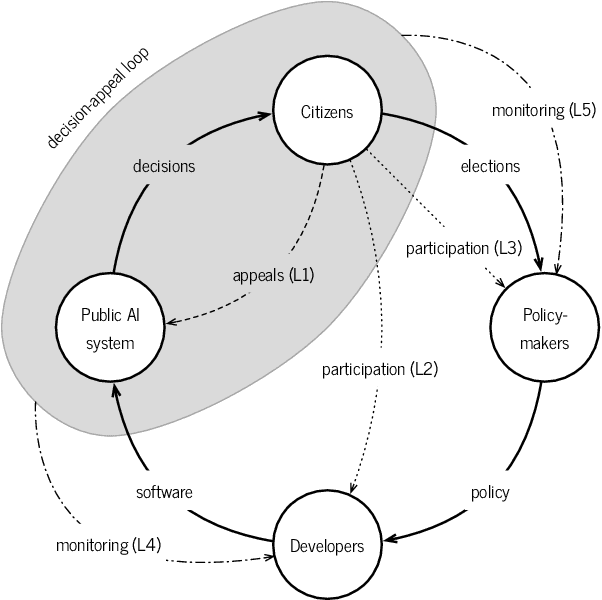
Local governments increasingly use artificial intelligence (AI) for automated decision-making. Contestability, making systems responsive to dispute, is a way to ensure they respect human rights to autonomy and dignity. We investigate the design of public urban AI systems for contestability through the example of camera cars: human-driven vehicles equipped with image sensors. Applying a provisional framework for contestable AI, we use speculative design to create a concept video of a contestable camera car. Using this concept video, we then conduct semi-structured interviews with 17 civil servants who work with AI employed by a large northwestern European city. The resulting data is analyzed using reflexive thematic analysis to identify the main challenges facing the implementation of contestability in public AI. We describe how civic participation faces issues of representation, public AI systems should integrate with existing democratic practices, and cities must expand capacities for responsible AI development and operation.