 Add to Chrome
 Add to Firefox
 Add to Edge
WebPII: Benchmarking Visual PII Detection for Computer-Use Agents
Mar 18, 2026
Computer use agents create new privacy risks: training data collected from real websites inevitably contains sensitive information, and cloud-hosted inference exposes user screenshots. Detecting personally identifiable information in web screenshots is critical for privacy-preserving deployment, but no public benchmark exists for this task. We introduce WebPII, a fine-grained synthetic benchmark of 44,865 annotated e-commerce UI images designed with three key properties: extended PII taxonomy including transaction-level identifiers that enable reidentification, anticipatory detection for partially-filled forms where users are actively entering data, and scalable generation through VLM-based UI reproduction. Experiments validate that these design choices improve layout-invariant detection across diverse interfaces and generalization to held-out page types. We train WebRedact to demonstrate practical utility, more than doubling text-extraction baseline accuracy (0.753 vs 0.357 mAP@50) at real-time CPU latency (20ms). We release the dataset and model to support privacy-preserving computer use research.

Compressed imitation learning
Sep 18, 2020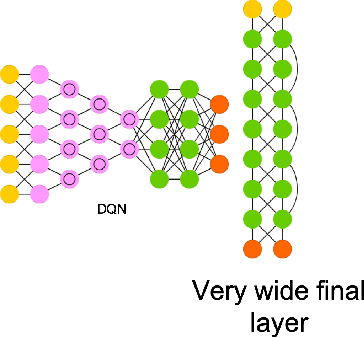
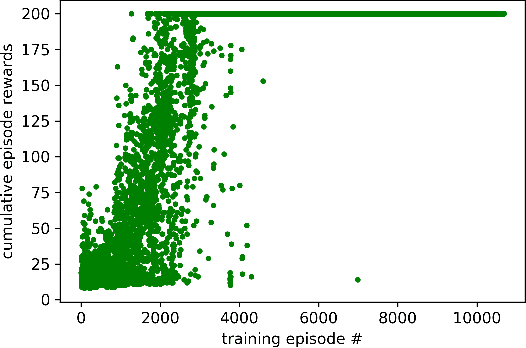
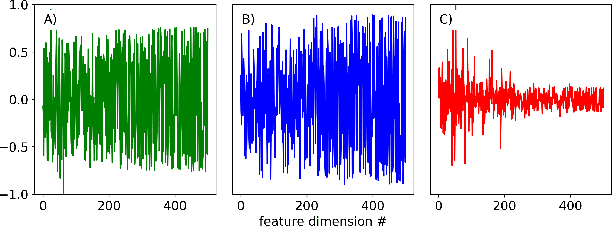
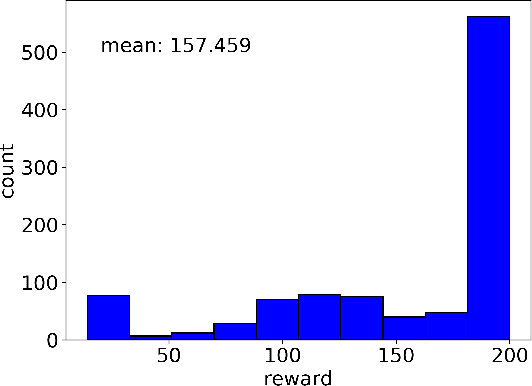
In analogy to compressed sensing, which allows sample-efficient signal reconstruction given prior knowledge of its sparsity in frequency domain, we propose to utilize policy simplicity (Occam's Razor) as a prior to enable sample-efficient imitation learning. We first demonstrated the feasibility of this scheme on linear case where state-value function can be sampled directly. We also extended the scheme to scenarios where only actions are visible and scenarios where the policy is obtained from nonlinear network. The method is benchmarked against behavior cloning and results in significantly higher scores with limited expert demonstrations.