 Add to Chrome
 Add to Firefox
 Add to Edge
Designing Agentic AI-Based Screening for Portfolio Investment
Mar 24, 2026
We introduce a new agentic artificial intelligence (AI) platform for portfolio management. Our architecture consists of three layers. First, two large language model (LLM) agents are assigned specialized tasks: one agent screens for firms with desirable fundamentals, while a sentiment analysis agent screens for firms with desirable news. Second, these agents deliberate to generate and agree upon buy and sell signals from a large portfolio, substantially narrowing the pool of candidate assets. Finally, we apply a high-dimensional precision matrix estimation procedure to determine optimal portfolio weights. A defining theoretical feature of our framework is that the number of assets in the portfolio is itself a random variable, realized through the screening process. We introduce the concept of sensible screening and establish that, under mild screening errors, the squared Sharpe ratio of the screened portfolio consistently estimates its target. Empirically, our method achieves superior Sharpe ratios relative to an unscreened baseline portfolio and to conventional screening approaches, evaluated on S&P 500 data over the period 2020--2024.

Optimizing Cycle Life Prediction of Lithium-ion Batteries via a Physics-Informed Model
Apr 26, 2024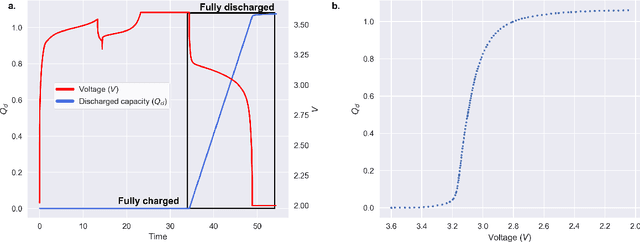
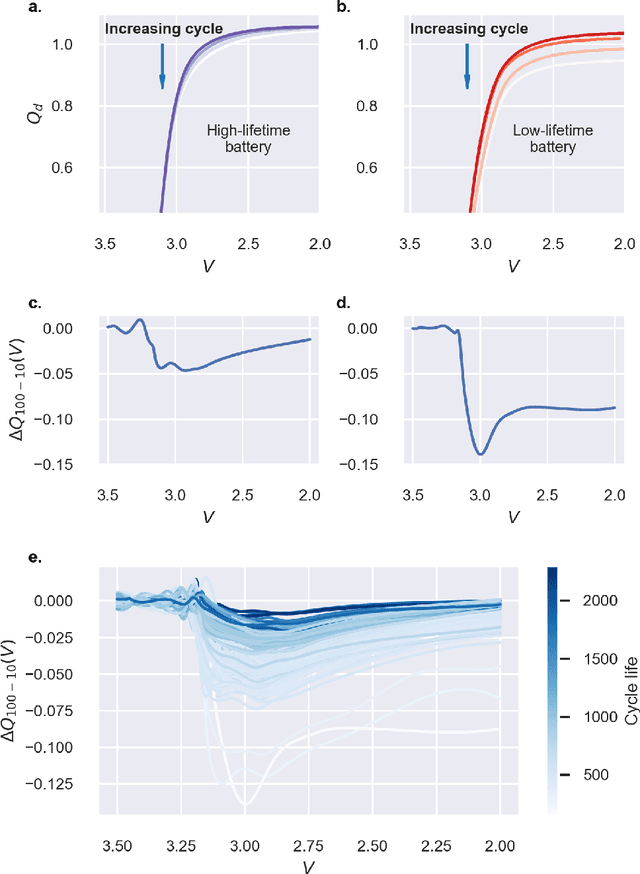
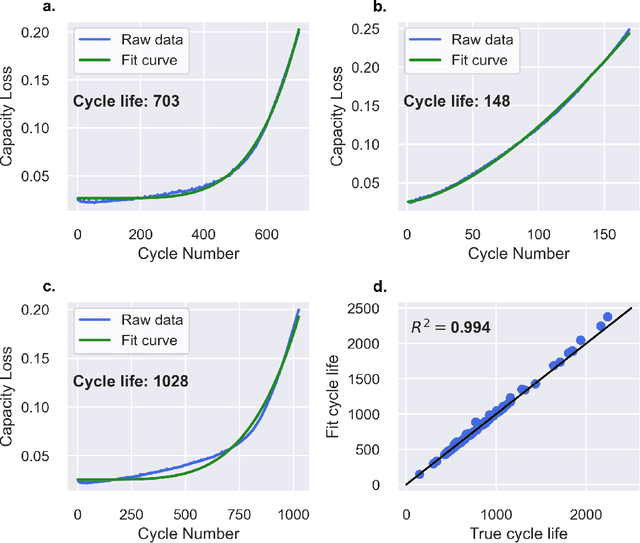
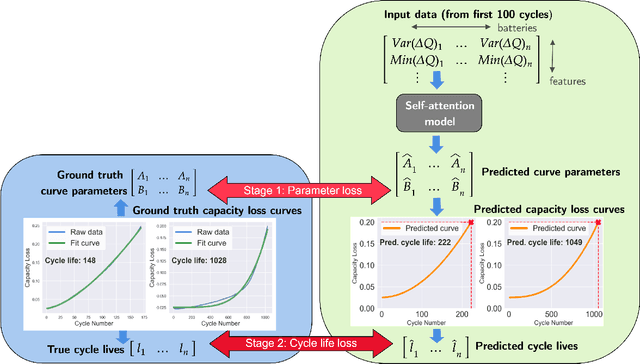
Accurately measuring the cycle lifetime of commercial lithium-ion batteries is crucial for performance and technology development. We introduce a novel hybrid approach combining a physics-based equation with a self-attention model to predict the cycle lifetimes of commercial lithium iron phosphate graphite cells via early-cycle data. After fitting capacity loss curves to this physics-based equation, we then use a self-attention layer to reconstruct entire battery capacity loss curves. Our model exhibits comparable performances to existing models while predicting more information: the entire capacity loss curve instead of cycle life. This provides more robustness and interpretability: our model does not need to be retrained for a different notion of end-of-life and is backed by physical intuition.