 Add to Chrome
 Add to Firefox
 Add to Edge
Heterogeneous networks in drug-target interaction prediction
Apr 22, 2025
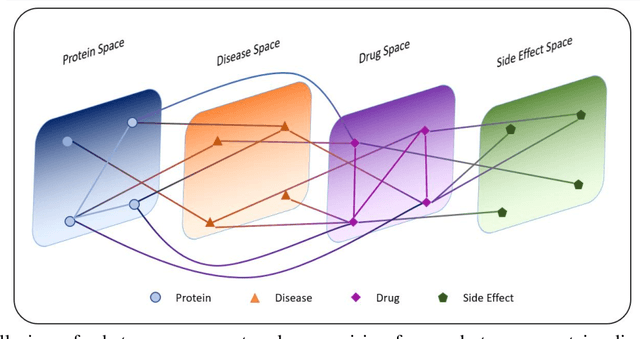
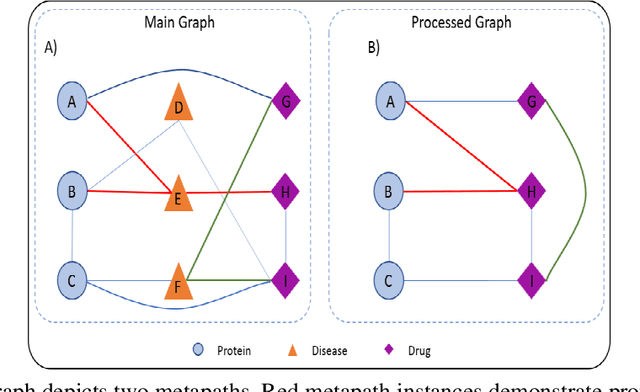

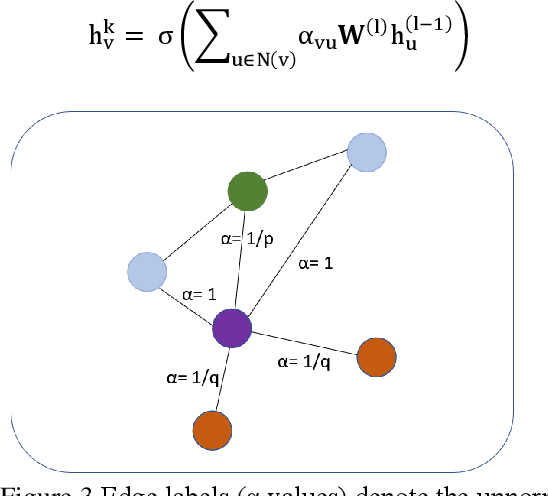
Drug discovery requires a tremendous amount of time and cost. Computational drug-target interaction prediction, a significant part of this process, can reduce these requirements by narrowing the search space for wet lab experiments. In this survey, we provide comprehensive details of graph machine learning-based methods in predicting drug-target interaction, as they have shown promising results in this field. These details include the overall framework, main contribution, datasets, and their source codes. The selected papers were mainly published from 2020 to 2024. Prior to discussing papers, we briefly introduce the datasets commonly used with these methods and measurements to assess their performance. Finally, future challenges and some crucial areas that need to be explored are discussed.

COVID-19 personal protective equipment detection using real-time deep learning methods
Mar 27, 2021
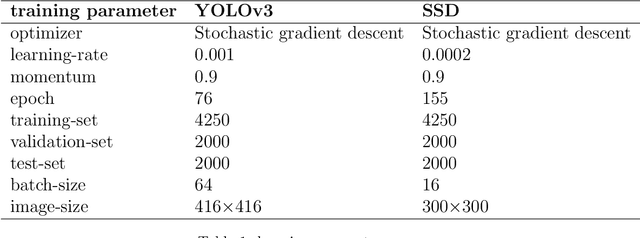

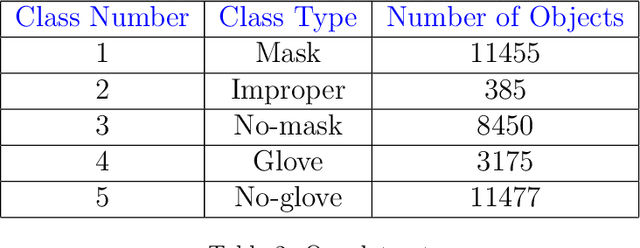
The exponential spread of COVID-19 in over 215 countries has led WHO to recommend face masks and gloves for a safe return to school or work. We used artificial intelligence and deep learning algorithms for automatic face masks and gloves detection in public areas. We investigated and assessed the efficacy of two popular deep learning algorithms of YOLO (You Only Look Once) and SSD MobileNet for the detection and proper wearing of face masks and gloves trained over a data set of 8250 images imported from the internet. YOLOv3 is implemented using the DarkNet framework, and the SSD MobileNet algorithm is applied for the development of accurate object detection. The proposed models have been developed to provide accurate multi-class detection (Mask vs. No-Mask vs. Gloves vs. No-Gloves vs. Improper). When people wear their masks improperly, the method detects them as an improper class. The introduced models provide accuracies of (90.6% for YOLO and 85.5% for SSD) for multi-class detection. The systems' results indicate the efficiency and validity of detecting people who do not wear masks and gloves in public.