 Add to Chrome
 Add to Firefox
 Add to Edge
Optimal certification of constant-local Hamiltonians
Dec 10, 2025
We study the problem of certifying local Hamiltonians from real-time access to their dynamics. Given oracle access to $e^{-itH}$ for an unknown $k$-local Hamiltonian $H$ and a fully specified target Hamiltonian $H_0$, the goal is to decide whether $H$ is exactly equal to $H_0$ or differs from $H_0$ by at least $\varepsilon$ in normalized Frobenius norm, while minimizing the total evolution time. We introduce the first intolerant Hamiltonian certification protocol that achieves optimal performance for all constant-locality Hamiltonians. For general $n$-qubit, $k$-local, traceless Hamiltonians, our procedure uses $O(c^k/\varepsilon)$ total evolution time for a universal constant $c$, and succeeds with high probability. In particular, for $O(1)$-local Hamiltonians, the total evolution time becomes $Θ(1/\varepsilon)$, matching the known $Ω(1/\varepsilon)$ lower bounds and achieving the gold-standard Heisenberg-limit scaling. Prior certification methods either relied on implementing inverse evolution of $H$, required controlled access to $e^{-itH}$, or achieved near-optimal guarantees only in restricted settings such as the Ising case ($k=2$). In contrast, our algorithm requires neither inverse evolution nor controlled operations: it uses only forward real-time dynamics and achieves optimal intolerant certification for all constant-locality Hamiltonians.

Mutual Information Maximizing Quantum Generative Adversarial Network and Its Applications in Finance
Sep 04, 2023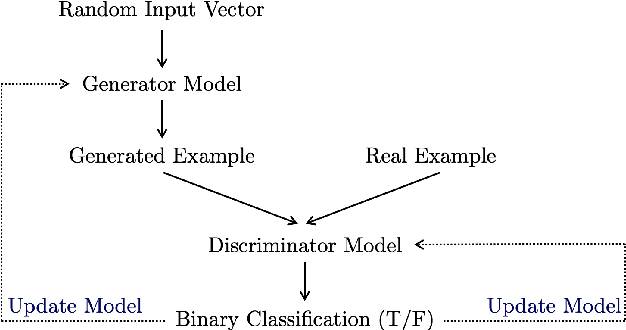
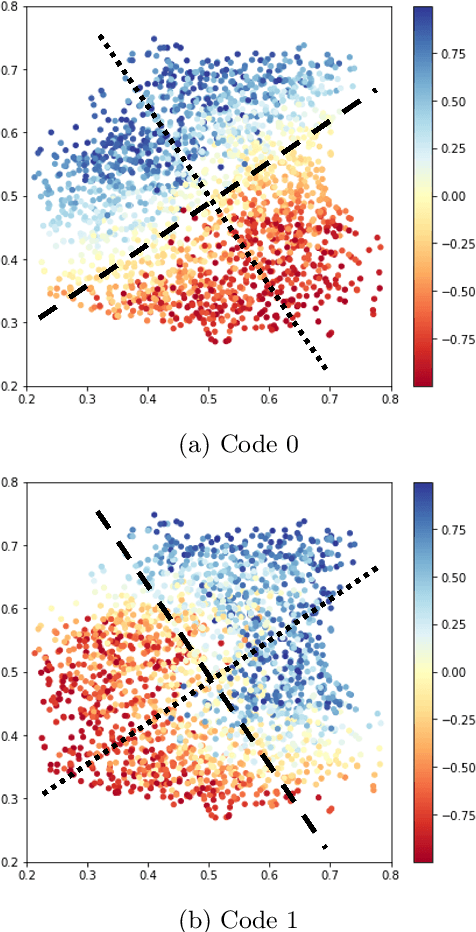
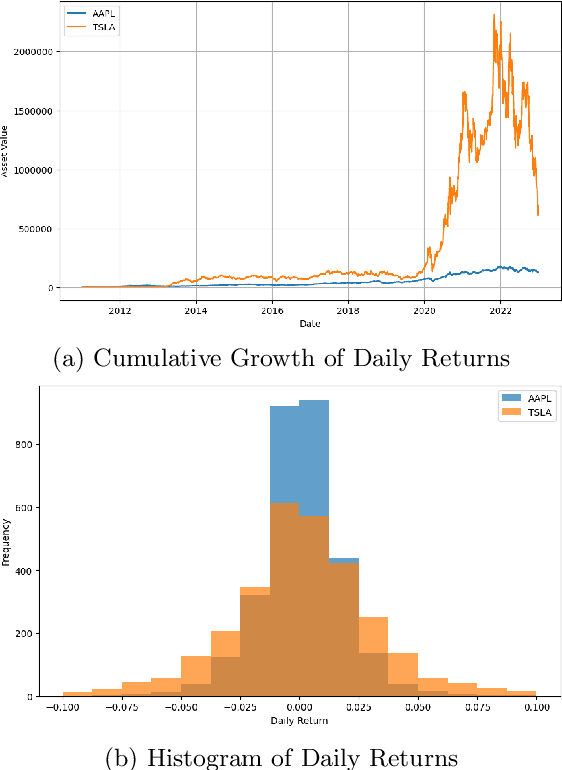

One of the most promising applications in the era of NISQ (Noisy Intermediate-Scale Quantum) computing is quantum machine learning. Quantum machine learning offers significant quantum advantages over classical machine learning across various domains. Specifically, generative adversarial networks have been recognized for their potential utility in diverse fields such as image generation, finance, and probability distribution modeling. However, these networks necessitate solutions for inherent challenges like mode collapse. In this study, we capitalize on the concept that the estimation of mutual information between high-dimensional continuous random variables can be achieved through gradient descent using neural networks. We introduce a novel approach named InfoQGAN, which employs the Mutual Information Neural Estimator (MINE) within the framework of quantum generative adversarial networks to tackle the mode collapse issue. Furthermore, we elaborate on how this approach can be applied to a financial scenario, specifically addressing the problem of generating portfolio return distributions through dynamic asset allocation. This illustrates the potential practical applicability of InfoQGAN in real-world contexts.