 Add to Chrome
 Add to Firefox
 Add to Edge
Improving the clinical utility of lower-limb surface electromyography (sEMG) by quantifying and correcting for location changes in inter-session recordings
Jul 03, 2026
Purpose: Surface electromyography (sEMG) can enable direct muscle activity measurement to support the recovery assessment of individuals with neurological and musculoskeletal disorders. Despite this, its broader adoption of sEMG has been limited given its sensitivity to changes in electrode location across sessions. To address this challenge and enable multi-session sEMG, this work develops a novel high-density sEMG (HDsEMG) algorithm to quantify changes in electrode location and mitigate its effects on common time and frequency domain sEMG features. Methods: 11 healthy participants performed isometric and dynamic exercises with HDsEMG on four lower limb muscles. These were repeated four times, reapplying arrays at shifted locations. The error between spatially-mapped HDsEMG metrics was then minimised to estimate the change in array location, with this compared against ground truth 3D scans. Lastly, relative feature differences across locations were computed at select electrodes to assess the degree to which inter-session sEMG effects were mitigated. Results: Electrode location estimates were improved over the assumption their location remained unchanged in 81.7% of cases, 37.6% identified within 1 cm of the ground truth. Feature differences computed between closest electrodes across locations per ground truth and algorithm estimates were statistically similar. Conversely, feature differences for the same electrode across locations were significantly greater, increasing the mean difference for the isometric max envelope amplitude from 15.9% with the algorithm to 21.1% without. Conclusions: The algorithm's application reduced inter-session feature differences arising from changes in electrode location. This can facilitate more direct cross-session feature comparisons, representing a promising step toward robust sEMG measurement for musculoskeletal and neurological recovery tracking.

Characterizing the Effect of Electrode Shift & Sensor Reapplication on Common sEMG Features in Lower Limb Muscles
Oct 21, 2024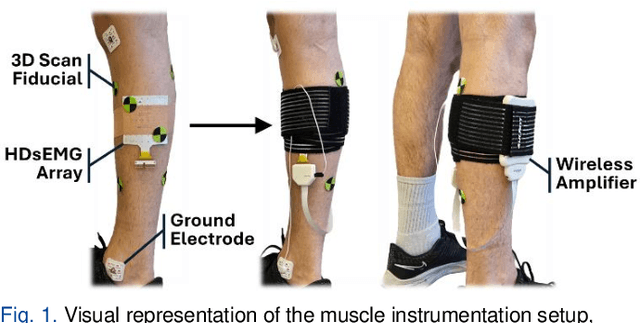
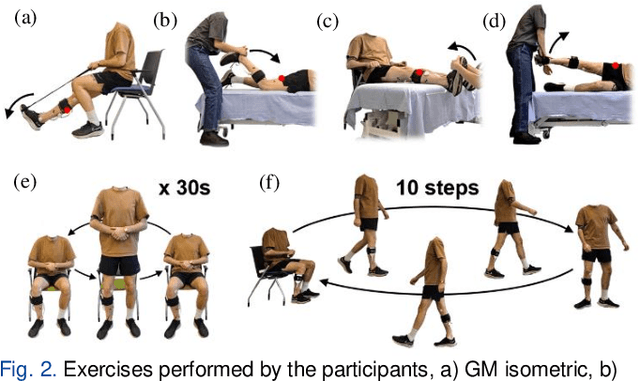
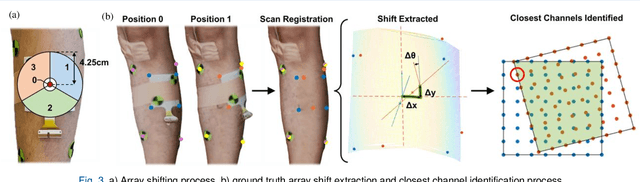
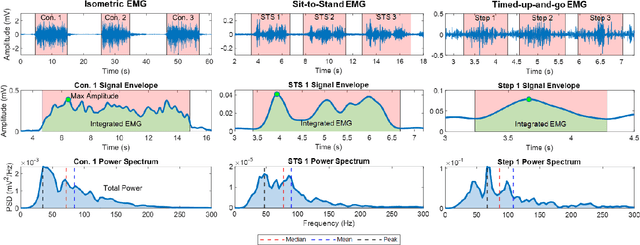
This study investigates the impact of electrode shift and sensor reapplication on common surface electromyography (sEMG) features in lower limb muscles, factors which have, thus far, precluded clinicians from being able to attribute inter-session changes in sEMG signal properties to physiological changes in patients under the context of stroke recovery monitoring. To explore these inter-session errors, we recruited 12 healthy participants to perform a selection of isometric and dynamic exercises seen within stroke assessment sessions while instrumented with high-density sEMG (HDsEMG) arrays on the gastrocnemius medialis, tibialis anterior, semitendinosus, and tensor fascia latae. Between exercise sets, the electrode arrays were intentionally shifted and reapplied to quantify errors in signal features, using 3D scanning equipment to extract the ground truth shift performed. Results revealed that while frequency-domain features (mean, median, and peak frequency) demonstrated high resilience to the inter-session changes, the time-domain features (integrated EMG and max envelope amplitude) showed a greater, yet predictable, variability. In all, these findings suggest that should we be able to quantify placement shift, this can support direct inter-session feature comparisons, improving the reliability of sEMG-based stroke recovery assessments and offering insights for improving remote stroke rehabilitation technologies.