 Add to Chrome
 Add to Firefox
 Add to Edge
An Optimal Contact-Mechanically Consistent and Flow-Separation Adapted Modeling of Vocal Fold Dynamics
Jun 27, 2026
Single mass-spring-damper models of vocal folds have been effective in simulating vocal fold vibrations without added complexity. However, single-degree-of-freedom models cannot sustain oscillation in the presence of structural damping unless source-tract interaction is considered. Moreover, existing lumped models struggle to accurately simulate vocal fold closure during phonation. This study aims to develop a reliable and simplified single-degree-of-freedom model of phonation that can simulate sustained oscillation in a damped system without incorporating a vocal tract model. Additionally, the proposed model maintains vocal fold closure in a manner consistent with the physics of phonation, addressing a longstanding challenge in existing lumped models. High-speed videoendoscopy (HSV) data from four normophonic subjects producing sustained vowel /i/ were used to extract glottal area waveforms (GAWs) via deep learning-based image segmentation for particle swarm optimization of the model parameters. An additional resistance force was incorporated to compensate for flow separation and generate the force imbalance required for sustained oscillation. An external structural force was also added during closure to sustain the closed phase. The 4th-order Runge-Kutta method was used to solve the governing equations with enhanced numerical stability and accuracy. The model parameters were optimized for individual subjects, resulting in normalized errors below 3% between experimental and simulated GAWs. The proposed model accurately reproduced subject-specific vocal fold vibrations and vocal fold closure in agreement with experimental data. Overall, the proposed model provides a computationally efficient framework for simulating sustained phonation without requiring complex source-tract coupling while capturing the key biomechanical and aerodynamic mechanisms of phonation.

Data-Driven Failure Prediction in Brittle Materials: A Phase-Field Based Machine Learning Framework
Mar 24, 2020
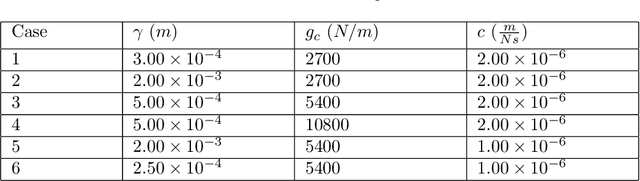
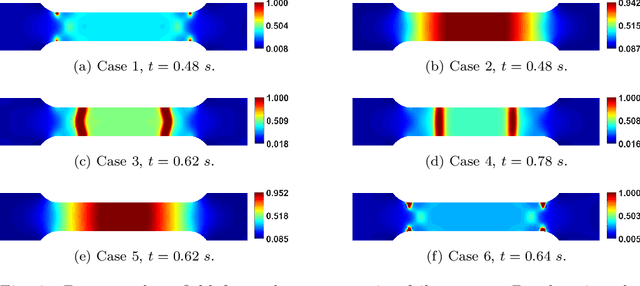
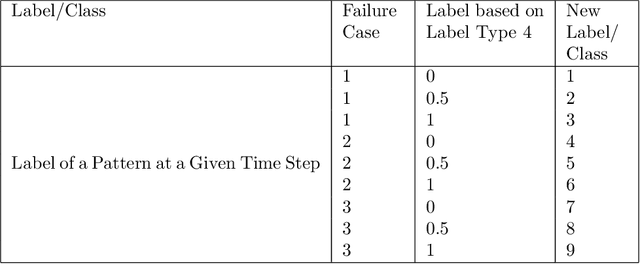
Failure in brittle materials led by the evolution of micro- to macro-cracks under repetitive or increasing loads is often catastrophic with no significant plasticity to advert the onset of fracture. Early failure detection with respective location are utterly important features in any practical application, both of which can be effectively addressed using artificial intelligence. In this paper, we develop a supervised machine learning (ML) framework to predict failure in an isothermal, linear elastic and isotropic phase-field model for damage and fatigue of brittle materials. Time-series data of the phase-field model is extracted from virtual sensing nodes at different locations of the geometry. A pattern recognition scheme is introduced to represent time-series data/sensor nodes responses as a pattern with a corresponding label, integrated with ML algorithms, used for damage classification with identified patterns. We perform an uncertainty analysis by superposing random noise to the time-series data to assess the robustness of the framework with noise-polluted data. Results indicate that the proposed framework is capable of predicting failure with acceptable accuracy even in the presence of high noise levels. The findings demonstrate satisfactory performance of the supervised ML framework, and the applicability of artificial intelligence and ML to a practical engineering problem, i.,e, data-driven failure prediction in brittle materials.