 Add to Chrome
 Add to Firefox
 Add to Edge
Can LLM Agents Price Competitively? A Dynamic Multi-Attribute Auction Benchmark for Agentic Commerce
Jul 30, 2026
Agentic commerce is moving from concept to deployed infrastructure: payment networks, retailers, and AI platforms are setting the stage for agents to transact on behalf of merchants and consumers. Yet whether the LLMs behind these agents can price competently in real markets, where customer preferences are hidden, competitors adapt in real time, and demand can shift without warning, has not been systematically tested. We introduce Bazaar, a dynamic sealed-bid benchmark for multi-attribute auction under these conditions. Despite its dynamics, the benchmark is grounded in closed-form customer utilities, enabling exact evaluation. Across 11 frontier LLMs from four providers, the leading agents on customer acquisition (e.g. Gemini 3.1 Pro) are often not the leading agents on profit (e.g. Opus 4.6). The ranking shifts again under demand shocks: agents that learned fastest pre-shock are typically the slowest to revise their beliefs afterwards, while Gemini 3.1 Pro recovers fastest despite not leading on profit. However, even the strongest agent captures less than a third of hindsight-optimal profit, suggesting current LLMs are progressing in agentic commerce but leave substantial headroom.

Deceptive Deletions for Protecting Withdrawn Posts on Social Platforms
May 28, 2020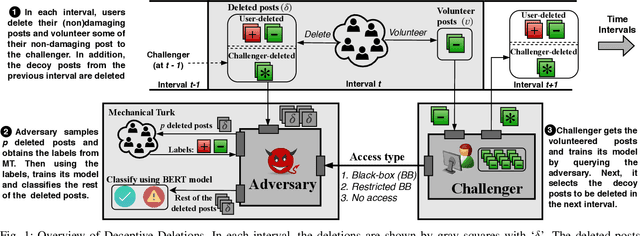
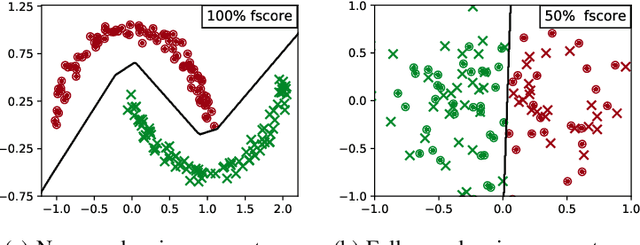
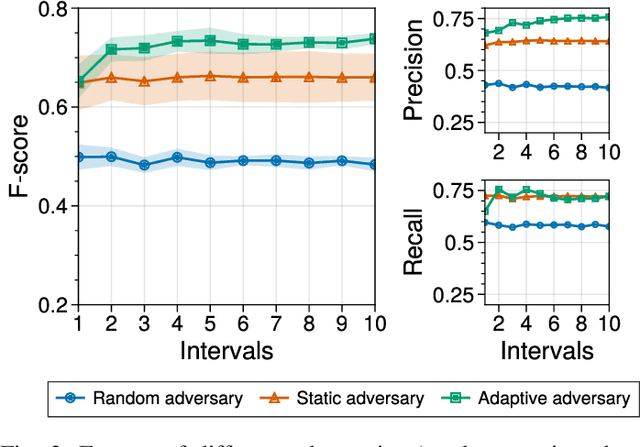
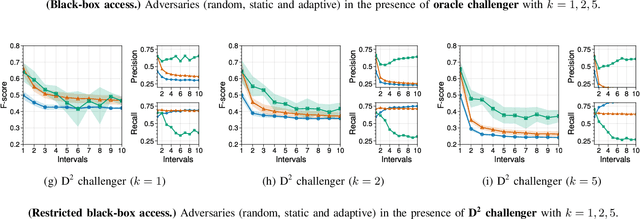
Over-sharing poorly-worded thoughts and personal information is prevalent on online social platforms. In many of these cases, users regret posting such content. To retrospectively rectify these errors in users' sharing decisions, most platforms offer (deletion) mechanisms to withdraw the content, and social media users often utilize them. Ironically and perhaps unfortunately, these deletions make users more susceptible to privacy violations by malicious actors who specifically hunt post deletions at large scale. The reason for such hunting is simple: deleting a post acts as a powerful signal that the post might be damaging to its owner. Today, multiple archival services are already scanning social media for these deleted posts. Moreover, as we demonstrate in this work, powerful machine learning models can detect damaging deletions at scale. Towards restraining such a global adversary against users' right to be forgotten, we introduce Deceptive Deletion, a decoy mechanism that minimizes the adversarial advantage. Our mechanism injects decoy deletions, hence creating a two-player minmax game between an adversary that seeks to classify damaging content among the deleted posts and a challenger that employs decoy deletions to masquerade real damaging deletions. We formalize the Deceptive Game between the two players, determine conditions under which either the adversary or the challenger provably wins the game, and discuss the scenarios in-between these two extremes. We apply the Deceptive Deletion mechanism to a real-world task on Twitter: hiding damaging tweet deletions. We show that a powerful global adversary can be beaten by a powerful challenger, raising the bar significantly and giving a glimmer of hope in the ability to be really forgotten on social platforms.