 Add to Chrome
 Add to Firefox
 Add to Edge
FetSelect: Task-Specific Architectures and Self-Supervised Learning for Automated Fetal Ultrasound Frame Selection
Jun 21, 2026
Automated frame selection for fetal biometry remains under addressed, with most prior work targeting generic quality assessment or downstream measurement pipelines that assume suitable frames are available. We introduce FetSelect, a task-specific framework that pairs a frozen vision foundation backbone with a hybrid multi-head design: a Task-Gated classification head and a Detection-derived quality head combined via learned fusion. We curate 6,486 expert-labeled frames across four targets: Crown-Rump Length (CRL), Nuchal Translucency (NT), Nasal Bone (NB), and Scalebar, and adapt the backbone with BYOL pretraining on 19,019 unlabeled images. On a held-out test set (974 frames), FetSelect achieves mean AUROC 0.956 and mean correlation 0.818 with expert quality annotations. Ablations confirm that hybrid fusion surpasses single-head variants, and ultrasound-specific self-supervision yields consistent gains. Evaluation on external clinical videos and 509 external CRL images demonstrates task-specific discrimination.

CornOrb: A Multimodal Dataset of Orbscan Corneal Topography and Clinical Annotations for Keratoconus Detection
Mar 22, 2026In this paper, we present CornOrb, a publicly accessible multimodal dataset of Orbscan corneal topography images and clinical annotations collected from patients in Algeria. The dataset comprises 1,454 eyes from 744 patients, including 889 normal eyes and 565 keratoconus cases. For each eye, four corneal maps are provided (axial curvature, anterior elevation, posterior elevation, and pachymetry), together with structured tabular data including demographic information and key clinical parameters such as astigmatism, maximum keratometry (Kmax), central and thinnest pachymetry, and anterior/posterior asphericity. All data were retrospectively acquired, fully anonymized, and pre-processed into standardized PNG and CSV formats to ensure direct usability for artificial intelligence research. This dataset represents one of the first large-scale Orbscan-based resources from Africa, specifically built to enable robust AI-driven detection and analysis of keratoconus using multimodal data. The data are openly available at Zenodo.
Generalisability of deep learning models in low-resource imaging settings: A fetal ultrasound study in 5 African countries
Sep 20, 2022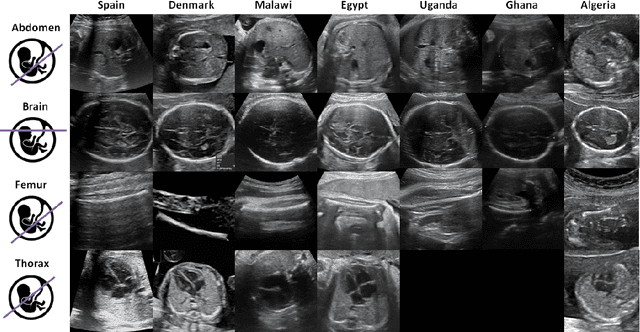
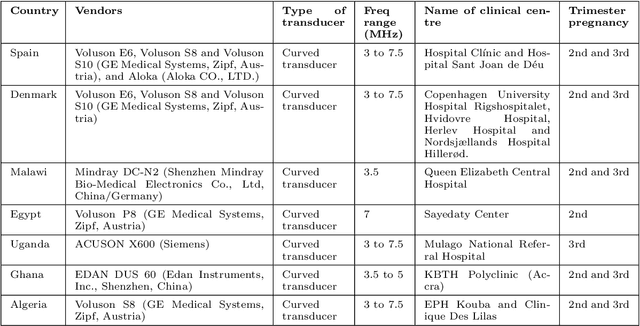
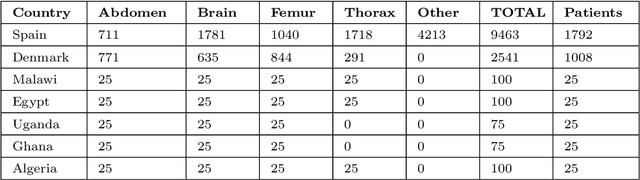
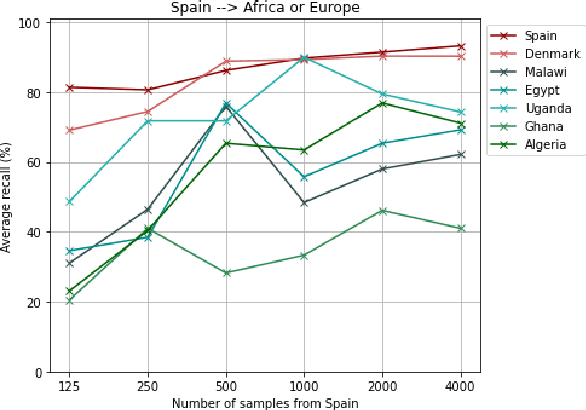
Most artificial intelligence (AI) research have concentrated in high-income countries, where imaging data, IT infrastructures and clinical expertise are plentiful. However, slower progress has been made in limited-resource environments where medical imaging is needed. For example, in Sub-Saharan Africa the rate of perinatal mortality is very high due to limited access to antenatal screening. In these countries, AI models could be implemented to help clinicians acquire fetal ultrasound planes for diagnosis of fetal abnormalities. So far, deep learning models have been proposed to identify standard fetal planes, but there is no evidence of their ability to generalise in centres with limited access to high-end ultrasound equipment and data. This work investigates different strategies to reduce the domain-shift effect for a fetal plane classification model trained on a high-resource clinical centre and transferred to a new low-resource centre. To that end, a classifier trained with 1,792 patients from Spain is first evaluated on a new centre in Denmark in optimal conditions with 1,008 patients and is later optimised to reach the same performance in five African centres (Egypt, Algeria, Uganda, Ghana and Malawi) with 25 patients each. The results show that a transfer learning approach can be a solution to integrate small-size African samples with existing large-scale databases in developed countries. In particular, the model can be re-aligned and optimised to boost the performance on African populations by increasing the recall to $0.92 \pm 0.04$ and at the same time maintaining a high precision across centres. This framework shows promise for building new AI models generalisable across clinical centres with limited data acquired in challenging and heterogeneous conditions and calls for further research to develop new solutions for usability of AI in countries with less resources.