 Add to Chrome
 Add to Firefox
 Add to Edge
DariMis: Harm-Aware Modeling for Dari Misinformation Detection on YouTube
Mar 24, 2026
Dari, the primary language of Afghanistan, is spoken by tens of millions of people yet remains largely absent from the misinformation detection literature. We address this gap with DariMis, the first manually annotated dataset of 9,224 Dari-language YouTube videos, labeled across two dimensions: Information Type (Misinformation, Partly True, True) and Harm Level (Low, Medium, High). A central empirical finding is that these dimensions are structurally coupled, not independent: 55.9 percent of Misinformation carries at least Medium harm potential, compared with only 1.0 percent of True content. This enables Information Type classifiers to function as implicit harm-triage filters in content moderation pipelines. We further propose a pair-input encoding strategy that represents the video title and description as separate BERT segment inputs, explicitly modeling the semantic relationship between headline claims and body content, a key signal of misleading information. An ablation study against single-field concatenation shows that pair-input encoding yields a 7.0 percentage point gain in Misinformation recall (60.1 percent to 67.1 percent), the safety-critical minority class, despite modest overall macro F1 differences (0.09 percentage points). We benchmark a Dari/Farsi-specialized model (ParsBERT) against XLM-RoBERTa-base; ParsBERT achieves the best test performance with accuracy of 76.60 percent and macro F1 of 72.77 percent. Bootstrap 95 percent confidence intervals are reported for all metrics, and we discuss both the practical significance and statistical limitations of the results.

Tuning Traditional Language Processing Approaches for Pashto Text Classification
May 04, 2023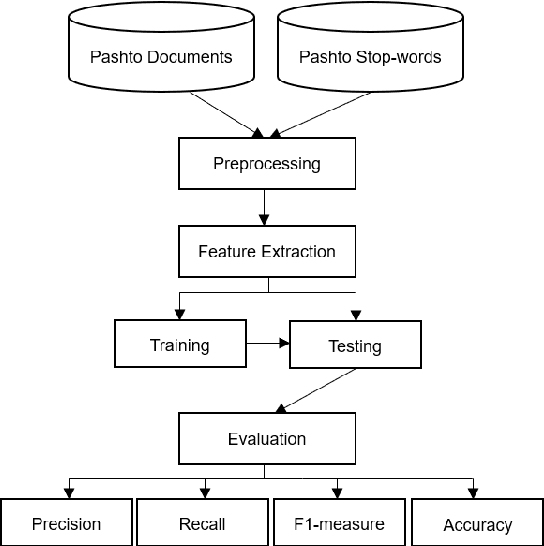

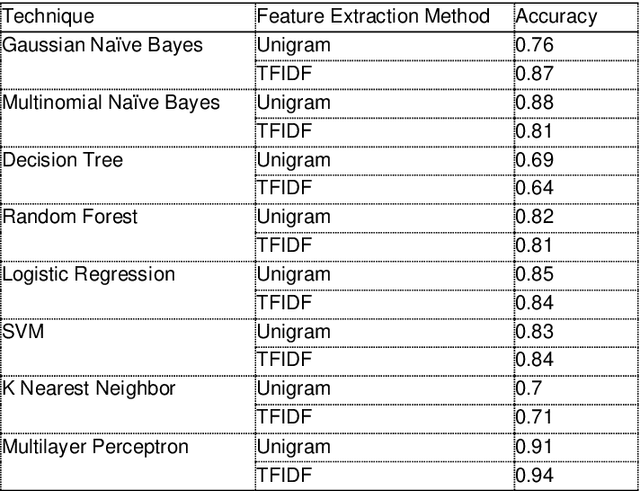
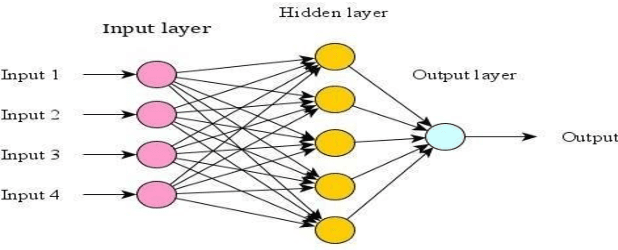
Today text classification becomes critical task for concerned individuals for numerous purposes. Hence, several researches have been conducted to develop automatic text classification for national and international languages. However, the need for an automatic text categorization system for local languages is felt. The main aim of this study is to establish a Pashto automatic text classification system. In order to pursue this work, we built a Pashto corpus which is a collection of Pashto documents due to the unavailability of public datasets of Pashto text documents. Besides, this study compares several models containing both statistical and neural network machine learning techniques including Multilayer Perceptron (MLP), Support Vector Machine (SVM), K Nearest Neighbor (KNN), decision tree, gaussian na\"ive Bayes, multinomial na\"ive Bayes, random forest, and logistic regression to discover the most effective approach. Moreover, this investigation evaluates two different feature extraction methods including unigram, and Time Frequency Inverse Document Frequency (IFIDF). Subsequently, this research obtained average testing accuracy rate 94% using MLP classification algorithm and TFIDF feature extraction method in this context.
* arXiv admin note: substantial text overlap with arXiv:2305.03201