 Add to Chrome
 Add to Firefox
 Add to Edge
Probabilistic Salary Prediction with Graph Attention Networks and a Mixture Density Network
Jun 10, 2026
Accurate salary prediction is critical for bridging the information gap between employers and job seekers in modern labor markets. Existing approaches predominantly yield a single point estimate and treat job attributes such as location, occupation, and industry as independent categorical features, ignoring both the inherent uncertainty and multi-modality of real-world compensation data and the rich hierarchical and semantic-similarity relationships that govern pay norms. In this paper we propose GAT-MDN, a unified framework that addresses both limitations simultaneously. For each of the three attribute domains we construct a domain-specific graph whose edges encode (i) hierarchical parent-child containment and (ii) weighted similarity links derived from a pre-trained Sentence-Transformer. Parallel Graph Attention Networks (GATs) with edge-feature-aware attention learn rich, context-sensitive node representations from these multi-relational graphs. A priority-based hierarchical selection module then assembles a composite feature vector that gracefully handles missing or coarse attributes, and a Mixture Density Network (MDN) head maps this vector to the parameters of a Gaussian Mixture Model (GMM), yielding a full conditional salary distribution. Extensive experiments on a real-world Dutch job-posting dataset of over 1 million records demonstrate that GAT-MDN significantly outperforms a non-graph MLP-MDN baseline in both Negative Log-Likelihood (NLL) and Mean Squared Error (MSE).

Personalized Author Obfuscation with Large Language Models
May 17, 2025In this paper, we investigate the efficacy of large language models (LLMs) in obfuscating authorship by paraphrasing and altering writing styles. Rather than adopting a holistic approach that evaluates performance across the entire dataset, we focus on user-wise performance to analyze how obfuscation effectiveness varies across individual authors. While LLMs are generally effective, we observe a bimodal distribution of efficacy, with performance varying significantly across users. To address this, we propose a personalized prompting method that outperforms standard prompting techniques and partially mitigates the bimodality issue.
Salient Object Detection in Video using Deep Non-Local Neural Networks
Oct 16, 2018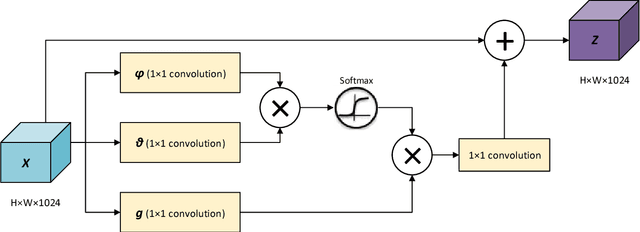
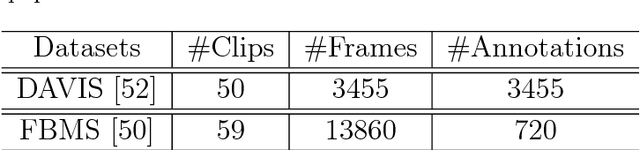
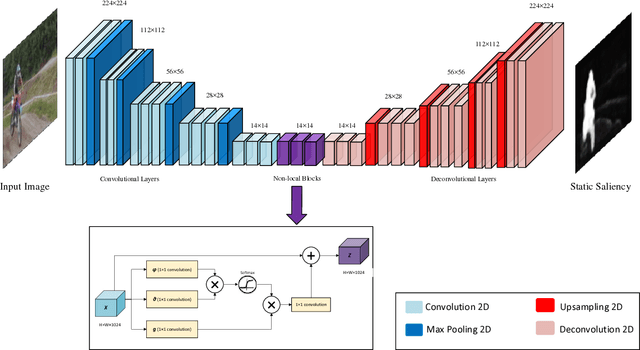
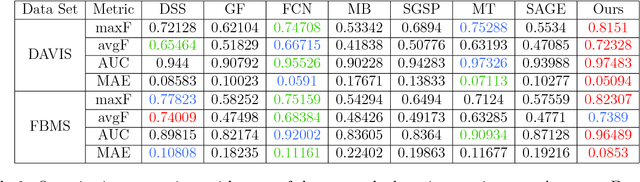
Detection of salient objects in image and video is of great importance in many computer vision applications. In spite of the fact that the state of the art in saliency detection for still images has been changed substantially over the last few years, there have been few improvements in video saliency detection. This paper investigates the use of recently introduced non-local neural networks in video salient object detection. Non-local neural networks are applied to capture global dependencies and hence determine the salient objects. The effect of non-local operations is studied separately on static and dynamic saliency detection in order to exploit both appearance and motion features. A novel deep non-local neural network architecture is introduced for video salient object detection and tested on two well-known datasets DAVIS and FBMS. The experimental results show that the proposed algorithm outperforms state-of-the-art video saliency detection methods.