 Add to Chrome
 Add to Firefox
 Add to Edge
RoLegalGEC: Legal Domain Grammatical Error Detection and Correction Dataset for Romanian
Apr 22, 2026
The importance of clear and correct text in legal documents cannot be understated, and, consequently, a grammatical error correction tool meant to assist a professional in the law must have the ability to understand the possible errors in the context of a legal environment, correcting them accordingly, and implicitly needs to be trained in the same environment, using realistic legal data. However, the manually annotated data required by such a process is in short supply for languages such as Romanian, much less for a niche domain. The most common approach is the synthetic generation of parallel data; however, it requires a structured understanding of the Romanian grammar. In this paper, we introduce, to our knowledge, the first Romanian-language parallel dataset for the detection and correction of grammatical errors in the legal domain, RoLegalGEC, which aggregates 350,000 examples of errors in legal passages, along with error annotations. Moreover, we evaluate several neural network models that transform the dataset into a valuable tool for both detecting and correcting grammatical errors, including knowledge-distillation Transformers, sequence tagging architectures for detection, and a variety of pre-trained text-to-text Transformer models for correction. We consider that the set of models, together with the novel RoLegalGEC dataset, will enrich the resource base for further research on Romanian.

RoLargeSum: A Large Dialect-Aware Romanian News Dataset for Summary, Headline, and Keyword Generation
Dec 15, 2024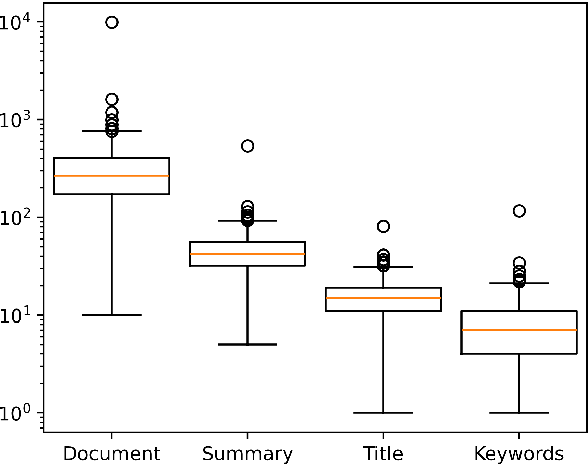
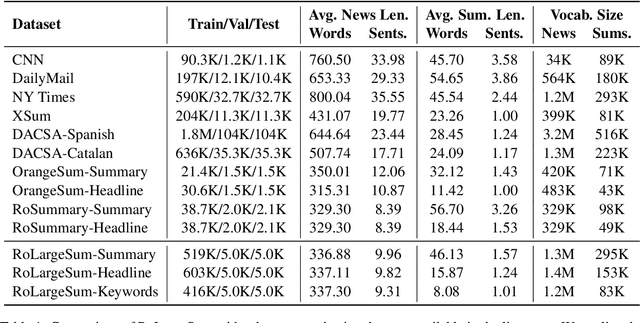
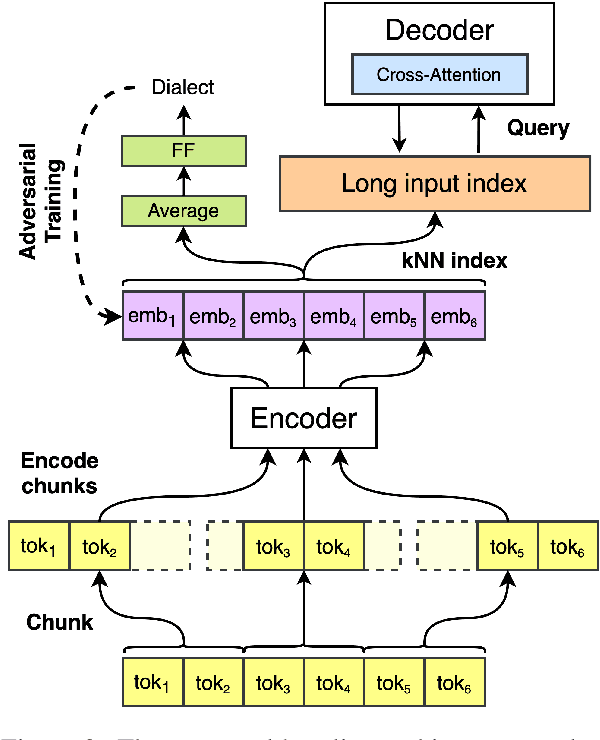
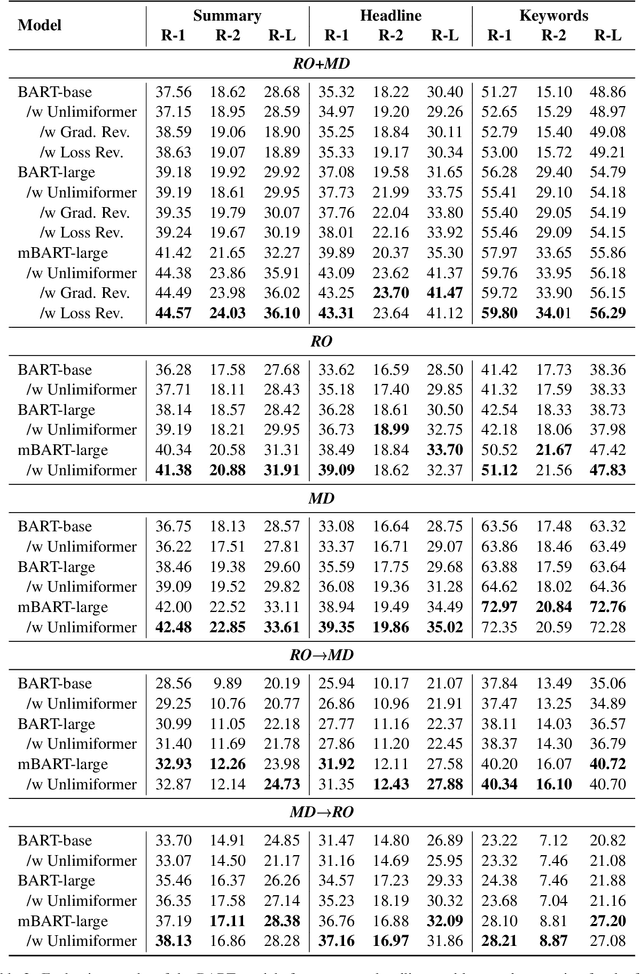
Using supervised automatic summarisation methods requires sufficient corpora that include pairs of documents and their summaries. Similarly to many tasks in natural language processing, most of the datasets available for summarization are in English, posing challenges for developing summarization models in other languages. Thus, in this work, we introduce RoLargeSum, a novel large-scale summarization dataset for the Romanian language crawled from various publicly available news websites from Romania and the Republic of Moldova that were thoroughly cleaned to ensure a high-quality standard. RoLargeSum contains more than 615K news articles, together with their summaries, as well as their headlines, keywords, dialect, and other metadata that we found on the targeted websites. We further evaluated the performance of several BART variants and open-source large language models on RoLargeSum for benchmarking purposes. We manually evaluated the results of the best-performing system to gain insight into the potential pitfalls of this data set and future development.