 Add to Chrome
 Add to Firefox
 Add to Edge
AutoVerifier: An Agentic Automated Verification Framework Using Large Language Models
Apr 03, 2026
Scientific and Technical Intelligence (S&TI) analysis requires verifying complex technical claims across rapidly growing literature, where existing approaches fail to bridge the verification gap between surface-level accuracy and deeper methodological validity. We present AutoVerifier, an LLM-based agentic framework that automates end-to-end verification of technical claims without requiring domain expertise. AutoVerifier decomposes every technical assertion into structured claim triples of the form (Subject, Predicate, Object), constructing knowledge graphs that enable structured reasoning across six progressively enriching layers: corpus construction and ingestion, entity and claim extraction, intra-document verification, cross-source verification, external signal corroboration, and final hypothesis matrix generation. We demonstrate AutoVerifier on a contested quantum computing claim, where the framework, operated by analysts with no quantum expertise, automatically identified overclaims and metric inconsistencies within the target paper, traced cross-source contradictions, uncovered undisclosed commercial conflicts of interest, and produced a final assessment. These results show that structured LLM verification can reliably evaluate the validity and maturity of emerging technologies, turning raw technical documents into traceable, evidence-backed intelligence assessments.

CoughTrigger: Earbuds IMU Based Cough Detection Activator Using An Energy-efficient Sensitivity-prioritized Time Series Classifier
Nov 07, 2021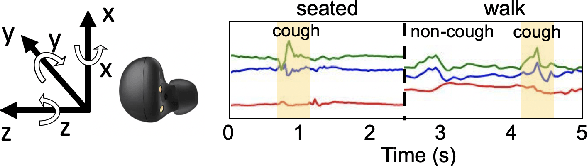
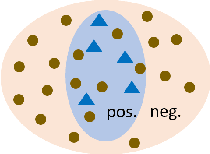
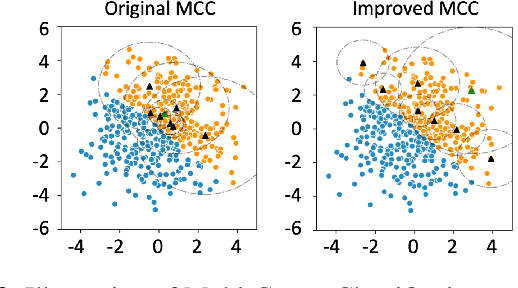
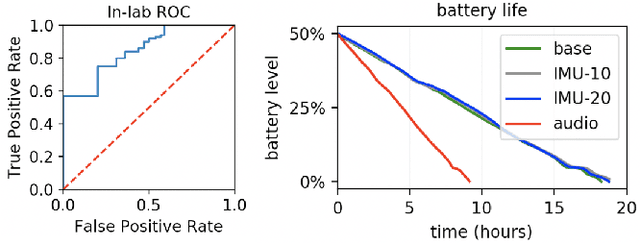
Persistent coughs are a major symptom of respiratory-related diseases. Increasing research attention has been paid to detecting coughs using wearables, especially during the COVID-19 pandemic. Among all types of sensors utilized, microphone is most widely used to detect coughs. However, the intense power consumption needed to process audio signals hinders continuous audio-based cough detection on battery-limited commercial wearable products, such as earbuds. We present CoughTrigger, which utilizes a lower-power sensor, an inertial measurement unit (IMU), in earbuds as a cough detection activator to trigger a higher-power sensor for audio processing and classification. It is able to run all-the-time as a standby service with minimal battery consumption and trigger the audio-based cough detection when a candidate cough is detected from IMU. Besides, the use of IMU brings the benefit of improved specificity of cough detection. Experiments are conducted on 45 subjects and our IMU-based model achieved 0.77 AUC score under leave one subject out evaluation. We also validated its effectiveness on free-living data and through on-device implementation.