 Add to Chrome
 Add to Firefox
 Add to Edge
TAPE: A two-stage parameter-efficient adaptation framework for foundation models in OCT-OCTA analysis
Apr 06, 2026
Automated analysis of optical coherence tomography (OCT) and OCT angiography (OCTA) images is critical for robust ophthalmic diagnosis. Existing mainstream methods trained from scratch rely heavily on massive data and model scale, thereby hindering their practical deployment in resource-constrained clinical settings. Although transfer learning based on foundation models (FMs) is promising, it still faces significant challenges: domain shift and task misalignment. To address these, we propose TAPE: A Two-stage Adaptation Framework via Parameter-Efficient Fine-tuning, which strategically decouples adaptation into domain alignment and task fitting for downstream segmentation. The domain adaptation stage notably applies parameter-efficient fine-tuning (PEFT) in the context of masked image modeling for medical image domain adaptation, a novel approach to the best of our knowledge. Applying TAPE to retinal layer segmentation on both universal (masked auto-encoder, MAE) and specialized (RETFound) FMs, it demonstrates superior parameter efficiency and achieves state-of-the-art generalization performance across diverse pathologies.

Multi-target Tracking of Zebrafish based on Particle Filter
Aug 09, 2022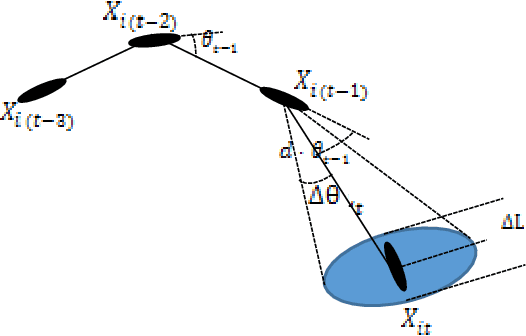
Zebrafish is an excellent model organism, which has been widely used in the fields of biological experiments, drug screening, and swarm intelligence. In recent years, there are a large number of techniques for tracking of zebrafish involved in the study of behaviors, which makes it attack much attention of scientists from many fields. Multi-target tracking of zebrafish is still facing many challenges. The high mobility and uncertainty make it difficult to predict its motion; the similar appearances and texture features make it difficult to establish an appearance model; it is even hard to link the trajectories because of the frequent occlusion. In this paper, we use particle filter to approximate the uncertainty of the motion. Firstly, by analyzing the motion characteristics of zebrafish, we establish an efficient hybrid motion model to predict its positions; then we establish an appearance model based on the predicted positions to predict the postures of every targets, meanwhile weigh the particles by comparing the difference of predicted pose and observation pose ; finally, we get the optimal position of single zebrafish through the weighted position, and use the joint particle filter to process trajectory linking of multiple zebrafish.
* 6 pages, 8 figures, 2016 35th Chinese Control Conference (CCC)