 Add to Chrome
 Add to Firefox
 Add to Edge
Fast Gauss-Newton for Multiclass Cross-Entropy
May 07, 2026
In multiclass softmax cross-entropy, the full generalized Gauss-Newton (GGN) curvature couples all output logits through the softmax covariance, making curvature-vector products harder to scale as the number of classes grows. We show that the standard multiclass GGN can be decomposed exactly into a true-vs-rest term and a positive semidefinite within-competitor covariance term. Fast Gauss-Newton (FGN) retains the first term and drops the second, yielding a positive semidefinite under-approximation of the multiclass GGN that is exact for binary classification. The derivation uses an exact true-vs-rest scalar-margin representation of softmax cross-entropy: the loss and gradient are unchanged, and the approximation enters only at the curvature level. Exploiting the FGN curvature structure, the damped update can be written as an equivalent whitened row-space system with one row per mini-batch example. We solve this system matrix-free by conjugate gradient using Jacobian-vector and vector-Jacobian products of the scalar margin map. Targeted mechanism experiments and an evaluation on a fixed-feature multiclass head support the predictions from the decomposition: FGN stays closest to the full softmax GGN when competitor mass is concentrated or damping is large, and deviates as the dropped within-competitor covariance grows.

Second-Order, First-Class: A Composable Stack for Curvature-Aware Training
Mar 26, 2026Second-order methods promise improved stability and faster convergence, yet they remain underused due to implementation overhead, tuning brittleness, and the lack of composable APIs. We introduce Somax, a composable Optax-native stack that treats curvature-aware training as a single JIT-compiled step governed by a static plan. Somax exposes first-class modules -- curvature operators, estimators, linear solvers, preconditioners, and damping policies -- behind a single step interface and composes with Optax by applying standard gradient transformations (e.g., momentum, weight decay, schedules) to the computed direction. This design makes typically hidden choices explicit and swappable. Somax separates planning from execution: it derives a static plan (including cadences) from module requirements, then runs the step through a specialized execution path that reuses intermediate results across modules. We report system-oriented ablations showing that (i) composition choices materially affect scaling behavior and time-to-accuracy, and (ii) planning reduces per-step overhead relative to unplanned composition with redundant recomputation.
Incremental Gauss-Newton Descent for Machine Learning
Aug 10, 2024
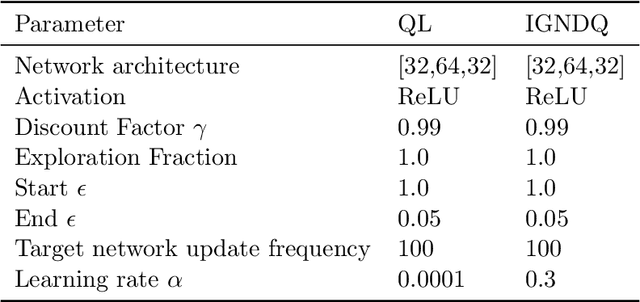
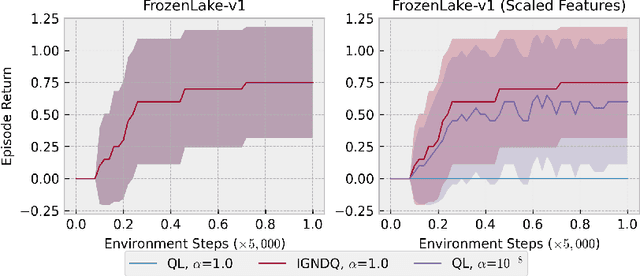
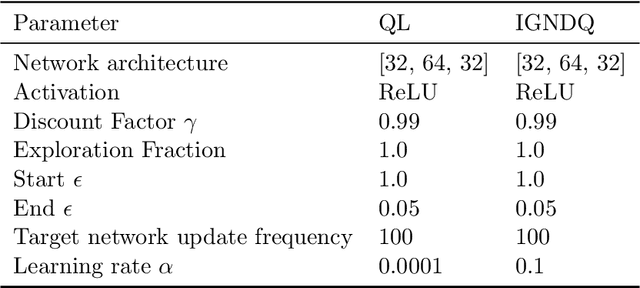
Stochastic Gradient Descent (SGD) is a popular technique used to solve problems arising in machine learning. While very effective, SGD also has some weaknesses and various modifications of the basic algorithm have been proposed in order to at least partially tackle them, mostly yielding accelerated versions of SGD. Filling a gap in the literature, we present a modification of the SGD algorithm exploiting approximate second-order information based on the Gauss-Newton approach. The new method, which we call Incremental Gauss-Newton Descent (IGND), has essentially the same computational burden as standard SGD, appears to converge faster on certain classes of problems, and can also be accelerated. The key intuition making it possible to implement IGND efficiently is that, in the incremental case, approximate second-order information can be condensed into a scalar value that acts as a scaling constant of the update. We derive IGND starting from the theory supporting Gauss-Newton methods in a general setting and then explain how IGND can also be interpreted as a well-scaled version of SGD, which makes tuning the algorithm simpler, and provides increased robustness. Finally, we show how IGND can be used in practice by solving supervised learning tasks as well as reinforcement learning problems. The simulations show that IGND can significantly outperform SGD while performing at least as well as SGD in the worst case.
Exact Gauss-Newton Optimization for Training Deep Neural Networks
May 23, 2024We present EGN, a stochastic second-order optimization algorithm that combines the generalized Gauss-Newton (GN) Hessian approximation with low-rank linear algebra to compute the descent direction. Leveraging the Duncan-Guttman matrix identity, the parameter update is obtained by factorizing a matrix which has the size of the mini-batch. This is particularly advantageous for large-scale machine learning problems where the dimension of the neural network parameter vector is several orders of magnitude larger than the batch size. Additionally, we show how improvements such as line search, adaptive regularization, and momentum can be seamlessly added to EGN to further accelerate the algorithm. Moreover, under mild assumptions, we prove that our algorithm converges to an $\epsilon$-stationary point at a linear rate. Finally, our numerical experiments demonstrate that EGN consistently exceeds, or at most matches the generalization performance of well-tuned SGD, Adam, and SGN optimizers across various supervised and reinforcement learning tasks.