 Add to Chrome
 Add to Firefox
 Add to Edge
Bridging Ab Initio Symmetries and Global Nuclear Masses with Interpretable Neural Networks
Jun 26, 2026
Ab initio modeling has established Wigner's SU(4) and Elliott's SU(3) as dominant symmetries of the nuclear force in light and intermediate-mass nuclei. We ask whether they also govern nuclear binding across the entire chart. Our aim is not high-precision prediction but physical insight, through interpretable, symmetry-based models. From the SU(3) and SU(4) Casimir operators we construct three neural-network (NN) mass models: Feature-Informed NN (FINN) for point predictions, Gaussian-Informed NN (GINN) adding uncertainty quantification, and Wigner-Informed NN (WINN) -- a mass formula using the Casimirs as an operator basis. All are trained on AME2016 and validated on nuclei new to AME2020. The SU(4) operators alone cut the root-mean-square error (RMSE) by nearly half on train and test data, and by about a fifth on extrapolation, relative to the liquid-drop baseline -- showing that Wigner's symmetry carries predictive information beyond bulk properties. Despite its compact form, WINN reaches the lowest validation RMSE, 0.430 MeV -- competitive with state-of-the-art mass models -- which we read less as a benchmark than as evidence that its symmetry basis captures important physics. WINN further reveals i) an enhancement of the quadratic SU(4) Casimir near the neutron dripline, signaling restoration of Wigner's symmetry, and ii) an unexpected gain of the quartic operator in the superheavy region. We thereby elevate emergent symmetries from the hidden order within individual nuclei to a governing principle of the whole nuclear chart.

Inferring astrophysical X-ray polarization with deep learning
May 16, 2020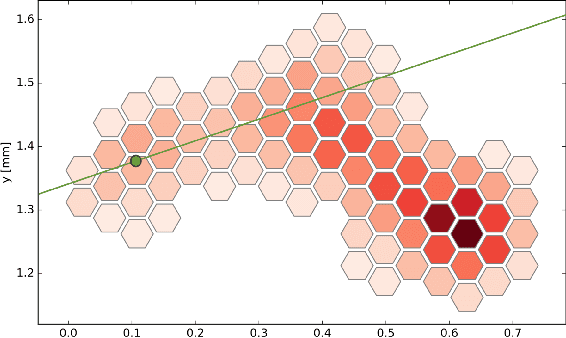

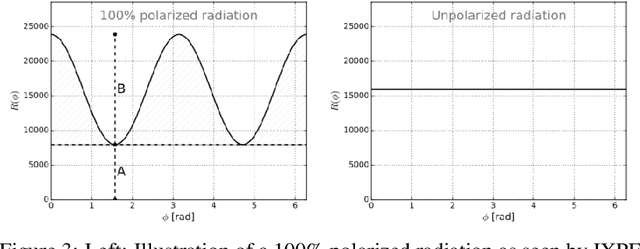
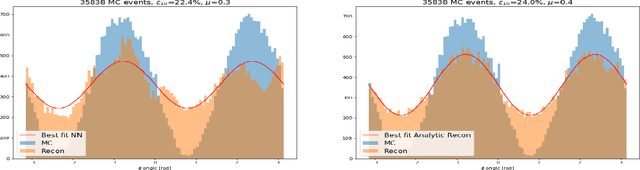
We investigate the use of deep learning in the context of X-ray polarization detection from astrophysical sources as will be observed by the Imaging X-ray Polarimetry Explorer (IXPE), a future NASA selected space-based mission expected to be operative in 2021. In particular, we propose two models that can be used to estimate the impact point as well as the polarization direction of the incoming radiation. The results obtained show that data-driven approaches depict a promising alternative to the existing analytical approaches. We also discuss problems and challenges to be addressed in the near future.