 Add to Chrome
 Add to Firefox
 Add to Edge
Contrastive explanations of BDI agents
Feb 10, 2026
The ability of autonomous systems to provide explanations is important for supporting transparency and aiding the development of (appropriate) trust. Prior work has defined a mechanism for Belief-Desire-Intention (BDI) agents to be able to answer questions of the form ``why did you do action $X$?''. However, we know that we ask \emph{contrastive} questions (``why did you do $X$ \emph{instead of} $F$?''). We therefore extend previous work to be able to answer such questions. A computational evaluation shows that using contrastive questions yields a significant reduction in explanation length. A human subject evaluation was conducted to assess whether such contrastive answers are preferred, and how well they support trust development and transparency. We found some evidence for contrastive answers being preferred, and some evidence that they led to higher trust, perceived understanding, and confidence in the system's correctness. We also evaluated the benefit of providing explanations at all. Surprisingly, there was not a clear benefit, and in some situations we found evidence that providing a (full) explanation was worse than not providing any explanation.

Towards a Framework for Certification of Reliable Autonomous Systems
Jan 24, 2020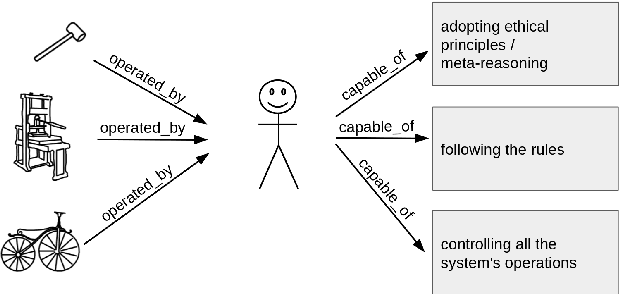
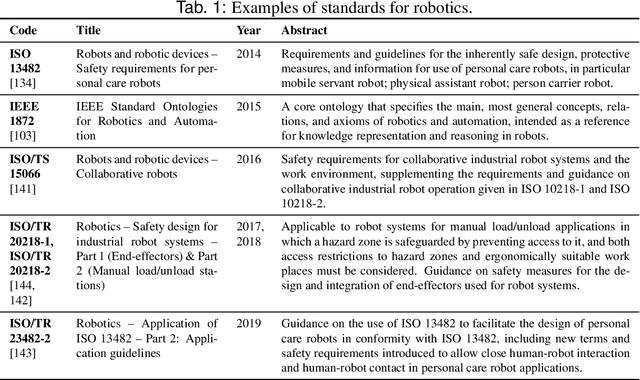
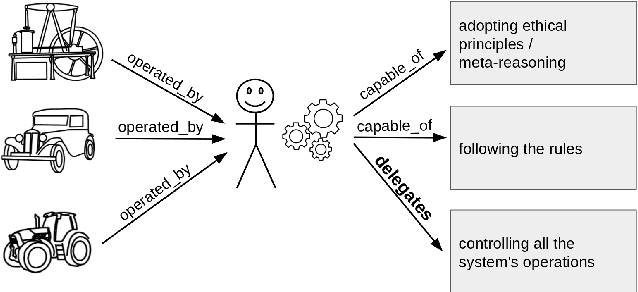
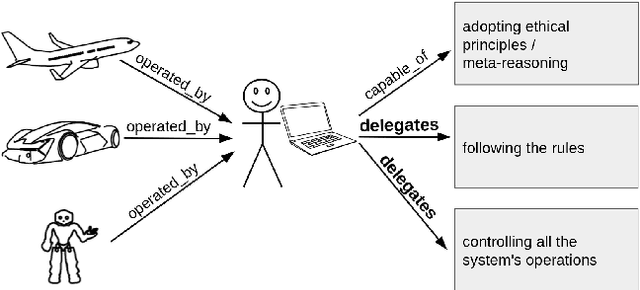
A computational system is called autonomous if it is able to make its own decisions, or take its own actions, without human supervision or control. The capability and spread of such systems have reached the point where they are beginning to touch much of everyday life. However, regulators grapple with how to deal with autonomous systems, for example how could we certify an Unmanned Aerial System for autonomous use in civilian airspace? We here analyse what is needed in order to provide verified reliable behaviour of an autonomous system, analyse what can be done as the state-of-the-art in automated verification, and propose a roadmap towards developing regulatory guidelines, including articulating challenges to researchers, to engineers, and to regulators. Case studies in seven distinct domains illustrate the article.