 Add to Chrome
 Add to Firefox
 Add to Edge
Characterization of Helicopter Rotor Blade Modulation in UHF and Microwave Bands
Aug 17, 2026
This paper presents metrics and measurement methods for the experimental characterization of helicopter rotor blade modulation of the wireless propagation channel. Broadband bistatic channel measurements were conducted at three widely separated carrier frequencies (302 MHz in the UHF band, 4.9 GHz in the C-band, and 27.1 GHz in the Ka-band) for three military helicopters (CH-53, Tiger, and UMAT) at the Bundeswehr Technical and Airworthiness Center for Aircraft in Manching, Germany. The time-variant channel was analyzed in terms of the Doppler Power Spectrum and the RMS Doppler spread, the Doppler spectrogram, and the Power Time Profile. The RMS Doppler spread values were found to be moderate (up to 106 Hz), which is attributable to the predominantly lateral blade motion relative to the line-of-sight path. The Power Time Profiles revealed periodic blockage attenuations of up to 15 dB at Ka-band, increasing significantly with the carrier frequency; at 302 MHz, the blockage attenuation does not exceed 2.3 dB and the RMS Doppler spread stays below 10 Hz. The measured blockage attenuation was modeled using the double knife-edge diffraction model, showing good agreement with the measurements. The distinct micro-Doppler signatures visible in the spectrograms are identified as a potential resource for helicopter classification and passive radar applications.

Demonstration of a Real-Time Testbed for D-Band Integrated Sensing and Communication
Jun 28, 2024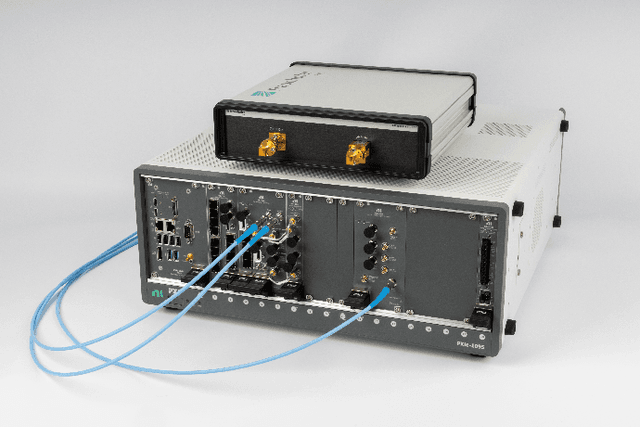
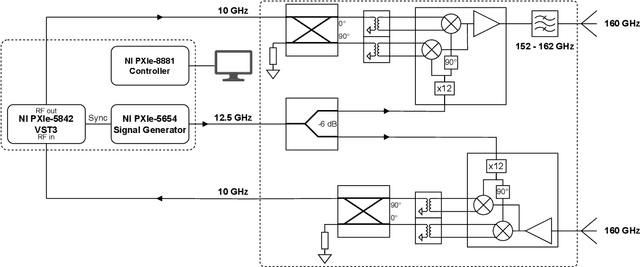
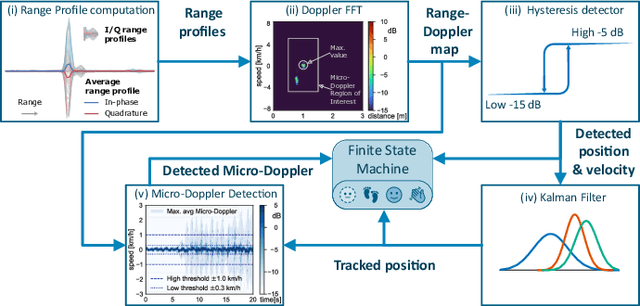
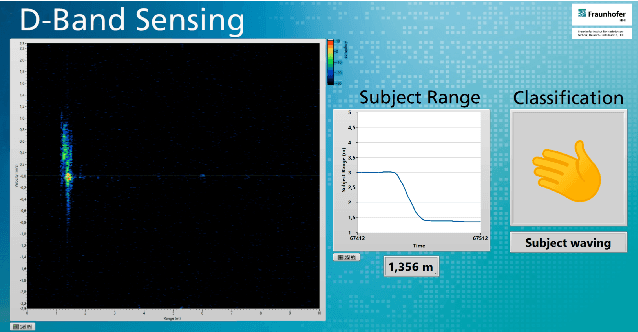
The D-band, spanning 110 GHz to 170 GHz, has emerged as a relevant frequency range for future mobile communications and radar sensing applications, particularly in the context of 6G technologies. This demonstration presents a high-bandwidth, real-time integrated sensing and communication (ISAC) platform operating in the upper D-band at 160 GHz. The platform comprises a software-defined intermediate frequency transceiver and a D-band radio frequency module. Its flexible software design allows for rapid integration of signal processing algorithms. Highlighting its potential for advanced research in ISAC systems, the platforms's efficacy is showcased through a live demonstration with an algorithm implementing human target tracking and activity classification.
Little or no equalization is needed in energy-efficient sub-THz mobile access
Oct 11, 2022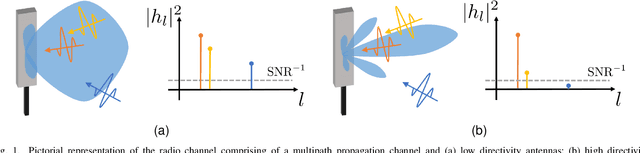
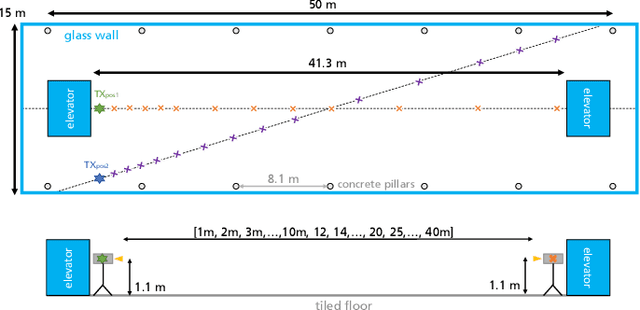
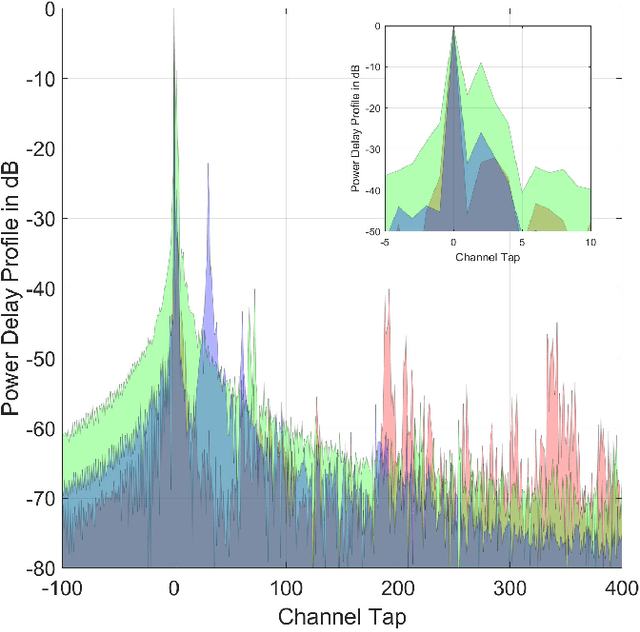
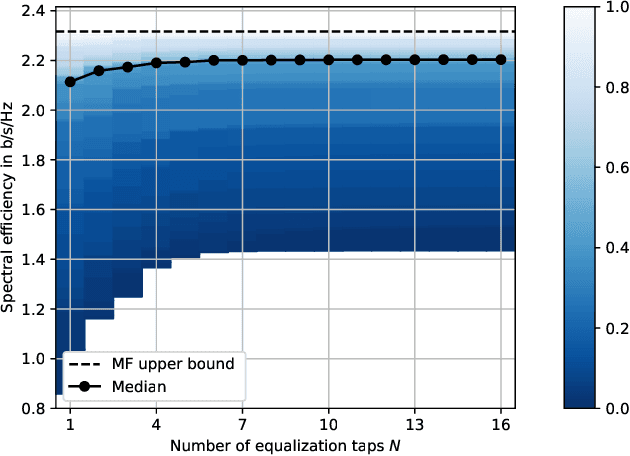
By trading coverage and hardware complexity for abundance of spectrum, sub-THz mobile access networks are expected to operate under highly directive and relatively spectrally inefficient transmission regimes, while still offering enormous capacity gains over current sub-6GHz alternatives. Building on this assumption, and supported by extensive indoor directional channel measurements at 160 GHz, this study advocates the use of very simple modulation and equalization techniques for sub-THz mobile access. Specifically, we demonstrate that, under the aforementioned transmission regimes, little or no equalization is needed for scoring significant capacity gain targets. In particular, we show that single-carrier or low-number-of-subcarriers modulations are very attractive competitors to the dramatically more complex and energy inefficient traditional multi-carrier designs.
Sub-THz Channel Measurements at 158 GHz and 300 GHz in a Street Canyon Environment
Mar 02, 2022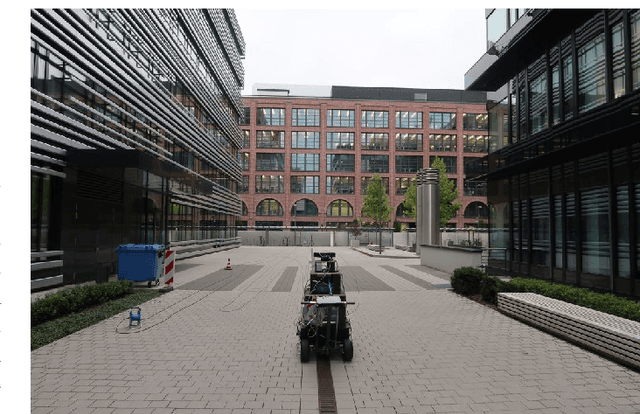
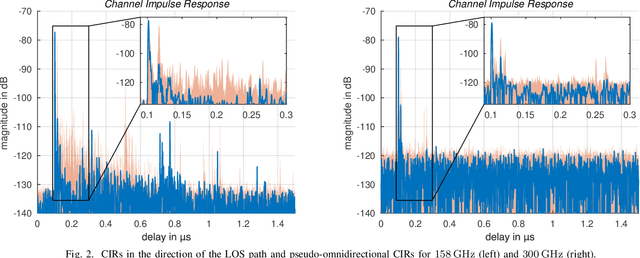
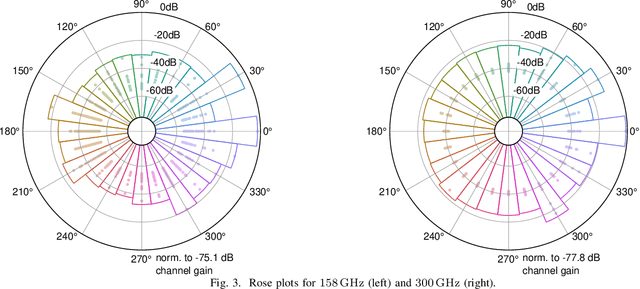
This paper presents first results of a channel measurement campaign performed in an urban micro (UMi) street canyon scenario at 158 GHz and 300 GHz.
Observations on the Angular Statistics of the Indoor Sub-THz Radio Channel at 158 GHz
Mar 02, 2022
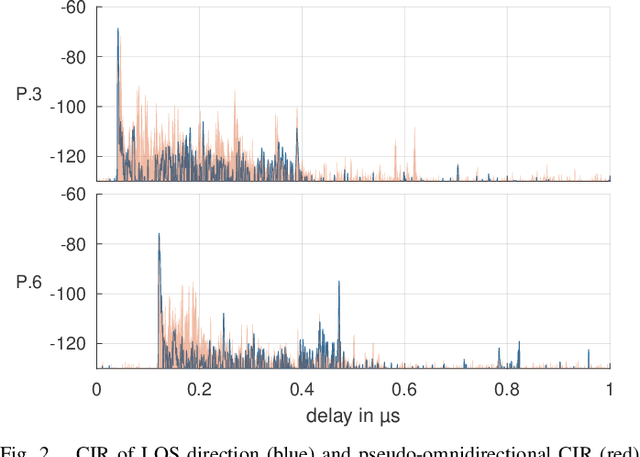
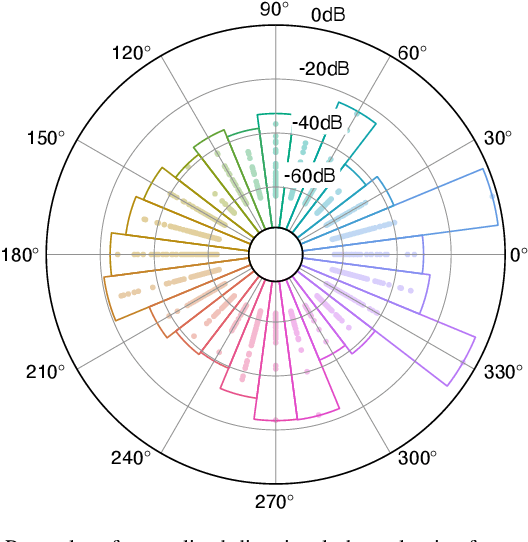
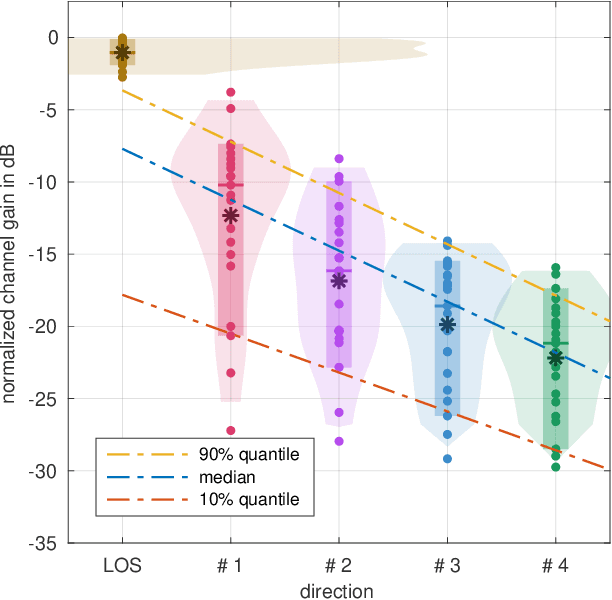
This paper presents selected results from a channel measurement campaign conducted in a shopping mall scenario at 158 GHz. The focus is on the statistical analysis of the collected measurement data in terms of directional channel gain. Although most power is received from the line-of-sight (LOS) direction, significant multipaths arrive from all measured azimuth directions. The median of the sorted directional channel gain can be approximated by a linear curve showing an offset of about 10 dB with respect to the LOS direction.