 Add to Chrome
 Add to Firefox
 Add to Edge
TaFD: Threat-Aware Frequency Decoupling for Adversarial Robustness against Heterogeneous Attacks
Jun 16, 2026
Multi-threat robustness remains a fundamental challenge in deep learning. Although joint adversarial training (JAT) is widely adopted, it suffers from negative transfer under heterogeneous threats, particularly between $\ell_p$-bounded and semantic attacks. Through first-order gradient analysis, we formalize this as gradient incompatibility and theoretically establish the necessity of decoupled optimization. We further reveal that these conflicting threats exhibit separable spectral characteristics in the frequency domain. Motivated by this observation, we propose Threat-aware Frequency Decoupling (TaFD), a two-stage defense framework that reformulates JAT as a frequency-domain divide-and-conquer paradigm. TaFD first discovers latent threat domains via unsupervised clustering of attack spectral prototypes and trains a lightweight classifier for inference-time threat domain identification. Conditioned on the prediction, TaFD employs a Frequency-Conditional Convolution that learns threat-domain-specific spectral masks and routes each sample to the corresponding expert, enforcing structural parameter separation and alleviating optimization conflicts. We validate TaFD on three representative image-classification benchmarks (CIFAR-10, CIFAR-100, and Tiny-ImageNet) and on two representative architectures (the convolutional ResNet and the hybrid-transformer MobileViT). Extensive results demonstrate that TaFD achieves more balanced robustness against heterogeneous attacks than existing JAT and frequency-domain baselines, improving average robust accuracy by approximately 11\% over the strongest baseline while maintaining leading clean accuracy.

Boosting Illuminant Estimation in Deep Color Constancy through Enhancing Brightness Robustness
Feb 18, 2025
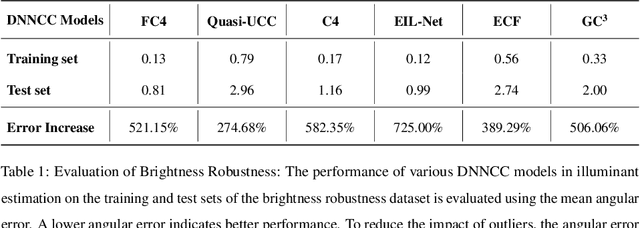
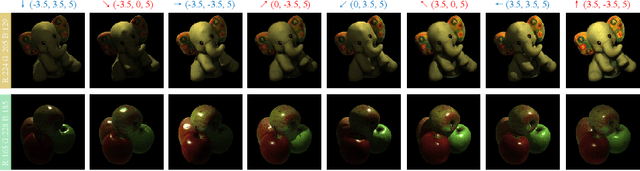
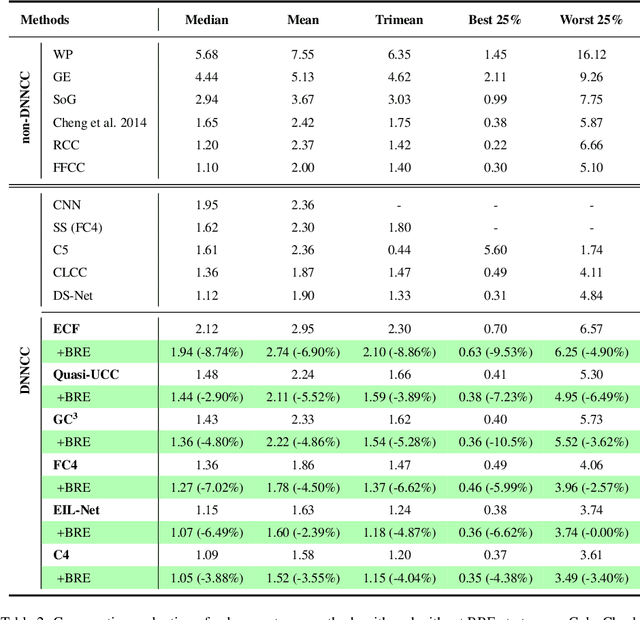
Color constancy estimates illuminant chromaticity to correct color-biased images. Recently, Deep Neural Network-driven Color Constancy (DNNCC) models have made substantial advancements. Nevertheless, the potential risks in DNNCC due to the vulnerability of deep neural networks have not yet been explored. In this paper, we conduct the first investigation into the impact of a key factor in color constancy-brightness-on DNNCC from a robustness perspective. Our evaluation reveals that several mainstream DNNCC models exhibit high sensitivity to brightness despite their focus on chromaticity estimation. This sheds light on a potential limitation of existing DNNCC models: their sensitivity to brightness may hinder performance given the widespread brightness variations in real-world datasets. From the insights of our analysis, we propose a simple yet effective brightness robustness enhancement strategy for DNNCC models, termed BRE. The core of BRE is built upon the adaptive step-size adversarial brightness augmentation technique, which identifies high-risk brightness variation and generates augmented images via explicit brightness adjustment. Subsequently, BRE develops a brightness-robustness-aware model optimization strategy that integrates adversarial brightness training and brightness contrastive loss, significantly bolstering the brightness robustness of DNNCC models. BRE is hyperparameter-free and can be integrated into existing DNNCC models, without incurring additional overhead during the testing phase. Experiments on two public color constancy datasets-ColorChecker and Cube+-demonstrate that the proposed BRE consistently enhances the illuminant estimation performance of existing DNNCC models, reducing the estimation error by an average of 5.04% across six mainstream DNNCC models, underscoring the critical role of enhancing brightness robustness in these models.
RetouchUAA: Unconstrained Adversarial Attack via Image Retouching
Nov 27, 2023Deep Neural Networks (DNNs) are susceptible to adversarial examples. Conventional attacks generate controlled noise-like perturbations that fail to reflect real-world scenarios and hard to interpretable. In contrast, recent unconstrained attacks mimic natural image transformations occurring in the real world for perceptible but inconspicuous attacks, yet compromise realism due to neglect of image post-processing and uncontrolled attack direction. In this paper, we propose RetouchUAA, an unconstrained attack that exploits a real-life perturbation: image retouching styles, highlighting its potential threat to DNNs. Compared to existing attacks, RetouchUAA offers several notable advantages. Firstly, RetouchUAA excels in generating interpretable and realistic perturbations through two key designs: the image retouching attack framework and the retouching style guidance module. The former custom-designed human-interpretability retouching framework for adversarial attack by linearizing images while modelling the local processing and retouching decision-making in human retouching behaviour, provides an explicit and reasonable pipeline for understanding the robustness of DNNs against retouching. The latter guides the adversarial image towards standard retouching styles, thereby ensuring its realism. Secondly, attributed to the design of the retouching decision regularization and the persistent attack strategy, RetouchUAA also exhibits outstanding attack capability and defense robustness, posing a heavy threat to DNNs. Experiments on ImageNet and Place365 reveal that RetouchUAA achieves nearly 100\% white-box attack success against three DNNs, while achieving a better trade-off between image naturalness, transferability and defense robustness than baseline attacks.